All posts by Adam Brinded

Having a ‘regular doctor’ can significantly reduce GP workload, study finds

If all GP practices moved to a model where patients saw the same doctor at each visit, it could significantly reduce doctor workload while improving patient health, a study suggests. 

Doctor examining a patient
Credit: The Good Brigade via Getty Images

In one of the largest studies of its kind, researchers from the University of Cambridge and INSEAD analysed data from more than 10 million consultations in 381 English primary care practices over a period of 11 years.

The results, reported in the journal Management Science, suggest that a long-term relationship between a patient and their doctor could both improve patient health and reduce workload for GPs.

The researchers found that when patients were able to see their regular doctor for a consultation – a model known as continuity of care – they waited on average 18% longer between visits, compared to patients who saw a different doctor. The productivity benefit of continuity of care was larger for older patients, those with multiple chronic conditions, and individuals with mental health conditions.

Although it will not always be possible for a patient to see their regular GP, this productivity differential would translate to an estimated 5% reduction in consultations if all practices in England were providing the level of care continuity of the best 10% of practices.

Primary care in the UK is under enormous strain: patients struggle to get appointments, GPs are retiring early, and financial pressures are causing some practices to close. According to the Health Foundation and the Nuffield Trust, there is a significant shortfall of GPs in England, with a projected 15% increase required in the workforce. The problem is not limited to UK, however: the Association of American Medical Colleges estimates a shortfall of between 21,400 and 55,200 primary care physicians in the US by 2033.

“Productivity is a huge problem across all the whole of the UK – we wanted to see how that’s been playing out in GP practices,” said Dr Harshita Kajaria-Montag, the study’s lead author, who is now based at the Kelley School of Business at Indiana University. “Does the rapid access model make GPs more productive?” 

“You can measure the productivity of GP surgeries in two ways: how many patients can you see in a day, or how much health can you provide in a day for those patients,” said co-author Professor Stefan Scholtes from Cambridge Judge Business School. “Some GP surgeries are industrialised in their approach: each patient will get seven or ten minutes before the GP has to move on to the next one.”

At English GP practices, roughly half of all appointments are with a patient’s regular doctor, but this number has been steadily declining over the past decade as GP practices come under increasing strain.

The researchers used an anonymised dataset from the UK Clinical Practice Research Datalink, consisting of more than 10 million GP visits between 1 January 2007 and 31 December 2017. Using statistical models to account for confounding and selection bias, and restricting the sample to consultations with patients who had at least three consultations over the past two years, the researchers found that the time to a patient’s next visit is substantially longer when the patient sees the doctor they have seen most frequently over the past two years, while there is no operationally meaningful difference in consultation duration.

“The impact is substantial: it could be the equivalent of increasing the GP workforce by five percent, which would significantly benefit both patients and the NHS,” said Scholtes. “Better health translates into less demand for future consultations. Prioritising continuity of care is crucial in enhancing productivity.”

“The benefits of continuity of care are obvious from a relationship point of view,” said Kajaria-Montag. “If you’re a patient with complex health needs, you don’t want to have to explain your whole health history at every appointment. If you have a regular doctor who’s familiar with your history, it’s a far more efficient use of time, for doctor and patient.”

“A regular doctor may have a larger incentive to take more time to treat her regular patients thoroughly than a transactional provider,” said Scholtes. “Getting it right the first time will reduce her future workload by preventing revisits, which would likely be her responsibility, while a transactional provider is less likely to see the patient for her next visit.”

The researchers emphasise that continuity of care does not only have the known benefits of better patient outcomes, better patient and GP experience, and reduced secondary care use, but also provides a surprisingly large productivity benefit for the GP practices themselves. 


Reference:Harshita Kajaria-Montag, Michael Freeman, Stefan Scholtes. ‘Continuity of Care Increases Physician Productivity in Primary Care.’ Management Science (2024). DOI: 10.1287/mnsc.2021.02015


Creative Commons License.The text in this work is licensed under a Creative Commons Attribution-NonCommercial-ShareAlike 4.0 International License. Images, including our videos, are Copyright ©University of Cambridge and licensors/contributors as identified. All rights reserved. We make our image and video content available in a number of ways – on our main website under its Terms and conditions, and on a range of channels including social media that permit your use and sharing of our content under their respective Terms.

source: cam.ac.uk
Shimmering seaweeds and algae antennae: sustainable energy solutions under the sea

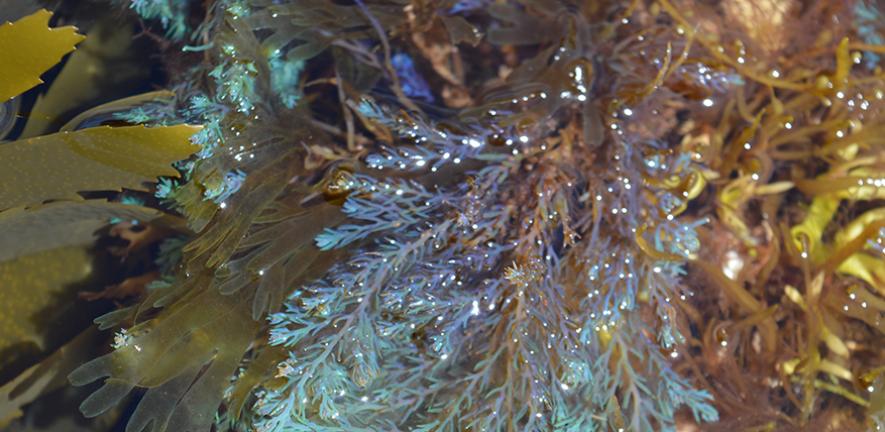
How could tiny antennae attached to tiny algae speed up the transition away from fossil fuels? This is one of the questions being studied by Cambridge researchers as they search for new ways to decarbonise our energy supply, and improve the sustainability of harmful materials such as paints and dyes.

Seaweeds showing structural colour
Credit: BEEP

Funded by the European Union’s Horizon 2020 research and innovation programme, the Bio-inspired and Bionic materials for Enhanced Photosynthesis (BEEP) project, led by Professor Silvia Vignolini in the Yusuf Hamied Department of Chemistry, studied how marine organisms interact with light.

The four-year sustainable energy project brought together nine research groups from across Europe and drew its inspiration from nature, in particular from the marine world, where organisms including algae, corals and sea slugs have evolved efficient ways to convert sunlight into energy. Harnessing these properties could aid in the development of new artificial and bionic photosynthetic systems.

Some of the brightest and most colourful materials in nature – such as peacock feathers, butterfly wings and opals – get their colour not from pigments or dyes, but from their internal structure alone. The colours our eyes perceive originate from the interaction between light and nanostructures at the surface of the material, which reflect certain wavelengths of light.

As part of the BEEP project, the team studied structural colour in marine species. Some marine algae species have nanostructures in their cell walls that can transmit certain wavelengths of visible light or change their structures to guide the light inside the cell. Little is known about the function of these structures, however: scientists believe they might protect the organisms from UV light or optimise light harvesting capabilities.

The team studied the optical properties and light harvesting efficiency of a range of corals, sea-slugs, microalgae and seaweeds. By understanding the photonic and structural properties of these species, the scientists hope to design new materials for bio-photoreactors and bionic systems.

“We’re fascinated by the optical effects performed by these organisms,” said Maria Murace, a BEEP PhD candidate at Cambridge, who studies structural colour in seaweeds and marine bacteria. “We want to understand what the materials and the structures at the base of these colours are, which could lead to the development of green and sustainable alternatives to the conventional paints and toxic dyes we use today.”

BEEP also studied diatoms: tiny photosynthetic algae that live in almost every aquatic system on Earth and produce as much as half of the oxygen we breathe. The silica shells of these tiny algae form into stunning structures, but they also possess remarkable light-harvesting properties.

The BEEP team engineered tiny light-harvesting antennae and attached them to diatom shells. “These antennae allowed us to gather the light that would otherwise not be harvested by the organism, which is converted and used for photosynthesis,” said Cesar Vicente Garcia, one of the BEEP PhD students, from the University of Bari in Italy. “The result is promising: diatoms grow more! This research could inspire the design of powerful bio-photoreactors, or even better

The scientists engineered a prototype bio-photoreactor, consisting of a fully bio-compatible hydrogel which sustains the growth of microalgae and structural coloured bacteria. The interaction of these organisms is mutually beneficial, enhancing microalgal growth and increasing the volume of biomass produced, which could have applications in the biofuel production industry.

Alongside research, the network has organised several training and outreach activities, including talks and exhibitions for the public at science festivals in Italy, France and the UK.

“Society relies on science to drive growth and progress,” said Floriana Misceo, the BEEP network manager who coordinated outreach efforts. “It’s so important for scientists to share their research and help support informed discussion and debate because without it, misinformation can thrive, which is why training and outreach was an important part of this project.”

“Coordinating this project has been a great experience. I learned immensely from the other groups in BEEP and the young researchers,” said Vignolini. “The opportunity to host researchers from different disciplines in the lab was instrumental in developing new skills and approaching problems from a different perspective.”

This project has received funding from the European Union’s Horizon 2020 research and innovation programme under a Marie Skłodowska-Curie grant.


source: cam.ac.uk


The text in this work is licensed under a Creative Commons Attribution-NonCommercial-ShareAlike 4.0 International License. Images, including our videos, are Copyright ©University of Cambridge and licensors/contributors as identified. All rights reserved. We make our image and video content available in a number of ways – on our main website under its Terms and conditions, and on a range of channels including social media that permit your use and sharing of our content under their respective Terms.

New Cambridge-developed resources help students learn how maths can help tackle infectious diseases

Aerial view of crowd connected by lines

source: www.cam.ac.uk

Cambridge mathematicians have developed a set of resources for students and teachers that will help them understand how maths can help tackle infectious diseases.

From measles and flu to SARS and COVID, mathematicians help us understand and predict the epidemics that can spread through our communities, and to help us look at strategies that we may be able to use to contain them.

The project, called Contagious Maths, was led by Professor Julia Gog from Cambridge’s Department of Applied Mathematics and Theoretical Physics (DAMTP), and was supported by a Rosalind Franklin Award from the Royal Society.

The curriculum-linked resources will give students between the ages 11 and 14 the opportunity to join researchers on the mathematical frontline to learn more about infectious disease spread, along with interactive tools to try mathematical modelling for themselves. Teachers receive full lesson plans, backed up by Cambridge research.

“I’ve always loved maths. I was lucky enough to have amazing teachers at sixth form who challenged me and were 100% behind me pursuing maths at the highest level, but maths as it’s taught in school can be highly abstract, so students often wonder what the point of maths even is,” said Gog, who is also Director of the Millennium Maths Project. “This is something I’m trying to help with now: to offer a glimpse from school to the research world to see the role mathematics can play in tackling important real-world problems.”

The Contagious Maths project introduces mathematical modelling; explores how mathematicians can model the spread of disease through a population and the type of questions we might think about when looking at models; and gives an insight into what mathematics researchers working on these real-life problems actually do.

“I’ve been engaged in outreach for many years at Cambridge, and the Contagious Maths project grew out of discussions with colleagues who have expertise in reaching school-age children,” said Gog. “The 11-14 age group we are targeting is a real crunch point for retaining girls in maths, and future female mathematicians. What exactly happens is complex and multifaceted, but this is a period when people form their views on how they fit with maths and science.

“Many of them disengage, as it can seem that maths at school is utterly disconnected from the real world. It can also be a time when maths appears very starkly right or wrong, whereas any research mathematician can tell you it’s always so much more subtle that than, and therefore so much more interesting!”

Gog hopes the Contagious Maths resources might be able to help, as they are designed to be used in regular school lessons, and cover a topic with clear real-world importance.

“The maths is never black and white in this field: there are always ways to challenge and develop the models, and some tricky thinking to be done about how the real epidemics and the simulations are really related to each other,” she said. “I suspect some students will find this frustrating, and just want maths to be algorithmic exercises. But some will be intrigued, and they are the ones we are trying to reach and expose to this larger world of applied maths research.”

Contagious Maths also provides teachers with all the ideas and tools they need, so they have at their fingertips all they need to deliver these lessons, even if they have no experience with research mathematics. “We hope this project will help these teachers to bring in the wider view of mathematics, and we hope it inspires them too,” said Gog. “It’s been really fun developing these resources, teaming up with both NRICH and Plus to make the most of our combined expertise.”

Maths teachers can attend a free online event on 20 March to learn more about the project.

In addition to the school resources, Gog and her colleagues have designed another version of Contagious Maths for a more general self-guided audience, which will work for students older than 14 or anyone, of any age, who is interested in learning about mathematical modelling.

“The paradox between the cleanness and precision of mathematics, and the utter hot mess of anything that involves biological dynamics across populations – like an outbreak of an infectious disease, is what intrigued me to stay in mathematics beyond my degree, and to move into research in mathematical biology,” said Gog. “Elegant theoretical ideas can tell us something valuable and universal about mitigating the devastating effects of disease on human and animal populations. Super abstract equations can hold fundamental truths about real-world problems – I don’t think I will ever tire of thinking about that.”

Adapted from a Royal Society interview with Professor Julia Gog.


The text in this work is licensed under a Creative Commons Attribution-NonCommercial-ShareAlike 4.0 International License. Images, including our videos, are Copyright ©University of Cambridge and licensors/contributors as identified. All rights reserved. We make our image and video content available in a number of ways – on our main website under its Terms and conditions, and on a range of channels including social media that permit your use and sharing of our content under their respective Terms.

School uniform policies linked to students getting less exercise, study finds

School children watching a sports game from indoors

source: www.cam.ac.uk

School uniform policies could be restricting young people from being active, particularly primary school-aged girls, new research suggests.

Social norms and expectations tend to influence what they feel they can do in these clothes. Unfortunately, when it comes to promoting physical health, that’s a problemEsther van Sluijs

The University of Cambridge study used data about the physical activity participation of more than a million five-to-17-year-olds internationally. It found that in countries where a majority of schools require students to wear uniforms, fewer young people tend to meet the average of 60 minutes of physical activity per day recommended by the World Health Organisation (WHO).

Regardless of uniform policies, across most countries fewer girls than boys reach those recommended exercise levels. Among primary school students, however, the difference in activity between girls and boys was found to be wider in countries where most schools mandated uniforms. The same result was not found in secondary school-aged students.

The authors suggest that this could be explained by the fact that younger children get more incidental exercise throughout the school day than older students; for example, through running, climbing and various other forms of active play at break and lunchtimes. There is already evidence that girls feel less comfortable in participating in active play if they are wearing certain types of clothing, such as skirts or dresses.

Importantly, the results do not definitively prove that school uniforms limit children’s physical activity and the researchers stress that “causation cannot be inferred”. Previous, smaller studies however provide support for these findings, indicating that uniforms could pose a barrier. For the first time, the research examines large-scale statistical evidence to assess that claim.

The study was led by Dr Mairead Ryan, a researcher at the Faculty of Education and Medical Research Council (MRC) Epidemiology Unit, University of Cambridge.

“Schools often prefer to use uniforms for various reasons,” Dr Ryan said. “We are not trying to suggest a blanket ban on them, but to present new evidence to support decision-making. School communities could consider design, and whether specific characteristics of a uniform might either encourage or restrict any opportunities for physical activity across the day.”

The WHO recommends that young people get an average of 60 minutes of at least moderate-intensity physical activity per day during the week. The study confirms previous observations that most children and adolescents are not meeting this recommendation, especially girls. The difference in the percentage of boys and girls meeting physical activity guidelines across all countries was, on average, 7.6 percentage points.

Existing evidence suggests that uniforms could be a factor. Previous concerns have, for example, been raised about girls’ PE uniforms and school sports kits. A 2021 study in England found that the design of girls’ PE uniforms deterred students from participating in certain activities, while the hockey player Tess Howard proposed redesigning gendered sports uniforms for similar reasons, after analysing interview and survey data.

Children often get their exercise away from PE and sports lessons, however.

“Activities like walking or cycling to school, breaktime games, and after-school outdoor play can all help young people incorporate physical activity into their daily routines,” Ryan said. “That’s why we are interested in the extent to which various elements of young people’s environments, including what they wear, encourage such behaviours.”

The study analysed existing data on the physical activity levels of nearly 1.1 million young people aged five to 17 in 135 countries and combined this with newly collected data on how common the use of school uniforms is in these countries.

In over 75% of the countries surveyed, a majority of schools required their students to wear uniforms. The study found that in these countries, physical activity participation was lower. The median proportion of all students meeting the WHO recommendations in countries where uniform-wearing was the norm was 16%; this rose to 19.5% in countries where uniforms were less common.

There was a consistent gender gap between boys’ and girls’ physical activity levels, with boys 1.5 times more likely to meet WHO recommendations across all ages. However, the gap widened from 5.5 percentage points at primary school level in non-uniform countries to a 9.8 percentage point difference in countries where uniforms were required in most schools.

The finding appears to match evidence from other studies suggesting that girls are more self-conscious about engaging in physical activity when wearing uniforms in which they do not feel comfortable.

“Girls might feel less confident about doing things like cartwheels and tumbles in the playground, or riding a bike on a windy day, if they are wearing a skirt or dress,” said senior author Dr Esther van Sluijs, MRC Investigator. “Social norms and expectations tend to influence what they feel they can do in these clothes. Unfortunately, when it comes to promoting physical health, that’s a problem.”

The authors of the study argue that there is now enough evidence to warrant further investigation into whether there is a causal relationship between school uniforms and lower activity levels. They also highlight the importance of regular physical activity for all young people, regardless of their gender.

“Regular physical activity helps support multiple physical, mental, and well-being needs, as well as academic outcomes,” Dr Ryan said. “We now need more information to build on these findings, considering factors like how long students wear their uniforms for after school, whether this varies depending on their background, and how broader gendered clothing norms may impact their activity.”

The findings are reported in the Journal of Sport and Health Science.

Reference
Ryan, M et al. Are school uniforms associated with gender inequalities in physical activity? A pooled analysis of population-level data from 135 countries/regions. Journal of Sport and Health Science; 15 Feb 2024; DOI: doi.org/10.1016/j.jshs.2024.02.003

Scientists identify genes linked to DNA damage and human disease

Cambridge scientists have identified more than one hundred key genes linked to DNA damage through systematic screening of nearly 1,000 genetically modified mouse lines.

Continued exploration on genomic instability is vital to develop tailored treatments that tackle the root genetic causes

Gabriel Balmus
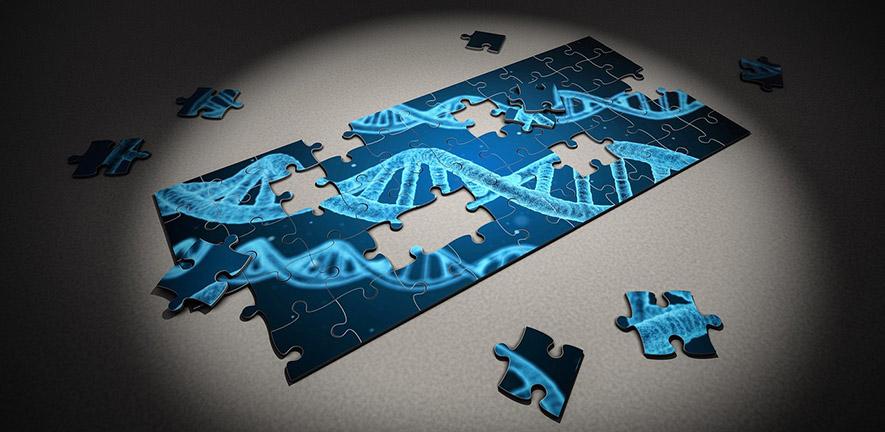
DNA jigsaw with pieces missing
DNA puzzle
Credit: qimono

The work, published in Nature, provides insights into cancer progression and neurodegenerative diseases as well as a potential therapeutic avenue in the form of a protein inhibitor.

The genome contains all the genes and genetic material within an organism’s cells. When the genome is stable, cells can accurately replicate and divide, passing on correct genetic information to the next generation of cells. Despite its significance, little is understood about the genetic factors governing genome stability, protection, repair, and the prevention of DNA damage.

In this new study, researchers from the UK Dementia Research Institute, at the University of Cambridge, and the Wellcome Sanger Institute set out to better understand the biology of cellular health and identify genes key to maintaining genome stability.

Using a set of genetically modified mouse lines, the team identified 145 genes that play key roles in either increasing or decreasing the formation of abnormal micronuclei structures. These structures indicate genomic instability and DNA damage, and are common hallmarks of ageing and diseases.

The most dramatic increases in genomic instability were seen when the researchers knocked out the gene DSCC1, increasing abnormal micronuclei formation five-fold. Mice lacking this gene mirrored characteristics akin to human patients with a number of rare genetic disorders, further emphasising the relevance of this research to human health.

Using CRISPR screening, researchers showed this effect triggered by DSCC1 loss could be partially reversed through inhibiting protein SIRT1. This offers a highly promising avenue for the development of new therapies.

The findings help shed light on genetic factors influencing the health of human genomes over a lifespan and disease development.

Professor Gabriel Balmus, senior author of the study at the UK Dementia Research Institute at the University of Cambridge, formerly at the Wellcome Sanger Institute, said: “Continued exploration on genomic instability is vital to develop tailored treatments that tackle the root genetic causes, with the goal of improving outcomes and the overall quality of life for individuals across various conditions.”

Dr David Adams, first author of the study at the Wellcome Sanger Institute, said: “Genomic stability is central to the health of cells, influencing a spectrum of diseases from cancer to neurodegeneration, yet this has been a relatively underexplored area of research. This work, of 15 years in the making, exemplifies what can be learned from large-scale, unbiased genetic screening. The 145 identified genes, especially those tied to human disease, offer promising targets for developing new therapies for genome instability-driven diseases like cancer and neurodevelopmental disorders.”

This research was supported by Wellcome and the UK Dementia Research Institute.

Reference
Adams, DJ et al. Genetic determinants of micronucleus formation in vivo. Nature; 14 Feb 2024; DOI: 10.1038/s41586-023-07009-0

Adapted from a press release from the Wellcome Sanger Institute.

source: cam.ac.uk


The text in this work is licensed under a Creative Commons Attribution-NonCommercial-ShareAlike 4.0 International License. Images, including our videos, are Copyright ©University of Cambridge and licensors/contributors as identified. All rights reserved. We make our image and video content available in a number of ways – on our main website under its Terms and conditions, and on a range of channels including social media that permit your use and sharing of our content under their respective Terms.

Groundbreaking work to beat cancer in spotlight

By Stephen Bevan
Published: 15th February 2024

New types of cancer treatment – which use the body’s immune system to fight the disease and are “kinder” to patients than chemotherapy ­– will feature at this year’s Cambridge Festival.

Cambridge researchers will discuss their pioneering work in cancer immunotherapy as part of a package of events focusing on cancer and the University’s work to help end the death and disease it causes.

Klaus Okkenhaug, Professor of Immunology in the Department of Pathology, says immunotherapy is already changing patients’ experience of cancer treatment, and has the potential to transform cancer care and outcomes in the future.

“These are drugs that remove the brakes on the immune system and unleash powerful immune responses, and that’s very effective against cancer,” he said.  “It’s a therapy which is advancing rapidly now, with a large number of immunotherapies approved over recent years. What’s exciting is that many patients have gone into very, very long-term remission, and in fact some of those patients are considered effectively cured. It’s less toxic than chemotherapy, so it’s also kinder on patients.”

Klaus Okkenhaug, Professor of Immunology in the Department of Pathology.

In Cancer immunotherapy: Innovation from laboratory bench to bedside (28 March), Professor Okkenhaug, Dr Pippa Corrie and Professor Rahul Roychoudhuri will explain how the current treatments work – among them cancer-killing viruses, tumour vaccines, and adoptive cell therapy – how they help patients, and how they might be improved.

“Cancer immunotherapy has already achieved a lot,” said Prof Okkenhaug. “We’ve had tremendous success with tumour vaccines, particularly those against Human papillomavirus (HPV) which can cause cervical cancer – and which now we could potentially eradicate. And there is also a lot of excitement about adoptive cell therapy, a personalised treatment where cells taken from a patient’s blood are genetically modified and reintroduced to kill the disease. There have been some remarkable results, particularly in blood cancers.

“There are amazing opportunities, and because of Cambridge’s unique ecosystem, where so many scientists are working together, and working in partnerships with industry, you actually see the time it takes for an idea to be translated into patient trials get smaller.”

Get hands-on with cancer research in Cambridge (16 March), also part of the Festival, is a day of interactive science featuring the groundbreaking programmes and institutes of the Cancer Research UK Cambridge Centre.

Alongside exhibits, experiments, informative demonstrations, and plenty of fun activities, scientists and clinicians will help tell the full story of the cancer research happening across Cambridge.

Neuropathologist Dr Mayen Briggs is part of the team running the Minderoo Precision Brain Tumour Programme, which is working to revolutionise treatment and improve survival rates for brain cancer patients with more targeted and effective care.

Patients with the most aggressive and fatal form of brain tumour, glioblastoma, are being offered a detailed diagnosis and tailored treatment plan, based on genomic sequencing.

Neuropathologist Dr Mayen Briggs.

“The idea is to use more targeted and precision brain chemotherapy by understanding the genetics behind a lot of these tumours,” said Dr Briggs, “and to sequence all of these tumours, understand what is driving them, and to identify instances where other drugs can be used.

“It has a big impact. We’re not just using information on which genes might be mutated, but also how these mutations might be affecting how these genes work. This additional information has the potential to guide treatment. If a patient isn’t responding to a particular therapy, using this information, we can try and work out why.

“It’s information we didn’t have before and it opens up truly personalised treatment options for patients, therapies that wouldn’t normally have been available to them because they’re not part of conventional treatments. It’s an especially significant development for those patients where therapy hasn’t changed a huge amount in terms of what we’re able to offer them.”

So far, the programme – which has enrolled more than 200 patients from Addenbrooke’s Hospital, part of Cambridge University Hospitals NHS Foundation Trust – has identified potential drug targets in more than 90 per cent of patients on the trial, recommended precision therapies for 10 per cent, and informed a change in diagnosis and treatment for three per cent.

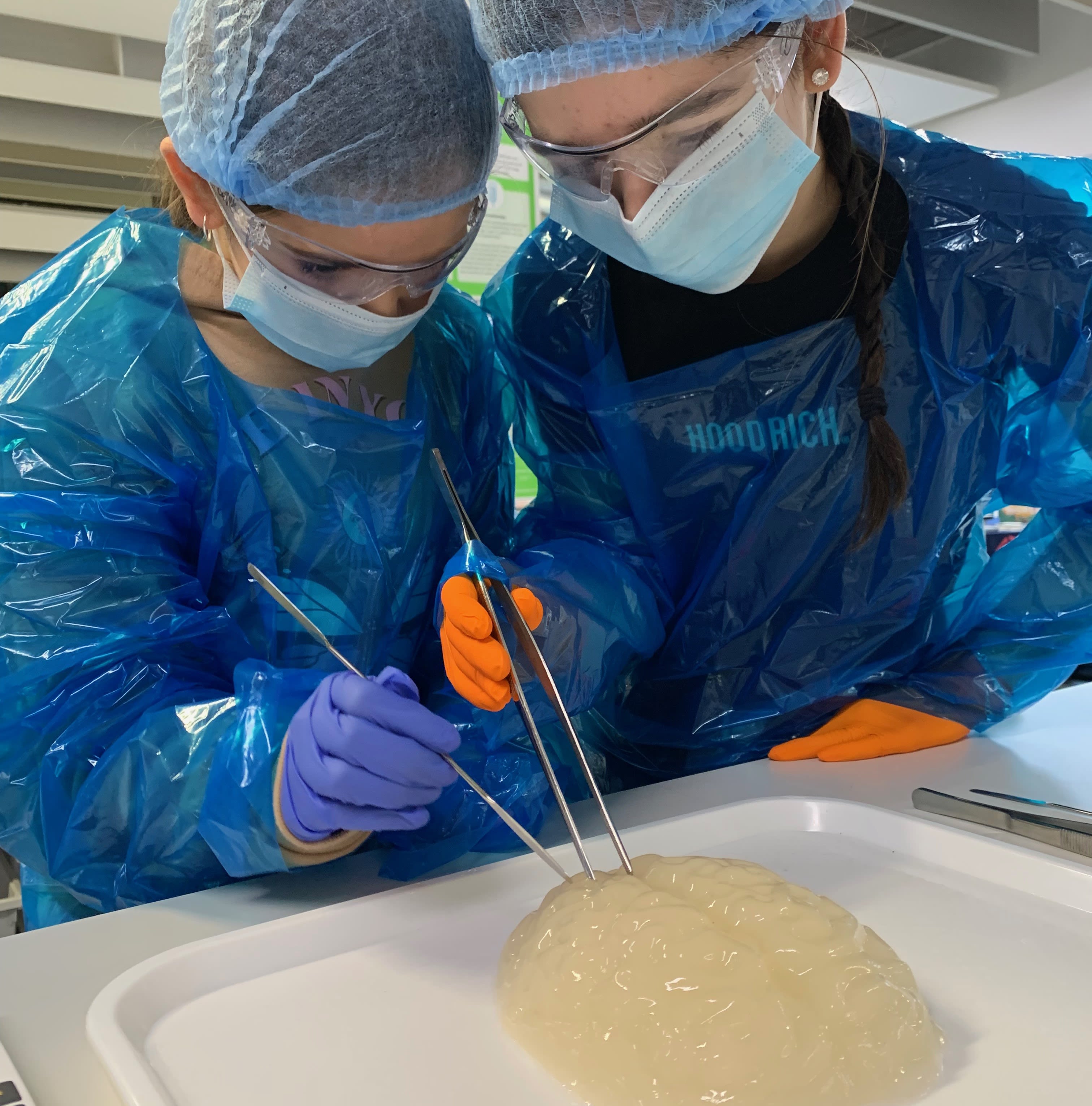
Dr Briggs – a member of the Brain Cancer Virtual Institute at the Cancer Research UK Cambridge Centre ­– will join colleagues in ‘Jelly brain surgery and neuropathology’ as part of CRUK’s Festival activities. Festival-goers will get the chance to step into the role of a brain surgeon and operate on special jelly ‘brains’, working with neuropathologists to recognise the patterns and identify the features of normal and abnormal brain tissue.

CRUK’s ‘Jelly brain surgery and neuropathology’ activity

The event – at the Cambridge Academy for Science and Technology – will also include an opportunity to find out more about the new Cambridge Cancer Research Hospital, and contribute ideas. Visitors can also get creative with an activity decorating radiotherapy masks.

Other Cambridge Festival events include:

Researching cancer in Cambridge (23 and 24 March), will hear from Cancer Research UK Cambridge Institute scientists about the work they are doing as part of their mission for 3 in 4 people to survive cancer by 2034. Interactive stalls will focus on two of the fundamental questions that all cancer researchers must ask: How do we identify cancer in the body? And, how do we get rid of it safely and effectively? There will be an opportunity to look inside the body using light, sound, magnets and more, and the chance to hear an MRI orchestra.  

A talk – Urgent call for cancer awareness in francophone Africa (22 March) – by Cambridge post-doctoral Research Associate Dr Yvonne Joko Walburga will take the audience through the epidemiology of cancer in French-speaking Africa. She will speak about the most common cancers, the risk factors, the prevention measures that are in place, and the challenges of cancer treatment and research on the sub-Saharan African continent, with a focus on French-speaking Africa.

Challenging the mysteries of cancer (16 March), features a range of interactive activities: looking at real cancer cells under the microscope, creating DIY 3D cells, finding the right antibody (key) that fits the right antigen (lock), and origami to make 2D miniature lab coats.

Science spotlight: Step into our science (21 March), is an online event which includes a virtual tour of the Babraham Institute’s Biological Support Unit to see how vital work is carried out at the world-leading biosciences research institute. Much of the Institute’s work underpins biomedical treatments for conditions such as cancer, autoimmune conditions and infectious diseases, to name a few.

The Cambridge Festival, which runs 13-28 March, is one of the largest of its kind in the country, featuring more than 360 mostly free events, and showcases cutting edge research across the University of Cambridge and beyond.

How you can support Cambridge’s cancer research.

The text in this work is licensed under a Creative Commons Attribution 4.0 International License.

source: cam.ac.uk

£11m semiconductor research centre could be key player in UK’s net zero mission

The University of Cambridge is a partner in the new £11m Innovation and Knowledge Centre (IKC) REWIRE, set to deliver pioneering semiconductor technologies and new electronic devices.

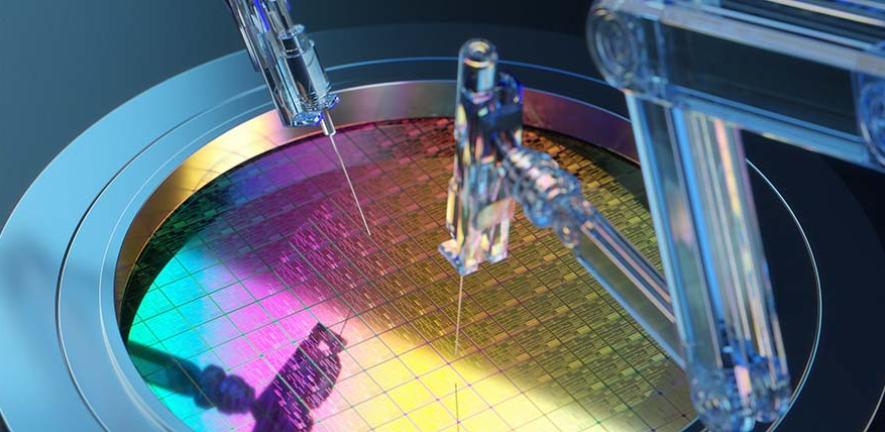
Robot arms and semiconductor wafer
Credit: Yuichiro Chino via Getty Images

Semiconductors, also known as microchips, are a key component in nearly every electrical device from mobile phones and medical equipment to electric vehicles.

They are increasingly being recognised as an area of global strategic significance due to the integral role they play in net zero, AI and quantum technology.

Co-created and delivered with industry, the REWIRE IKC is led by the University of Bristol, in partnership with Cambridge and Warwick Universities.

The IKC will accelerate the UK’s ambition for net zero by transforming the next generation of high-voltage electronic devices using wide/ultra-wide bandgap (WBG/UWBG) compound semiconductors.

The project is being led by Professor Martin Kuball and his team at the University of Bristol. Cambridge members of the IKC team include Professors Rachel OliverFlorin Udrea and Teng Long.

The centre will advance the next generation of semiconductor power device technologies and enhance the security of the UK’s semiconductor supply chain.

Compound semiconductor WBG/UWBG devices have been recognised in the UK National Semiconductor Strategy as key elements to support the net zero economy through the development of high voltage and low energy-loss power electronic technology.

They are essential building blocks for developing all-electric trains, ships and heavy goods electric vehicles, better charging infrastructure, renewable energy and High Voltage Direct Current grid connections, as well as intelligent power distribution and energy supplies to telecommunication networks and data centres.

“Power devices are at the centre of all power electronic systems and pave the way for more efficient and compact power electronic systems, reducing energy loss,” said Kuball. “The REWIRE IKC will focus on power conversion of wind energy, electric vehicles, smart grids, high-temperature applications, device and packaging, and improving the efficiency of semiconductor device manufacture.”

Our home electrical supply is at 240 Volts, but to handle the power from offshore wind turbines, devices will have to operate at thousands of Volts. These very high voltages can easily damage the materials normally used in power electronics.

“Newly emerging ultra-wide bandgap materials have properties which enable them to handle very large voltages more easily,” said Oliver, who Director of the Cambridge Centre for Gallium Nitride. “The devices based on these materials will waste less energy and be smaller, lighter and cheaper. The same materials can also withstand high temperatures and doses of radiation, which means they can be used to enable other new electricity generation technologies, such as fusion energy.”

“The REWIRE IKC will play a prominent role within the UK’s semiconductor strategy, in cementing the UK’s place as a leader in compound semiconductor research and development, developing IP to be exploited here in the UK, rebuilding the UK semiconductor supply chain, and training the next generation of semiconductor materials scientists and engineers,” said Professor Peter Gammon from the University of Warwick.

Industry partners in the REWIRE IKC include Ampaire, BMW, Bosch, Cambridge GaN Devices (CGD), Element-Six Technologies, General Electric, Hitachi Energy, IQE, Oxford Instruments, Siemens, ST Microelectronics and Toshiba.

REWIRE is one of two new IKCs announced being funded by the Engineering and Physical Sciences Research Council (EPSRC) and Innovate UK, both part of UK Research and Innovation. The second IKC at the University of Southampton will improve development and commercialisation of silicon photonics technologies in the UK.

“This investment marks a crucial step in advancing our ambitions for the semiconductor industry, with these centres helping bring new technologies to market in areas like net zero and AI, rooting them right here in the UK,” said Minister for Tech and the Digital Economy Saqib Bhatti. “Just nine months into delivering on the National Semiconductor Strategy, we’re already making rapid progress towards our goals. This isn’t just about fostering growth and creating high-skilled jobs, it’s about positioning the UK as a hub of global innovation, setting the stage for breakthroughs that have worldwide impact.”

Adapted from a University of Bristol media release.

For more information on energy-related research in Cambridge, please visit the Energy IRC, which brings together Cambridge’s research knowledge and expertise, in collaboration with global partners, to create solutions for a sustainable and resilient energy landscape for generations to come.

source: cam.ac.uk


The text in this work is licensed under a Creative Commons Attribution-NonCommercial-ShareAlike 4.0 International License. Images, including our videos, are Copyright ©University of Cambridge and licensors/contributors as identified. All rights reserved. We make our image and video content available in a number of ways – on our main website under its Terms and conditions, and on a range of channels including social media that permit your use and sharing of our content under their respective Terms.

Ice cores provide first documentation of rapid Antarctic ice loss in the past

Researchers from the University of Cambridge and the British Antarctic Survey have uncovered the first direct evidence that the West Antarctic Ice Sheet shrunk suddenly and dramatically at the end of the Last Ice Age, around 8,000 years ago.

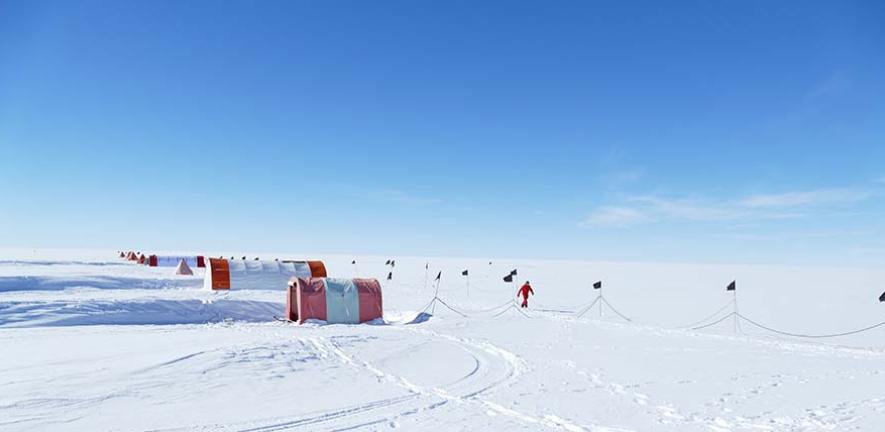
Tents at Skytrain Ice Rice in Antarctica
Tents at Skytrain Ice Rise
Credit: University of Cambridge / British Antarctic Survey

The evidence, contained within an ice core, shows that in one location the ice sheet thinned by 450 metres — that’s more than the height of the Empire State Building — in just under 200 years.

This is the first evidence anywhere in Antarctica for such a fast loss of ice. Scientists are worried that today’s rising temperatures might destabilize parts of the West Antarctic Ice Sheet in the future, potentially passing a tipping point and inducing a runaway collapse. The study, published in Nature Geoscience, sheds light on how quickly Antarctic ice could melt if temperatures continue to soar.

“We now have direct evidence that this ice sheet suffered rapid ice loss in the past,” said Professor Eric Wolff, senior author of the new study from Cambridge’s Department of Earth Sciences. “This scenario isn’t something that exists only in our model predictions and it could happen again if parts of this ice sheet become unstable.”

From west to east, the Antarctic ice sheets contain enough freshwater to raise global sea levels by around 57 metres. The West Antarctic Ice Sheet is considered particularly vulnerable because much of it sits on bedrock below sea level.

Model predictions suggest that a large part of the West Antarctic Ice Sheet could disappear in the next few centuries, causing sea levels to rise. Exactly when and how quickly the ice could be lost is, however, uncertain.

One way to train ice sheet models to make better predictions is to feed them with data on ice loss from periods of warming in Earth’s history. At the peak of the Last Ice Age 20,000 years ago, Antarctic ice covered a larger area than today. As our planet thawed and temperatures slowly climbed, the West Antarctic Ice Sheet contracted to more or less its current extent.

“We wanted to know what happened to the West Antarctic Ice Sheet at the end of the Last Ice Age, when temperatures on Earth were rising, albeit at a slower rate than current anthropogenic warming,” said Dr Isobel Rowell, study co-author from the British Antarctic Survey. “Using ice cores we can go back to that time and estimate the ice sheet’s thickness and extent.”

Ice cores are made up of layers of ice that formed as snow fell and was then buried and compacted into ice crystals over thousands of years. Trapped within each ice layer are bubbles of ancient air and contaminants that mixed with each year’s snowfall — providing clues as to the changing climate and ice extent.

The researchers drilled a 651-metre-long ice core from Skytrain Ice Rise in 2019. This mound of ice sits at the edge of the ice sheet, near the point where grounded ice flows into the floating Ronne Ice Shelf.

After transporting the ice cores to Cambridge at -20C, the researchers analysed them to reconstruct the ice thickness. First, they measured stable water isotopes, which indicate the temperature at the time the snow fell. Temperature decreases at higher altitudes (think of cold mountain air), so they could equate warmer temperatures with lower-lying, thinner ice.

They also measured the pressure of air bubbles trapped in the ice. Like temperature, air pressure also varies systematically with elevation. Lower-lying, thinner ice contains higher-pressure air bubbles.

These measurements told them that ice thinned rapidly 8,000 years ago. “Once the ice thinned, it shrunk really fast,” said Wolff, “this was clearly a tipping point — a runaway process.”

They think this thinning was probably triggered by warm water getting underneath the edge of the West Antarctic Ice Sheet, which normally sits on bedrock. This likely untethered a section of the ice from bedrock, allowing it to float suddenly and forming what is now the Ronne Ice Shelf. This allowed neighbouring Skytrain Ice Rise, no longer restrained by grounded ice, to thin rapidly. 

The researchers also found that the sodium content of the ice (originating from salt in sea spray) increased about 300 years after the ice thinned. This told them that, after the ice thinned, the ice shelf shrunk back so that the sea was hundreds of kilometres nearer to their site.

“We already knew from models that the ice thinned around this time, but the date of this was uncertain,” said Rowell. Ice sheet models placed the retreat anywhere between 12,000 and 5,000 years ago and couldn’t say how quickly it happened. “We now have a very precisely dated observation of that retreat that can be built into improved models,” said Rowell.

Although the West Antarctic Ice Sheet retreated quickly 8,000 years ago, it stabilised when it reached roughly its current extent. “It’s now crucial to find out whether extra warmth could destabilise the ice and cause it to start retreating again,” said Wolff.

Reference

Grieman et al. (2024) Abrupt Holocene ice loss due to thinning and ungrounding in the Weddell Sea Embayment. Nature Geoscience. DOI: 10.1038/s41561-024-01375-8

source: cam.ac.uk


The text in this work is licensed under a Creative Commons Attribution-NonCommercial-ShareAlike 4.0 International License. Images, including our videos, are Copyright ©University of Cambridge and licensors/contributors as identified. All rights reserved. We make our image and video content available in a number of ways – on our main website under its Terms and conditions, and on a range of channels including social media that permit your use and sharing of our content under their respective Terms.

Celebrating Women in STEM

“Follow your curiosity”

By Ellie Austin

To mark the International Day of Women and Girls in Science , two of our academics speak about their research careers and how they ended up using their STEM interests to tackle climate change

Build food security amid changing environments with crop science

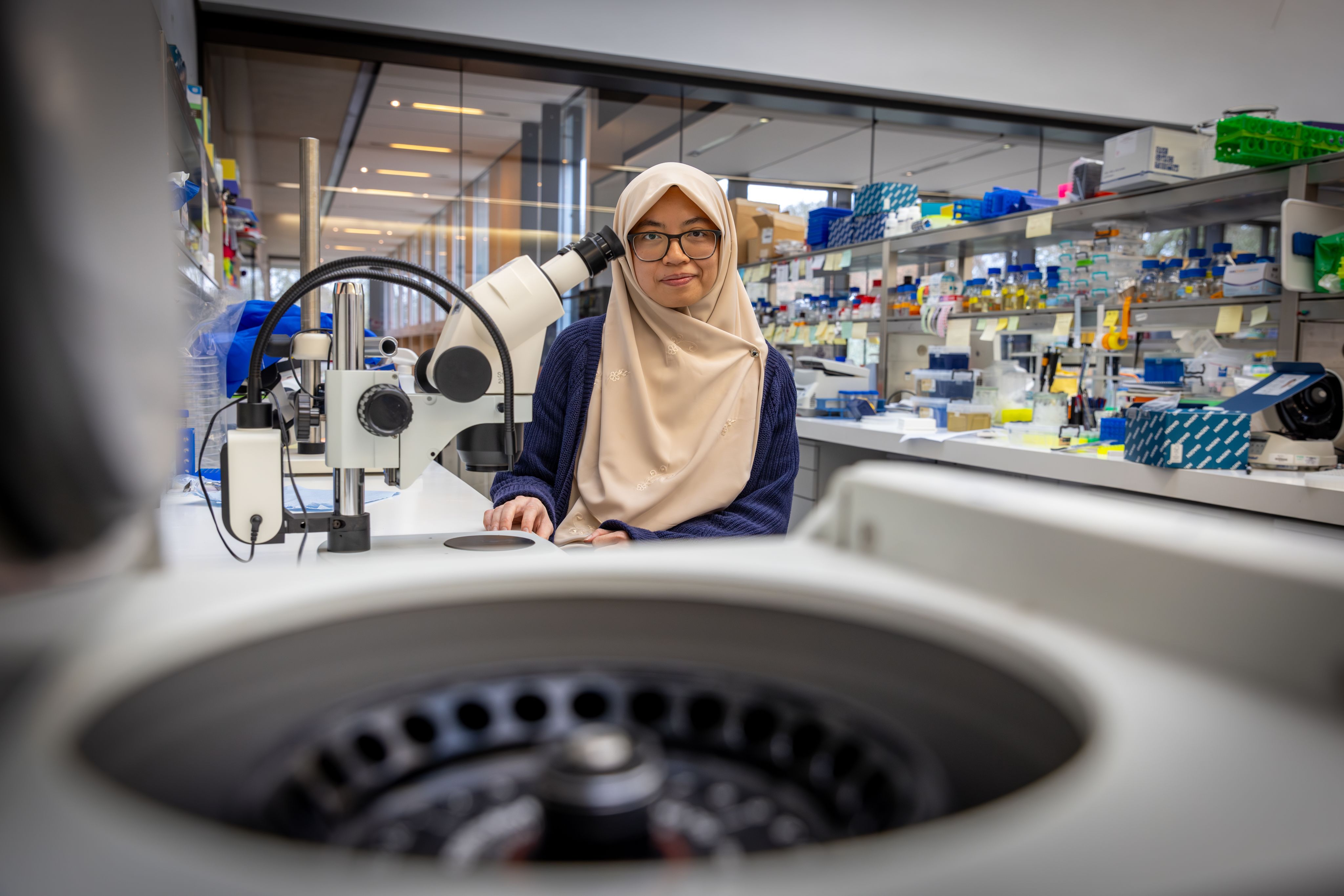
Dr Nadia Radzman is a plant biologist. She’s an expert in legume biology, i.e., “anything that’s got to do with beans!…I’m a little bit obsessive about it.” 

“I initially wanted to do something with virology…I didn’t even consider plant biology as something I wanted to pursue,” said Dr Radzman.

However, after finding herself allocated to a plant biology lab during her second summer of undergrad, she wound up falling in love with legumes.

Now she uses her background in chemistry and molecular biology, and her love for beans, to secure a brighter, well-nourished future for people across the planet. 

“Within the context of climate change, [legumes] will become very important in the future,” said Dr Radzman. 

Her work investigates how the important plant nutrient, nitrogen, can be acquired naturally by the plant from the air (“fixed”), without the use of polluting synthetic fertilisers.

She’s also interested in how plants can be used to breathe in the climate-changing greenhouse gas, carbon dioxide, to trap (“sequester”) carbon underground

“Legumes can mutually associate with very specific bacteria in the soil through symbiosis and form these structures on the roots called nodules…these nodules fix nitrogen from the air into a form that can be utilised by the plants,” said Dr Radzman.

“Because nitrogen and carbon are very strongly correlated, if you have a higher fixation of nitrogen it also correlates with a higher sequestration of carbon too.”

“When we want to fix nitrogen from the air we have to use the Haber-Bosch process, which is high temperature and a lot of fossil fuels…but plants can do it in just ambient temperature.” 

Dr Radzman’s latest project is applying her findings about these underground roots structures into the aboveground shoots. She’s interested in how a changing environment will influence the shoot, which is the part of the plant that produces the beans.

“I figured out that there are aspects of [nodules] that can be translated into the shoot…and the shoot is important in terms of food security, and when we talk about climate change.” 

Dr Radzman is also one of the first batch of King’s College Research Associates in their entrepreneurship lab. Her start-up idea is to improve the technology available to transfer genetically modified plant tissue into field-ready growing plants, which is one of the most challenging aspects of engineering crops. 

She was inspired to scale-up her science to industry after being approached by a few African NGOs asking how they can adapt their agriculture to the increasingly extreme dry seasons due to climate change.

“Native African legume crops are very drought tolerant, but these crops are usually forgotten or neglected…these crops need to have a higher yield to support the population.”

“Because of climate change, we need to improve our crops faster and cheaper, especially for the Global South. To do that, we will need new technologies,” said Dr Radzman. 

“Having a role model is important. It can be a motivation that someone has made it, so I can do it too.”

Dr Nadia Radzman

Creating safe and sustainable batteries for the energy transition

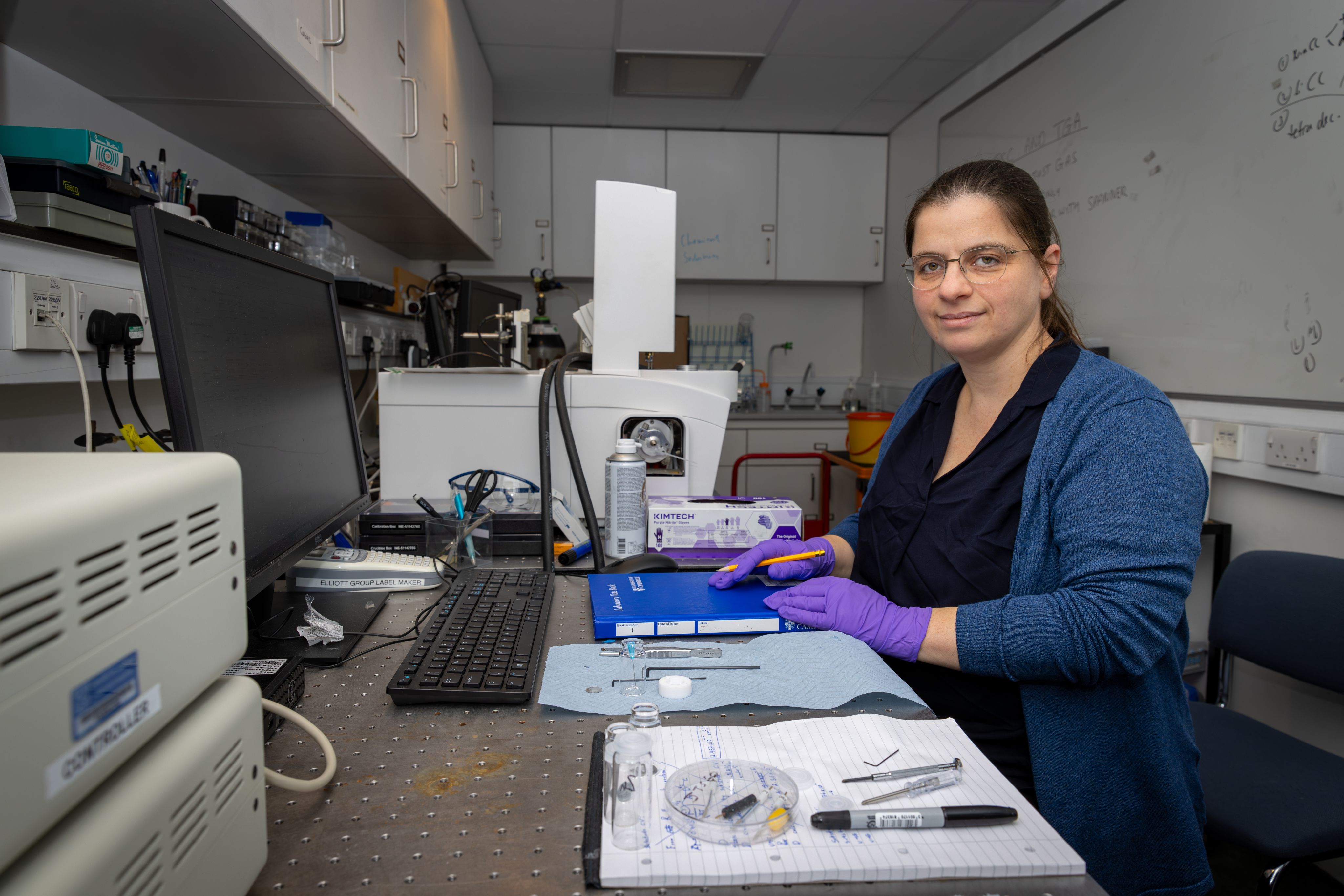
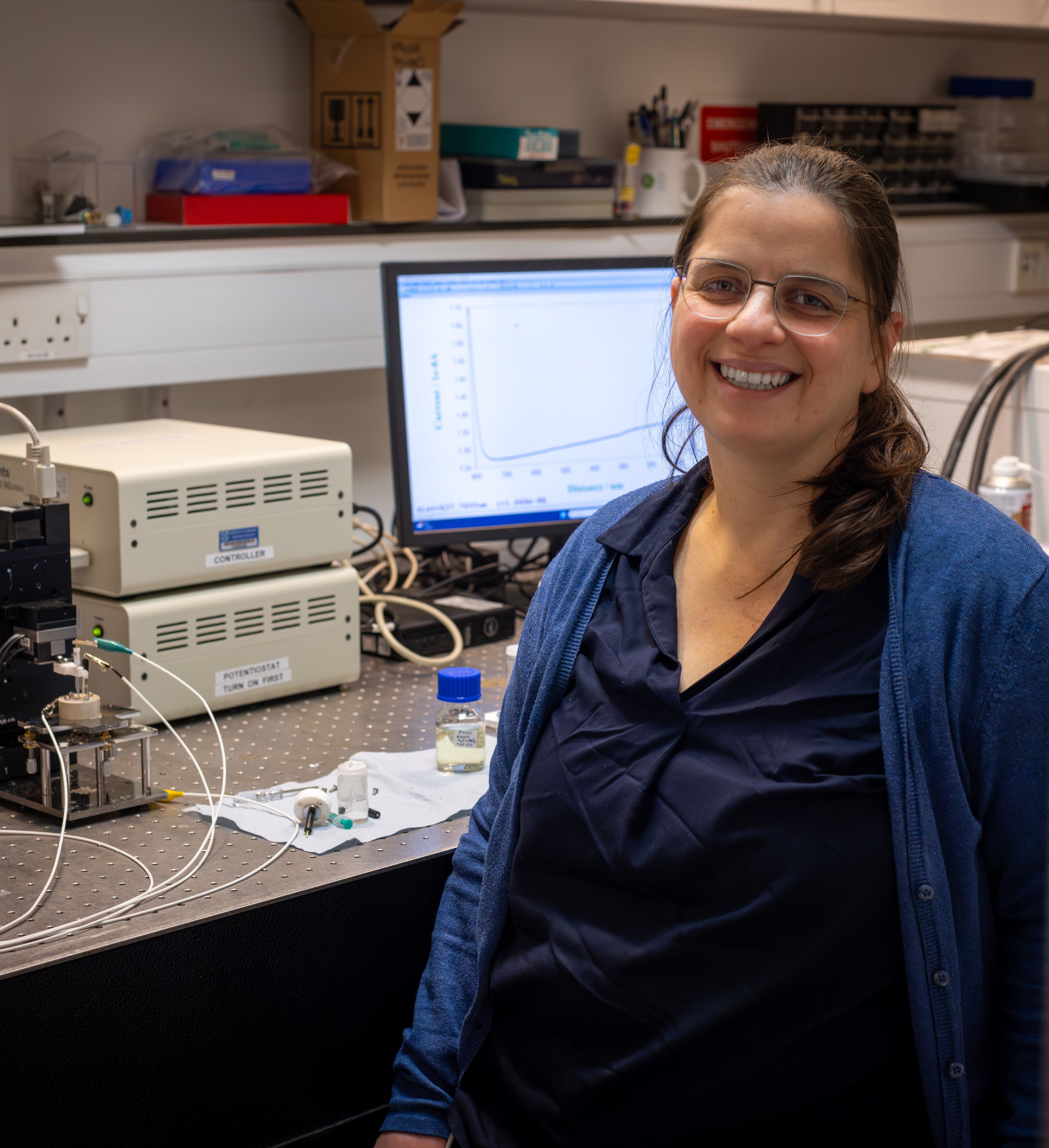
Dr Svetlana Menkin is interested in battery interfaces. Her research is all about next-generation batteries, which involve using materials such as Sodium and Calcium ions, or Zinc, to store energy.

These batteries are vital for green transition to store the production of renewable energy, so that we can use our captured solar energy from the day well into the night. 

But what is a battery interface? What is a battery? Why does it matter? Dr Menkin explains:

“In batteries we have cathodes and anodes (two electrodes), which are connected by electrolytes, which are absorbed in a separator. This electrolyte allows ions to pass from one side to another, but not the electrons.” 

This transport of electrons and ions creates what’s known as a “charge transport.” The purpose of batteries is to store a charge, i.e. store electrical energy, which can then be “discharged” to power our devices. 

“When you charge a battery, you ‘put in’ electrons from the circuit, which forces the ions from one electrode to the other. When you discharge, you let these ions (this ‘charge’ that you’ve passed) go back [to the other electrode] which then gives up the electrons you stored. You then use these electrons for the device…and this is how you store energy in a battery.” Eureka! 

“Batteries are all about controlling how this charge is transported,” said Menkin. “Between the electrodes, in the electrolyte, the charge should pass…but typically the electrodes develop a layer at the interface [between the electrodes and the electrolytes],” said Menkin, which could happen for example as a product of a chemical reaction of the electrolyte with the anode. 

This is very critical for the battery because this will determine performance: how fast it can charge, safety of the battery, the degradation/ how many cycles it can do.” 

These next-generation batteries are more sustainable than alternatives such as Lithium-ion batteries. “Calcium is one of the most abundant elements…it is three magnitudes more abundant than lithium. Lithium is only found in particular places, and so it’s more energy intensive to move it about from place to place. The methods to extract Lithium from sources are also not very environmentally friendly,” said Dr Menkin.

The challenge with these next-generation batteries, however, is that this interface becomes very unstable. When unchecked, this instability can lead to short-circuits and battery fires.

Dr Menkin aims to understand these interfaces so she can improve battery safety, and hence the availability of more sustainable batteries to industry.

“Eight years ago calcium-rechargeable batteries were considered impossible…so it’s very new, but we will try.” 

Mentoring Women and Girls in Science

When asked about what first sparked their interest in STEM, Dr Radzman and Dr Menkin both noted female teachers in their early education.

“Towards the end of high school, I had a chemistry teacher. I remember one class where she explained to us the structure of diamonds, and I was fascinated by how diamonds and coal are made of the same carbon atoms but it is the structure that makes them so different…I was inspired by how excited she was. This was when it clicked: I was going to study chemistry,” said Dr Menkin.  

“I had a very good high school teacher…in my high school, there were not a lot of girls who wanted to pursue science. But she was really, really encouraging, and motivated me to pursue [my interests in STEM],” said Dr Radzman.

“Having a role model is important,” said Dr Radzman. It can be a motivation that someone has made it, so I can do it too.”

“Each step that I made, to bring me to where I am now, I had somebody who was there to support me and was there to tell me ‘yes this is possible for you,’” said Dr Menkin. 

Radzman’s final piece of advice? “Follow your curiosity…take up your space, and stand your ground.”

“We see that female candidates, if they see that they are almost hitting the criteria, they don’t apply. Male candidates, [who are] not eligible, [they] apply. I think this is the critical point: you need somebody to tell you that it is possible for you,” said Dr Menkin.  

“If you look at something and you can imagine yourself being happy there, apply. Go for it! …if you wonder whether it’s possible for you, it is,” said Dr Menkin.


The International Day of Women and Girls in Science is a campaign to promote full and equal access and participation of women in Science, Technology, Engineering and Mathematics (STEM).

Applications to join Dr Menkin’s lab as a PhD student are open now until the end of the month. Find out more information about how to apply here.

Published 11 February 2024

Images: Nick Saffell

source: cam.ac.uk

The text in this work is licensed under a Creative Commons Attribution 4.0 International License

Galaxy mergers solve early Universe mystery

A team of astronomers, led by the University of Cambridge, has used the NASA/ESA/CSA James Webb Space Telescope to reveal, for the first time, what lies in the local environment of galaxies in the very early Universe.

This has solved one of the most puzzling mysteries in astronomy – why astronomers detect light from hydrogen atoms that should have been entirely blocked by the pristine gas that formed after the Big Bang.

These new observations have found small, faint objects surrounding the galaxies that show the ‘inexplicable’ hydrogen emission. In conjunction with state-of-the-art simulations of galaxies in the early Universe, the observations have shown that the chaotic merging of these neighbouring galaxies is the source of this hydrogen emission. The results are reported in the journal Nature Astronomy.

Light travels at a finite speed (300 000 km a second), which means that the further away a galaxy is, the longer it has taken the light from it to reach our Solar System. As a result, not only do observations of the most distant galaxies probe the far reaches of the Universe, but they also allow us to study the Universe as it was in the past.

To study the early Universe, astronomers require exceptionally powerful telescopes that are capable of observing very distant – and therefore very faint – galaxies. One of Webb’s key capabilities is its ability to observe these galaxies, and probe the early history of the Universe.

The earliest galaxies were sites of vigorous and active star formation, and were rich sources of a type of light emitted by hydrogen atoms called Lyman-α emission. However, during the epoch of reionisation, an immense amount of neutral hydrogen gas surrounded these stellar nurseries. Furthermore, the space between galaxies was filled by more of this neutral gas than is the case today. The gas can effectively absorb and scatter this kind of hydrogen emission, so astronomers have long predicted that the abundant Lyman-α emission released in the early Universe should not be observable today.

This theory has not always stood up to scrutiny, however, as examples of early hydrogen emission have previously been observed by astronomers. This has presented a mystery: how is it that this hydrogen emission – which should have long since been absorbed or scattered – is being observed?

“One of the most puzzling issues that previous observations presented was the detection of light from hydrogen atoms in the very early Universe, which should have been entirely blocked by the pristine neutral gas that was formed after the Big Bang,” said lead author Callum Witten from Cambridge’s Institute of Astronomy. “Many hypotheses have previously been suggested to explain the great escape of this ‘inexplicable’ emission.”

The team’s breakthrough came thanks to Webb’s combination of angular resolution and sensitivity. The observations with Webb’s NIRCam instrument were able to resolve smaller, fainter galaxies that surround the bright galaxies from which the ‘inexplicable’ hydrogen emission had been detected. In other words, the surroundings of these galaxies appear to be a much busier place than we previously thought, filled with small, faint galaxies.

These smaller galaxies were interacting and merging with one another, and Webb has revealed that galaxy mergers play an important role in explaining the mystery emission from the earliest galaxies.

“Where Hubble was seeing only a large galaxy, Webb sees a cluster of smaller interacting galaxies, and this revelation has had a huge impact on our understanding of the unexpected hydrogen emission from some of the first galaxies,” said co-author Sergio Martin-Alvarez from Stanford University.

The team then used computer simulations to explore the physical processes that might explain their results. They found that the rapid build-up of stellar mass through galaxy mergers both drove strong hydrogen emission and facilitated the escape of that radiation via channels cleared of the abundant neutral gas. So, the high merger rate of the previously unobserved smaller galaxies presented a compelling solution to the long-standing puzzle of the ‘inexplicable’ early hydrogen emission.

The team is planning follow-up observations with galaxies at various stages of merging, to continue to develop their understanding of how the hydrogen emission is ejected from these changing systems. Ultimately, this will enable them to improve our understanding of galaxy evolution.

Reference:
Callum Witten et al. ‘Deciphering Lyman-α emission deep into the epoch of reionization.’ Nature Astronomy (2024). DOI: 10.1038/s41550-023-02179-3

Adapted from an ESA press release.

source: cam.ac.uk


The text in this work is licensed under a Creative Commons Attribution-NonCommercial-ShareAlike 4.0 International License. Images, including our videos, are Copyright ©University of Cambridge and licensors/contributors as identified. All rights reserved. We make our image and video content available in a number of ways – on our main website under its Terms and conditions, and on a range of channels including social media that permit your use and sharing of our content under their respective Terms.

‘Mini-placentas’ help scientists understand the causes of pre-eclampsia and pregnancy disorders

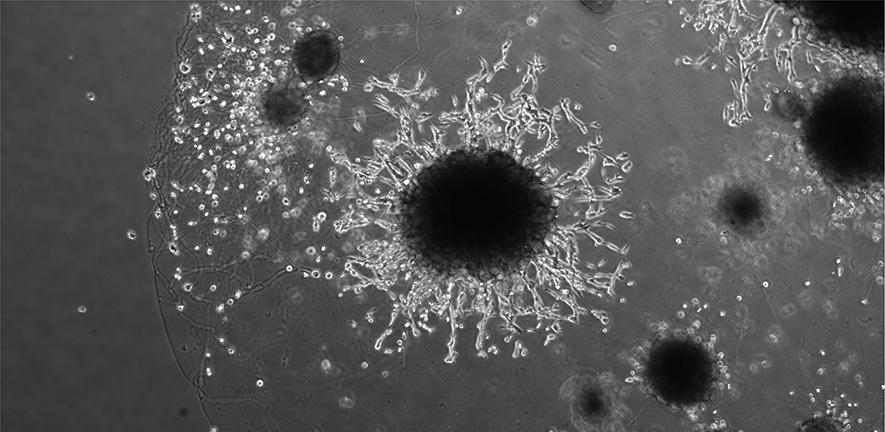
Placental organoid (circle in the centre). Trophoblast cells are invading out of the organoid, mimicking placental cells invading the uterus in the early weeks of pregnancy.
Credit: Friedrich Miescher Institute/University of Cambridge

Scientists have grown ‘mini-placentas’ in the lab and used them to shed light on how the placenta develops and interacts with the inner lining of the womb – findings that could help scientists better understand and, in future, potentially treat pre-eclampsia.

Most of the major disorders of pregnancy – pre-eclampsia, still birth, growth restriction, for example – depend on failings in the way the placenta develops in the first few weeks. This is a process that is incredibly difficult to study.Ashley Moffett

The study, published today in Cell Stem Cell, shows that it is possible to experiment on a developing human placenta, rather than merely observe specimens, in order to study major disorders of pregnancy.

Successful pregnancy depends on the development of the placenta in the first few weeks of gestation. During this period, the placenta implants itself into the endometrium – the mucosal lining of the mother’s uterus.

Interactions between the cells of the endometrium and the cells of the placenta are critical to whether a pregnancy is successful. In particular, these interactions are essential to increase the maternal blood supply to the placenta, necessary for fetal growth and development.

When these interactions do not work properly, they can lead to complications, such as pre-eclampsia, a condition that causes high blood pressure during pregnancy. Pre-eclampsia occurs in around six in 100 first pregnancies and can put at risk the health of both the mother and the baby.

Professor Ashley Moffett from the Department of Pathology at the University of Cambridge said: “Most of the major disorders of pregnancy – pre-eclampsia, still birth, growth restriction, for example – depend on failings in the way the placenta develops in the first few weeks. This is a process that is incredibly difficult to study – the period after implantation, when the placenta embeds itself into the endometrium, is often described as a ‘black box of human development’.

“Over the past few years, many scientists – including several at Cambridge – have developed embryo-like models to help us understand early pre-implantation development. But further development is impeded because we understand so little about the interactions between the placenta and the uterus.”

Professor Moffett and colleagues at the Friedrich Miescher Institute, Switzerland, and the Wellcome Sanger Institute, Cambridge, have used ‘mini-placentas’ – a cellular model of the early stages of the placenta – to provide a window into early pregnancy and help improve our understanding of reproductive disorders. Known as ‘trophoblast organoids’, these are grown from placenta cells and model the early placenta so closely that they have previously been shown to record a positive response on an over-the-counter pregnancy test.

In previous work, Professor Moffett and colleagues identified genes that increase the risk of or protect against conditions such as pre-eclampsia. These highlighted the important role of immune cells uniquely found in the uterus, known as ‘uterine natural killer cells’, which cluster in the lining of the womb at the site where the placenta implants. These cells mediate the interactions between the endometrium and the cells of the placenta.

In their new study, her team applied proteins secreted by the uterine natural killer cells to the trophoblast organoids so that they could mimic the conditions where the placenta implants itself. They identified particular proteins that were crucial to helping the organoids develop. These proteins will contribute to successful implantation, allowing the placenta to invade the uterus and transform the mother’s arteries.

“This is the only time that we know of where a normal cell invades and transforms an artery, and these cells are coming from another individual, the baby,” said Professor Moffett, who is also a Fellow at King’s College, Cambridge.

“If the cells aren’t able to invade properly, the arteries in the womb don’t open up and so the placenta – and therefore the baby – are starved of nutrients and oxygen. That’s why you get problems later on in pregnancy, when there just isn’t enough blood to feed the baby and it either dies or is very tiny.”

The researchers also found several genes that regulate blood flow and help with this implantation, which Professor Moffett says provide pointers for future research to better understand pre-eclampsia and similar disorders.

Dr Margherita Turco, from the Friedrich Miescher Institute in Switzerland and co-lead of this work, added: “Despite affecting millions of women a year worldwide, we still understand very little about pre-eclampsia. Women usually present with pre-eclampsia at the end of pregnancy, but really to understand it – to predict it and prevent it – we have to look at what’s happening in the first few weeks.

“Using ‘mini-placentas’, we can do just that, providing clues as to how and why pre-eclampsia occurs. This has helped us unpick some of the key processes that we should now focus on far more. It shows the power of basic science in helping us understand our fundamental biology, something that we hope will one day make a major difference to the health of mothers and their babies.”

The research was supported by Wellcome, the Royal Society, European Research Council and Medical Research Council.

Reference
Li, Q et al. Human uterine natural killer cells regulate differentiation of extravillous trophoblast early in pregnancy. Cell Stem Cell; 17 Jan 2024; DOI: doi.org/10.1016/j.stem.2023.12.013

source: cam.ac.uk

Astronomers detect oldest black hole ever observed

The GN-z11 galaxy, taken by the Hubble Space Telescope
Credit: NASA, ESA, and P. Oesch (Yale University)

Researchers have discovered the oldest black hole ever observed, dating from the dawn of the universe, and found that it is ‘eating’ its host galaxy to death.

It’s a new era: the giant leap in sensitivity, especially in the infrared, is like upgrading from Galileo’s telescope to a modern telescope overnightRoberto Maiolino

The international team, led by the University of Cambridge, used the NASA/ESA/CSA James Webb Space Telescope (JWST) to detect the black hole, which dates from 400 million years after the big bang, more than 13 billion years ago. The results, which lead author Professor Roberto Maiolino says are “a giant leap forward”, are reported in the journal Nature.

That this surprisingly massive black hole – a few million times the mass of our Sun – even exists so early in the universe challenges our assumptions about how black holes form and grow. Astronomers believe that the supermassive black holes found at the centre of galaxies like the Milky Way grew to their current size over billions of years. But the size of this newly-discovered black hole suggests that they might form in other ways: they might be ‘born big’ or they can eat matter at a rate that’s five times higher than had been thought possible.

According to standard models, supermassive black holes form from the remnants of dead stars, which collapse and may form a black hole about a hundred times the mass of the Sun. If it grew in an expected way, this newly-detected black hole would take about a billion years to grow to its observed size. However, the universe was not yet a billion years old when this black hole was detected.

“It’s very early in the universe to see a black hole this massive, so we’ve got to consider other ways they might form,” said Maiolino, from Cambridge’s Cavendish Laboratory and Kavli Institute for Cosmology. “Very early galaxies were extremely gas-rich, so they would have been like a buffet for black holes.”

Like all black holes, this young black hole is devouring material from its host galaxy to fuel its growth. Yet, this ancient black hole is found to gobble matter much more vigorously than its siblings at later epochs.

The young host galaxy, called GN-z11, glows from such an energetic black hole at its centre. Black holes cannot be directly observed, but instead they are detected by the tell-tale glow of a swirling accretion disc, which forms near the edges of a black hole. The gas in the accretion disc becomes extremely hot and starts to glow and radiate energy in the ultraviolet range. This strong glow is how astronomers are able to detect black holes.

GN-z11 is a compact galaxy, about one hundred times smaller than the Milky Way, but the black hole is likely harming its development. When black holes consume too much gas, it pushes the gas away like an ultra-fast wind. This ‘wind’ could stop the process of star formation, slowly killing the galaxy, but it will also kill the black hole itself, as it would also cut off the black hole’s source of ‘food’.

Maiolino says that the gigantic leap forward provided by JWST makes this the most exciting time in his career. “It’s a new era: the giant leap in sensitivity, especially in the infrared, is like upgrading from Galileo’s telescope to a modern telescope overnight,” he said. “Before Webb came online, I thought maybe the universe isn’t so interesting when you go beyond what we could see with the Hubble Space Telescope. But that hasn’t been the case at all: the universe has been quite generous in what it’s showing us, and this is just the beginning.”

Maiolino says that the sensitivity of JWST means that even older black holes may be found in the coming months and years. Maiolino and his team are hoping to use future observations from JWST to try to find smaller ‘seeds’ of black holes, which may help them untangle the different ways that black holes might form: whether they start out large or they grow fast.

The research was supported in part by the European Research Council, the Royal Society, and the Science and Technology Facilities Council (STFC), part of UK Research and Innovation (UKRI).

Reference:
Roberto Maiolino et al. ‘A small and vigorous black hole in the early Universe.’ Nature (2024). DOI: 10.1038/s41586-024-07052-5

source: cam.ac.uk


The text in this work is licensed under a Creative Commons Attribution-NonCommercial-ShareAlike 4.0 International License. Images, including our videos, are Copyright ©University of Cambridge and licensors/contributors as identified. All rights reserved. We make our image and video content available in a number of ways – on our main website under its Terms and conditions, and on a range of channels including social media that permit your use and sharing of our content under their respective Terms.

Role of inherited genetic variants in rare blood cancer uncovered

Combining three different sources of genetic information has allowed researchers to further understand why only some people with a common mutation go on to develop rare blood cancer.

Our hope is that this information can be incorporated into future disease prediction effortsJyoti Nangalia

Large-scale genetic analysis has helped researchers uncover the interplay between cancer-driving genetic mutations and inherited genetic variants in a rare type of blood cancer.

Researchers from the University of Cambridge, Wellcome Sanger Institute, and collaborators, combined various comprehensive data sets to understand the impact of both cancer-driving spontaneous mutations and inherited genetic variation on the risk of developing myeloproliferative neoplasms (MPN).

The study, published in the journal Nature Genetics, describes how inherited genetic variants can influence whether a spontaneous mutation in a particular gene increases the risk of developing this rare blood cancer.

This analysis has an impact on current clinical predictions of disease development in individuals. Further research is required to understand the biological mechanisms behind how these inherited genetic variants influence the chances of developing rare blood cancer. In the future, this knowledge could aid drug development and interventions that reduce the risk of disease.

Myeloproliferative neoplasms, MPNs, are a group of rare, chronic, blood cancers. There are around 4,000 cases of MPN in the UK each year. These occur when the bone marrow overproduces blood cells, which can result in blood clots and bleeding. MPNs can also progress into other forms of blood cancer, such as leukaemia.

In the population, there is a large amount of natural variation between individuals’ blood cells, which can affect the amount of blood cells a person has and their particular traits. This is because multiple different genes can influence blood cell features in an individual. During routine blood tests, researchers take known information about these genes and analyse the variation to give a genetic risk score, which is how likely that individual is to develop a disease over their lifetime.  

MPNs have been linked to random somatic mutations in certain genes including in a gene called JAK2. However, mutated JAK2 is commonly found in the global population, and the vast majority of these individuals do not have or go on to develop MPN.

Whilst previous studies have identified over a dozen associated inherited genetic variants that increase the risk of MPN, these studies insufficiently explain why most individuals in the population do not go on to develop MPN.

This new study, from the Wellcome Sanger Institute and collaborators, combined information on the known somatic driver mutations in MPN, inherited genetic variants, and genetic risk scores from individuals with MPN.

They found that the inherited variants that cause natural blood cell variation in the population also impact whether a JAK2 somatic mutation will go on to cause MPN.  They also found that individuals with an inherited risk of having a higher blood cell count could display MPN features in the absence of cancer-driving mutations, thus, mimicking disease.

Dr Jing Guo, from the University of Cambridge and the Wellcome Sanger Institute and first author of the study, said: “Our large-scale statistical study has helped fill the knowledge gaps in how variants in DNA, both inherited and somatic, interact to influence complex disease risk. By combining these three different types of datasets we were able to get a more complete picture of how these variants combine to cause blood disorders.”

Professor Nicole Soranzo, co-senior author from the University of Cambridge, the Wellcome Sanger Institute, and Human Technopole, Italy, said: “There has been increasing realisation that human diseases have complex causes involving a combination of common and rare inherited genetic variants with different severity.

“We have previously shown that variation in blood cell parameters and function has complex genetic variability by highlighting thousands of genetic changes that affect different gene functions. Here, we show for the first time that common variants in these genes also affect blood cancers, independent of causative somatic mutations. This confirms a new important contribution of normal variability beyond complex disease, contributing to our understanding of myeloproliferative neoplasms and blood cancer more generally.”

Dr Jyoti Nangalia, co-senior author from the Wellcome-MRC Cambridge Stem Cell Institute at the University of Cambridge, and the Wellcome Sanger Institute, said: “We have a good understanding of the genetic causes of myeloproliferative neoplasms. In fact, many of these genetic mutations are routine diagnostic tests in the clinic. However, these mutations can often be found in healthy individuals without the disease.

“Our study helps us understand how inherited DNA variation from person to person can interact with cancer-causing mutations to determine whether disease occurs in the first place, and how this can alter the type of any subsequent disease that emerges. Our hope is that this information can be incorporated into future disease prediction efforts.”  

This research was funded by Cancer Research UK and Wellcome.

Reference

J Guo, K Walter, P M Quiros, et al. ‘Inherited polygenic effects on common hematological traits influence clonal selection on JAK2V617F and the development of myeloproliferative neoplasms.’ Jan 2024,  Nature Genetics. DOI: 10.1038/s41588-023-01638-x

Adapted from a press release by the Wellcome Sanger Institute

source: cam.ac.uk


The text in this work is licensed under a Creative Commons Attribution-NonCommercial-ShareAlike 4.0 International License. Images, including our videos, are Copyright ©University of Cambridge and licensors/contributors as identified. All rights reserved. We make our image and video content available in a number of ways – on our main website under its Terms and conditions, and on a range of channels including social media that permit your use and sharing of our content under their respective Terms.

Removing largest wine glass serving reduces amount of wine sold in bars and pubs

Red and white wine in glasses Credit: hcdeharder (Pixabay)

Taking away the largest serving of wine by the glass – in most cases the 250ml option – led to an average reduction in the amount of wine sold at pubs and bars of just under 8%, new research led by a team at the University of Cambridge has discovered.

When the largest serving size of wine by the glass was unavailable, people shifted towards the smaller options, but didn’t then drink the equivalent amount of wineEleni Mantzari

While only modest, the finding could provide one way of nudging customers to drink less alcohol and have an impact at a population level, say the researchers.

Alcohol consumption is the fifth largest contributor to premature death and disease worldwide. In 2016 it was estimated to have caused approximately 3 million deaths worldwide.

There are many factors that influence how much we drink, from advertising to labelling to availability and cost. Previous research from the Behaviour and Health Research Unit at Cambridge has shown that even glass size can influence how much alcohol is consumed.

In research published today in PLOS Medicine, the Cambridge team carried out a study in 21 licensed premises (mainly pubs) in England to see whether removing their largest serving of wine by the glass for four weeks would have an impact on how much wine is consumed. Wine is the most commonly drunk alcoholic drink in the UK and Europe. Twenty of the premises completed the experiment as designed by the researchers and were included in the final analysis.

After adjusting for factors such as day of the week and total revenue, the researchers found that removing the largest wine glass serving led to an average (mean) decrease of 420ml of wine sold per day per venue – equating to a 7.6% decrease.

There was no evidence that sales of beer and cider increased, suggesting that people did not compensate for their reduced wine consumption by drinking more of these alcoholic drinks. There was also no evidence that it affected total daily revenues, implying that participating licensed premises did not lose money as a result of removing the largest serving size for glasses of wine, perhaps due to the higher profit margins of smaller serving sizes of wine. However, it is important to note that the study was not designed to provide statistically meaningful data on these points.

First author Dr Eleni Mantzari, from the University of Cambridge, said: “It looks like when the largest serving size of wine by the glass was unavailable, people shifted towards the smaller options, but didn’t then drink the equivalent amount of wine.

“People tend to consume a specific number of ‘units’ – in this case glasses – regardless of portion size. So, someone might decide at the outset they’ll limit themselves to a couple of glasses of wine, and with less alcohol in each glass they drink less overall.”

Professor Dame Theresa Marteau, the study’s senior author and an Honorary Fellow at Christ’s College Cambridge, added: “It’s worth remembering that no level of alcohol consumption is considered safe for health, with even light consumption contributing to the development of many cancers. Although the reduction in the amount of wine sold at each premise was relatively small, even a small reduction could make a meaningful contribution to population health.”

Evidence suggests that the public prefer information-based interventions, such as health warning labels, to reductions in serving or package sizes. However, in this study, managers at just four of the 21 premises reported receiving complaints from customers.

The researchers note that although the intervention would potentially be acceptable to pub or bar managers, given there was no evidence that it can result in a loss in revenue, a nationwide policy would likely be resisted by the alcohol industry given its potential to reduce sales of targeted drinks. Public support for such a policy would depend on its effectiveness and how clearly this was communicated.

The research was funded by Wellcome.

source: cam.ac.uk

Reference
Mantzari, E et al. Impact on wine sales of removing the largest serving size by the glass: an A-B-A reversal trial in 21 pubs, bars and restaurants in England. PLOS Medicine; DOI: 10.1371/journal.pmed.1004313


The text in this work is licensed under a Creative Commons Attribution-NonCommercial-ShareAlike 4.0 International License. Images, including our videos, are Copyright ©University of Cambridge and licensors/contributors as identified. All rights reserved. We make our image and video content available in a number of ways – on our main website under its Terms and conditions, and on a range of channels including social media that permit your use and sharing of our content under their respective Terms.

Sustainable solar cell material shown to be highly promising for medical imaging

Using X-rays to see inside the human body has revolutionised non-invasive medical diagnostics. However, the dose of X-rays required for imaging is far higher than background levels, due to the poor performance of the detector materials currently available. This can cause harm to patients, and in some cases even cancer.

Bismuth oxyiodide crystals
Credit: John Freeman

A team of researchers, jointly led by the Universities of Oxford and Cambridge, have discovered that a solar cell material – bismuth oxyiodide (BiOI) – is capable of detecting X-ray dose rates over 250 times lower than the current best performing detectors used commercially. This has the potential to make medical imaging safer, and open up new opportunities in non-invasive diagnostics, such as X-ray video techniques. Their results are reported in the journal Nature Communications.

“We have developed BiOI single crystals into X-ray detectors that work over 100 times better than the current state-of-the-art for medical imaging,” said Dr Robert Hoye from the University of Oxford, who led the work. “BiOI is nontoxic, stable in air, and can be grown cost-effectively and at scale. We are very excited by the potential BiOI has to make the next generation of non-invasive diagnostics more accessible, safer, and more effective.”

BiOI is a nontoxic semiconductor that absorbs visible light and is stable in air. Owing to these qualities, over the past decade there has been a surge of interest in this material for solar cells (turning sunlight into clean electricity), photoelectrochemical cells (turning sunlight into fuels) and energy harvesting to power smart devices, among many other applications.

BiOI contains two heavy elements – bismuth and iodine – which allows the material to strongly absorb X-rays. However, previous attempts to make BiOI into X-ray detectors were ineffective due to significant energy losses from defects arising from the nanocrystalline nature of the detectors made.

The researchers developed and patented a method to grow high-quality single crystals of BiOI using a scalable vapour-based approach. The low defect density in these crystals led to stable and ultra-low dark currents, which was critical to substantially improve the sensitivity and detection limit of this material to X-rays.

“Showing that these simply-processed, low-temperature grown, stable crystals can give such high sensitivity for X-ray detection is quite remarkable,” said Professor Judith Driscoll from Cambridge’s Department of Materials Science and Metallurgy, who co-led the work. “We began working on this material, BiOI, several years ago, and we find it outshines other rival materials in a range of optoelectronic and sensing applications, when toxicity and performance are considered together.”

The researchers formed an interdisciplinary team to understand why BiOI works so well as an X-ray detector. They used advanced optical techniques to resolve processes taking place over a trillionth of a second, and coupled these with simulations to link these processes with what is happening at the atomic level.

Through this study, the team revealed the unusual way in which electrons couple to vibrations in the lattice. Unlike other bismuth-halide compounds, the electrons in BiOI remain delocalised, meaning that electrons can easily and rapidly move within the lattice of BiOI. At the same time, the unusual electron coupling with lattice vibrations results in an irreversible energy loss channel that would still be present even if the material were defect-free.

The researchers found that these losses can be overcome by cooling down the sample to reduce thermal energy, or by applying an electric field to rip away electrons from the lattice. The latter case is ideally matched with how X-ray detectors operate. By applying a small electric field, electrons can be transported over a millimetre length-scale, allowing the efficient extraction of electrons generated in the single crystals through the absorption of X-rays.

“We have built a microscopic quantum mechanical model of electrons and ions that can fully explain the remarkable optoelectronic properties of BiOI that make it such a good material for X-ray detection,” said Dr Bartomeu Monserrat from Cambridge’s Department of Materials Science and Metallurgy, who co-led the project. “This gives us a roadmap for designing even more materials with similarly advantageous properties.

This work offers important insights into how delocalised charge-carriers can be achieved in bismuth-halide compounds. The researchers are now working on applying these insights to design materials with similarly advantageous properties as BiOI, as well as how to tune the composition of BiOI to improve its transport properties further. They are also working on bringing the unique benefits of BiOI to society by devising routes to increase the size of the BiOI detectors, while preserving the exceptional properties found in single crystals.

The study also involved researchers from Imperial College London, Queen Mary University London, Technical University Munich and CNRS in Toulouse.

Reference:
R A Jagt, I Bravić, et al. ‘Layered BiOI single crystals capable of detecting low dose rates of X-rays.’ Nature Communications (2023). https://doi.org/10.1038/s41467-023-38008-4

Adapted from a story by the University of Oxford


source: cam.ac.uk

The text in this work is licensed under a Creative Commons Attribution-NonCommercial-ShareAlike 4.0 International License. Images, including our videos, are Copyright ©University of Cambridge and licensors/contributors as identified.  All rights reserved. We make our image and video content available in a number of ways – as here, on our main website under its Terms and conditions, and on a range of channels including social media that permit your use and sharing of our content under their respective Terms.

Exceptional scientists elected as Fellows of the Royal Society

Seven outstanding Cambridge researchers have been elected as Fellows of the Royal Society, the UK’s national academy of sciences and the oldest science academy in continuous existence.

The Royal Society, London
Credit: Courtesy of The Royal Society

These individuals have pushed forward the boundaries of their respective fields and had a beneficial influence on the world beyond.Sir Adrian Smith, President of the Royal Society

The Royal Society is a self-governing Fellowship of many of the world’s most distinguished scientists drawn from all areas of science, engineering and medicine.

The Society’s fundamental purpose, as it has been since its foundation in 1660, is to recognise, promote and support excellence in science and to encourage the development and use of science for the benefit of humanity.

This year, a total of 80 researchers, innovators and communicators from around the world have been elected as Fellows of the Royal Society for their substantial contribution to the advancement of science. These include 59 Fellows, 19 Foreign Members and two Honorary Fellows.

Sir Adrian Smith, President of the Royal Society said: “I am delighted to welcome our newest cohort of Fellows. These individuals have pushed forward the boundaries of their respective fields and had a beneficial influence on the world beyond. This year’s intake have already achieved incredible things, and I have no doubt that they will continue to do so. I look forward to meeting them and following their contributions in future.” 

The Fellows and Foreign Members join the ranks of Stephen Hawking, Isaac Newton, Charles Darwin, Albert Einstein, Lise Meitner, Subrahmanyan Chandrasekhar and Dorothy Hodgkin.

The Cambridge Fellows are:

Professor Cathie Clarke FRS

Professor of Theoretical Astrophysics, Institute of Astronomy, and Fellow of Clare College

Clarke studies astrophysical fluid dynamics, including accretion and protoplanetary discs and stellar winds. She was the first to demonstrate how protoplanetary disc formation around low-mass young stars is determined by their radiation field. In 2017 she became the first woman to be awarded the Eddington Medal by the Royal Astronomical Society and in 2022 she became director of the Institute of Astronomy.

She said: “It’s a great honour to join the many Cambridge astrophysicists who have held this title. I would like to particularly pay tribute to the many junior colleagues, PhD students and postdocs who have contributed to my research.”

Professor Christopher Jiggins FRS

Professor of Evolutionary Biology (2014), Department of Zoology, and Fellow of St John’s College

Jiggins studies adaption and speciation in the Lepidoptera (butterflies and moths). In particular he is interested in studying how species converge due to mimicry as a model for understanding the predictability of evolution and the genetic and ecological causes of speciation. He demonstrated the importance of hybridisation and movement of genes between species in generating novel adaptations. He also works on the agricultural pest cotton bollworm and carries out genomic studies of the insect bioconversion species, black soldier fly.

He said: “I am amazed and delighted to receive this honour, and would thank all the amazing students, and postdocs that I have been lucky enough to work with over the years.”

Dr Philip Jones FRS

Senior Group Leader, Wellcome Sanger Institute and Professor of Cancer Development, University of Cambridge, and Fellow of Clare College

Jones studies how normal cell behaviour is altered by mutation in aging and the earliest stages of cancer development. He focuses on normal skin and oesophagus, which become a patchwork of mutant cells by middle age. He has found that different mutations can either promote or inhibit cancer development giving hope of new ways to prevent cancer in the future. He is also a Consultant in Medical Oncology at Addenbrooke’s Hospital in Cambridge.

He said: “I am delighted to be elected to the Fellowship of the Royal Society. This honour is a tribute to the dedication of my research team and collaborators and support of my mentors and scientific colleagues over many years.”

Dr Lori Passmore FRS

Group Leader, Structural Studies Division, MRC Laboratory of Molecular Biology, and Fellow of Clare Hall

Passmore a cryo-electron microscopist and structural biologist who works at the Medical Research Council (MRC) Laboratory of Molecular Biology and at the University of Cambridge. She is known for her work on multiprotein complexes involved in gene expression and the development of new supports for cryo-EM studies. She also studies the molecular mechanisms underlying Fanconi anemia, a rare genetic disease resulting in an impaired response to DNA damage.

She said: “I am so honoured to be recognised alongside such an exceptional group of scientists. I am grateful to all the trainees, collaborators and colleagues whom I have worked with over the past years – science is truly collaborative and this is a recognition of all the courageous work of many people.”

Professor Peter Sewell FRS

Professor of Computer Science, Department of Computer Science and Technology, and Fellow of Wolfson College

Sewell’s research aims to put the engineering of the real-world computer systems that we all depend on onto better foundations, developing techniques to make systems that are better-understood, more robust and more secure. He and his group are best known for their work on the subtle relaxed-memory concurrency behaviour and detailed sequential semantics of processors and programming languages. He co-leads the CHERI cybersecurity project, for which his team have established mathematically-proven security properties of Arm’s Morello industrial prototype architecture.

He said: “This honour is a testament to the work of many excellent colleagues over the years, without whom none of this would have been possible.”

Professor Ivan Smith FRS

Professor of Geometry, Centre for Mathematical Sciences, and Fellow of Caius College

Smith is a mathematician who deals with symplectic manifolds and their interaction with algebraic geometry, low-dimensional topology and dynamics. In 2007, he received the Whitehead Prize for his work in symplectic topology, highlighting the breadth of applied techniques from algebraic geometry and topology, and in 2013 the Adams Prize. 

He said: “I am surprised, delighted and hugely honoured to be elected a Fellow of the Royal Society. I’ve been very fortunate to work in a rapidly advancing field, learning it alongside many inspirational and generous collaborators, who should definitely share this recognition.”

Professor William Sutherland CBE FRS

Miriam Rothschild Chair of Conservation Biology, Department of Zoology and Professorial Fellow of St Catharine’s College

Sutherland is a conservation scientist who is interested in improving the processes by which decisions are made. This has involved horizon scanning to identify future issues to reduce the surprises of future developments. His main work has been the industrial-scale collation of evidence to determine which interventions are effective and which are not and then establishing processes for embedding evidence in decision making. He has developed a free, online resource, Conservation Evidence, summarising evidence for the effectiveness of conservation actions to support anyone making decisions about how to maintain and restore biodiversity and an open access book Transforming Conservation: a practical guide to evidence and decision making.

He said: “I am delighted that our work on the means of improving decision making in conservation and elsewhere has been recognised in this way and thank my numerous collaborators.”


source: cam.ac.uk

The text in this work is licensed under a Creative Commons Attribution-NonCommercial-ShareAlike 4.0 International License. Images, including our videos, are Copyright ©University of Cambridge and licensors/contributors as identified.  All rights reserved. We make our image and video content available in a number of ways – as here, on our main website under its Terms and conditions, and on a range of channels including social media that permit your use and sharing of our content under their respective Terms.

Obesity accelerates loss of COVID-19 vaccination immunity, study finds

The protection offered by COVID-19 vaccination declines more rapidly in people with severe obesity than in those with normal weight, scientists at the Universities of Cambridge and Edinburgh have found. The study suggests that people with obesity are likely to need more frequent booster doses to maintain their immunity.

Patient receiving a COVID-19 vaccination
Patient receiving a COVID-19 vaccination in their arm
Credit: Steven Cornfield

This poses a major challenge for health servicesSadaf Farooqi

Clinical trials have shown that COVID-19 vaccines are highly effective at reducing symptoms, hospitalisation and deaths caused by the virus, including for people with obesity. Previous studies have suggested that antibody levels may be lower in vaccinated people who have obesity and that they may remain at higher risk of severe disease than vaccinated people with normal weight. The reasons for this have, however, remained unclear.

This study, published in the journal Nature Medicine, shows that the ability of antibodies to neutralise the virus declines faster in vaccinated people who have obesity. The findings have important implications for vaccine prioritisation policies around the world.

During the pandemic, people with obesity were more likely to be hospitalised, require ventilators and to die from COVID-19. In this study, supported by the NIHR Bioresource and funded by UKRI, the researchers set out to investigate how far two of the most extensively used vaccines protect people with obesity compared to those with a normal weight, over time.

A team from the University of Edinburgh, led by Prof Sir Aziz Sheikh, looked at real-time data tracking the health of 3.5 million people in the Scottish population as part of the EAVE II study. They looked at hospitalisation and mortality from COVID-19 in adults who received two doses of COVID-19 vaccine (either Pfizer-BioNTech BNT162b2 mRNA or AstraZeneca ChAdOx1).

They found that people with severe obesity (a BMI greater than 40 kg/m2) had a 76% higher risk of severe COVID-19 outcomes, compared to those with a normal BMI. A modest increase in risk was also seen in people with obesity (30-39.9kg/m2), which affects a quarter of the UK population, and those who were underweight. ‘Break-through infections’ after the second vaccine dose also led to hospitalisation and death sooner (from 10 weeks) among people with severe obesity, and among people with obesity (after 15 weeks), than among individuals with normal weight (after 20 weeks).

Prof Sir Aziz Sheikh said: “Our findings demonstrate that protection gained through COVID-19 vaccination drops off faster for people with severe obesity than those with a normal body mass index. Using large-scale data assets such as the EAVE II Platform in Scotland have enabled us to generate important and timely insights that enable improvements to the delivery of COVID-19 vaccine schedules in a post-pandemic UK.”

The University of Cambridge team – jointly led by Dr James Thaventhiran, from the MRC Toxicology Unit and Prof Sadaf Farooqi from the Wellcome-MRC Institute of Metabolic Science – studied people with severe obesity attending the Obesity clinic at Addenbrooke’s Hospital in Cambridge, and compared the number and function of immune cells in their blood to those of people of normal weight.

They studied people six months after their second vaccine dose and then looked at the response to a third ‘booster’ vaccine dose over time. The Cambridge researchers found that six months after a second vaccine dose, people with severe obesity had similar levels of antibodies to the COVID-19 virus as those with a normal weight.

But the ability of those antibodies to work efficiently to fight against the virus (known as ‘neutralisation capacity’) was reduced in people with obesity. 55% of individuals with severe obesity were found to have unquantifiable or undetectable ‘neutralising capacity’ compared to 12% of people with normal BMI.

“This study further emphasises that obesity alters the vaccine response and also impacts on the risk of infection,” said Dr Agatha van der Klaauw from the Wellcome-MRC Institute of Metabolic Science and first author of the paper. “We urgently need to understand how to restore immune function and minimise these health risks.”

The researchers found that antibodies produced by people with severe obesity were less effective at neutralising the SARS-CoV-2 virus, potentially because the antibodies were not able to bind to the virus with the same strength.

When given a third (booster) dose of a COVID-19 vaccine, the ability of the antibodies to neutralise the virus was restored in both the normal weight and severely obese groups. But the researchers found that immunity again declined more rapidly in people with severe obesity, putting them at greater risk of infection with time.

Dr James Thaventhiran, a Group Leader from the MRC Toxicology Unit in Cambridge and co-lead author of the SCORPIO study said: “It is promising to see that booster vaccines restore the effectiveness of antibodies for people with severe obesity, but it is concerning that their levels decrease more quickly, after just 15 weeks. This shows that the vaccines work as well in people with obesity, but the protection doesn’t last as long.”

Prof Sadaf Farooqi from the Wellcome-MRC Institute of Metabolic Science and co-lead author of the SCORPIO study said: “More frequent booster doses are likely to be needed to maintain protection against COVID-19 in people with obesity. Because of the high prevalence of obesity across the globe, this poses a major challenge for health services”.

Reference

A A van der Klaauw et al., ‘Accelerated waning of the humoral response to COVID-19 vaccines in obesity’, Nature Medicine (2023). DOI: 10.1038/s41591-023-02343-2


source: cam.ac.uk

The text in this work is licensed under a Creative Commons Attribution-NonCommercial-ShareAlike 4.0 International License. Images, including our videos, are Copyright ©University of Cambridge and licensors/contributors as identified.  All rights reserved. We make our image and video content available in a number of ways – as here, on our main website under its Terms and conditions, and on a range of channels including social media that permit your use and sharing of our content under their respective Terms.

New, handwritten Maimonides texts discovered at Cambridge University Library

By Stuart Roberts

Two pages from Maimonides’ notebook in which he has listed words in Judaeo-Arabic and given Judaeo-Romance translations beneath.

A Visiting Researcher to Cambridge has found previously unknown evidence of the legendary Jewish philosopher writing in a Romance dialect in manuscript fragments dating from the 12th century.

A scrap of 900-year-old paper – part of Cambridge’s Cairo Genizah collection of more than 200,000 fragments of writing chronicling life over 1,000 years in Egypt and the Middle East – has been identified as containing the handwriting of the legendary Jewish philosopher Moses Maimonides.

The pages are a glossary of basic terms relating to herbs, basic foods and colours and were identified by José Martínez Delgado, a visiting professor to Cambridge University Library’s Genizah Research Unit, from the Department of Semitic Studies at the University of Granada.

Around 60 fragments written by Maimonides have been found in the Cairo Genizah manuscripts, and most are written in Maimonides’ customary Judaeo-Arabic (Arabic language written with the Hebrew alphabet). His writings include letters, legal rulings, and early drafts of his important works.

What makes this fragment unique, however, is the fact that Maimonides has added the translation in a Romance dialect below some words. It is the first evidence for Maimonides knowing Romance, an evolving dialect version of Latin that is a pre-cursor to what would eventually become modern-day Spanish dialects and language.

The discovery has been covered widely in the Spanish press this week.

Maimonides was born in Cordoba in 1135. His codification of Jewish law (the Mishneh Torah) is still considered a cornerstone of Jewish law and ethics. Through such works, Maimonides attempts to show that every part of Jewish law serves a rational purpose and that nothing was demanded for the sake of obedience alone.

A fragment from the Mishneh Torah, also in Maimonides’ hand, part of the Cambridge Genizah archive.

He influenced thinkers as diverse as Newton and Aquinas and set forth the philosophic foundations of Jewish belief and wider philosophy in works such as the Guide of the Perplexed. Maimonides also served as Head of the Jews in Egypt and was renowned for his medical and scientific knowledge. In addition to being one of the Jewish faith’s most important thinkers and philosophers, Maimonides was also physician to the court of the Muslim sultan Saladin.

Maimonides must have written these fragments – later deposited in the Cairo Genizah from where Cambridge’s collection derives – sometime between 1168 when he arrived in Egypt and 1204, the year of his death.


“Something about the handwriting in these Cambridge fragments seemed familiar. At last, I realised what I was looking at. I had seen this handwriting before. I quickly sent a message to my friend Amir Ashur (at Tel Aviv University).

“I didn’t say what I was thinking – I just asked him to look at the fragment, too. Then came confirmation of my suspicions. Amir had seen what I had seen. We were looking at Maimonides’ handwriting, in some sort of Romance dialect.”

José Martínez Delgado


Dr Solomon Schechter with the Genizah collection in the old University Library at the Old Schools, Cambridge University.

Added Martínez Delgado: “The glossary covers four semantic categories: colours, flavours and aromas, actions, and food. Why was Maimonides collecting these words? What does it tell us about him?

The sequence of the words is interesting, as we are seeing him ‘at work’, writing a progression of words that make sense to him. The terms don’t follow alphabetical order – they are arranged logically by basic associations (bread, water), and opposites (white, black). The category of colours (white, black, blue, red, green, yellow, purple), ends in ‘light’ and ‘dark’ and then moves to flavours and aromas. The connection between these is presumably the senses, moving from sight to taste to smell.

“The list of foods moves from basic foods (bread, water) to vegetables, to edible seeds (wheat, chickpea), to seeded fruits (olive, fig), to dried fruits/nuts (acorn, pistachio), to foods from other natural products (milk, honey). The list of actions first describes the basic actions undertaken by all animals (eat, sleep), and then moves to actions, feelings and emotions that are more specific to people. Interestingly, although the words are in a Romance dialect, the plurals seem to be Italian, so it is a very mixed text.

“As to why he was collecting the words? He was a physician, with students, so perhaps he was gathering the terms for a medical or educational reason, or testing himself on his vocabulary!”


“The Cairo Genizah fragments have been in Cambridge for over 120 years, but the work of cataloguing and interpreting them is still ongoing.

 “Each discovery like this builds on our knowledge of Egypt in the Middle Ages and the lives of Jews living in Islamic lands. It’s a treasure trove for historians, but for many people it also represents a tangible link to the heritage of the Jewish community and its religious traditions.

“Through the Littman Genizah Educational Programme at Cambridge University Library we aim to make the manuscripts available to new audiences, from schools to adult learners. I will never tire of seeing the excitement and emotion on peoples’ faces when they see these manuscripts in person.”

Dr Melonie Schmierer-Lee
Research Associate at the Genizah Research Institute


The Genizah collection is one of the greatest treasures among the world-class collections at Cambridge University Library.  

From the 9th to the 19th century, the Jewish community of Fustat (Old Cairo) deposited more than 200,000 unwanted writings in a purpose-built storeroom in the Ben Ezra synagogue.

This sacred storeroom was called the Genizah. A Genizah was a safe place to store away any old or unusable text that, because it contained the name of God, was considered too holy to simply throw out.

But when the room was opened in the late 19th century, alongside the expected Bibles, prayer books and works of Jewish law – scholars discovered the documents and detritus of everyday life: shopping lists, marriage contracts, divorce deeds, a 1,000-year-old page of child’s doodles and alphabets, Arabic fables, works of Muslim philosophy, medical books, magical amulets, business letters and accounts. Practically every kind of written text produced by the Jewish communities of the Near East throughout the Middle Ages had been preserved in that sacred storeroom.

Among the highlights of the remarkable collection are the earliest known example of a Jewish engagement deed (Shtar Shiddukhin, from 1119), showing the complex legal relations that existed around marriage, early fragments of the Bible in different languages, and an 11th century pre-nuptial agreement where the groom, Toviyya – who clearly had a poor reputation – was required to make a series of promises about his future behaviour.


source: cam.ac.uk

The text in this work is licensed under a Creative Commons Attribution-NonCommercial-ShareAlike 4.0 International License 

Cambridge University excels in BUCS Athletics Championships and secures historic Varsity Boxing win

CUABC winners lift the trophy
CUABC winners lift the trophy. Credit Anthony Sajdler Photography

Cambridge University athletes showcased their talent and competitive spirit in two thrilling sports events recently, the British Universities & Colleges Sports (BUCS) Outdoor Athletics Championships and the Amateur Boxing Varsity.

The BUCS Outdoor Athletics Championships, held in Manchester, saw Cambridge athletes from Cambridge University Athletic Club and Cambridge University Hare and Hounds, clinch five medals. Some of the notable results included:

  • Angus Harrington of St. John’s College securing a gold medal in the 800m event, making him the BUCS Champion for the 2022-23 season. 
  • Jeremy Dempsey from Girton College claiming the silver medal in the highly competitive 1500m race. 
  • Reese Robinson of Jesus College displaying remarkable skill in the Triple Jump event, earning a well-deserved bronze medal. 
  • Niamh Bridson Hubbard from Magdalene College also securing a bronze medal in the 1500m event.
  • Mary Adeniji of Newnham College impressed with a bronze medal in the Long Jump.

In addition to the medalists, several other Cambridge students reached the finals and narrowly missed out on podium finishes, underscoring the depth of talent within the university.

The weekend included six students who are part of Cambridge’s UCAPP programme, showcasing the university’s commitment to nurturing exceptional athletic talent. 

The BUCS success followed another great triumph for Cambridge University Amateur Boxing Club (CUABC) in the 114th Amateur Boxing Varsity in March. The Amateur Boxing Varsity stands as the longest-running amateur boxing fixture in the world since its inception in 1897.

Cambridge’s Varsity Squad, comprising 12 fighters, travelled to Oxford where victory for the CUABC boxers unfolded in front of a boisterous crowd of 750 Oxford supporters. The final score was 6-3 and included 3 early stoppages by technical knockout. 

Cambridge’s victory further extended their lead in the overall score, with the tally now standing at 58-56 in Cambridge’s favour, reflecting the close competition between the two universities.


source: cam.ac.uk


The text in this work is licensed under a Creative Commons Attribution-NonCommercial-ShareAlike 4.0 International License. Images, including our videos, are Copyright ©University of Cambridge and licensors/contributors as identified.  All rights reserved. We make our image and video content available in a number of ways – as here, on our main website under its Terms and conditions, and on a range of channels including social media that permit your use and sharing of our content under their respective Terms.

Carbon emissions from fertilisers could be reduced by as much as 80% by 2050

Researchers have calculated the carbon footprint for the full life cycle of fertilisers, which are responsible for approximately five percent of total greenhouse gas emissions – the first time this has been accurately quantified – and found that carbon emissions could be reduced to one-fifth of current levels by 2050.

Our work gives us a good idea of what’s technically possible, and where interventions would be meaningful – it’s important that we aim interventions at what matters the most, in order to make fast and meaningful progress in reducing emissionsAndré Cabrera Serrenho

Spraying fertiliser on wheat crop – North Yorkshire – England.
Credit: SteveAllenPhoto via Getty Images

The researchers, from the University of Cambridge, found that two-thirds of emissions from fertilisers take place after they are spread on fields, with one-third of emissions coming from production processes.

Although nitrogen-based fertilisers are already known to be a major source of greenhouse gas emissions, this is the first time that their overall contribution, from production to deployment, has been fully quantified. Their analysis found that manure and synthetic fertilisers emit the equivalent of 2.6 gigatonnes of carbon per year – more than global aviation and shipping combined.

Carbon emissions from fertilisers urgently need to be reduced; however, this must be balanced against the need for global food security. Earlier research has estimated that 48% of the global population is fed with crops grown with synthetic fertilisers, and the world’s population is expected to grow by 20% by 2050.

The Cambridge researchers say that a combination of scalable technological and policy solutions are needed to reduce fertiliser emissions while maintaining food security. However, they estimate that if such solutions could be implemented at scale, the emissions from manure and synthetic fertilisers could be reduced by as much as 80%, to one-fifth of current levels, without a loss of productivity. Their results are reported in the journal Nature Food.

“Incredibly, we don’t actually know how many chemicals we produce globally, where they end up, where and how they accumulate, how many emissions they produce, and how much waste they generate,” said co-author Dr André Cabrera Serrenho from Cambridge’s Department of Engineering.

Serrenho and his co-author Yunhu Gao undertook a project to accurately measure the total impacts of fertilisers, one of the two main products of the petrochemical industry. Of all the products made by the petrochemical industry, the vast majority – as much as 74% – are either plastics or fertilisers.

“In order to reduce emissions, it’s important for us to identify and prioritise any interventions we can make to make fertilisers less harmful to the environment,” said Serrenho. “But if we’re going to do that, we first need to have a clear picture of the whole lifecycle of these products. It sounds obvious, but we actually know very little about these things.”

The researchers mapped the global flows of manure and synthetic fertilisers and their emissions for 2019, along all stages of the lifecycle, by reconciling the production and consumption of nitrogen fertilisers and regional emission factors across nine world regions.

After completing their analysis, the researchers found that unlike many other products, the majority of emissions for fertilisers occur not during production, but during their use.

“It was surprising that this was the major source of emissions,” said Serrenho. “But only after quantifying all emissions, at every point of the lifecycle, can we then start looking at different mitigation methods to reduce emissions without a loss of productivity.”

The researchers listed and quantified the maximum theoretical impact of different mitigation methods – most of these are already known, but their maximum potential effect had not been quantified.

Emissions from the production of synthetic fertilisers are mostly from ammonia synthesis, partly due to chemical reactions used in the production process. The most effective mitigation at the production stage would be for the industry to decarbonise heating and hydrogen production. Additionally, fertilisers could be mixed with chemicals called nitrification inhibitors, which prevent bacteria from forming nitrous oxide. However, these chemicals are likely to make fertilisers more expensive.

“If we’re going to make fertilisers more expensive, then there needs to be some sort of financial incentive to farmers and to fertiliser companies,” said Serrenho. “Farming is an incredibly tough business as it is, and farmers aren’t currently rewarded for producing lower emissions.”

The single most effective way to reduce fertiliser-associated emissions, however, would be to reduce the amount of fertilisers that we use. “We’re incredibly inefficient in our use of fertilisers,” said Serrenho. “We’re using far more than we need, which is economically inefficient and that’s down to farming practices. If we used fertiliser more efficiently, we would need substantially less fertiliser, which would reduce emissions without affecting crop productivity.”

The researchers also looked at the mix of fertilisers used around the world, which varies by region. The researchers say that replacing some of the fertilisers with the highest emissions, such as urea, with ammonium nitrate worldwide could further reduce emissions by between 20% and 30%. However, this would only be beneficial after decarbonising the fertiliser industry.

“There are no perfect solutions,” said Serrenho. “We need to rethink how we produce food, and what sorts of economic incentives work best. Perhaps that means paying farmers to produce fewer emissions, perhaps that means paying more for food. We need to find the right mix of financial, technological and policy solutions to reduce emissions while keeping the world fed.”

Serrenho and Gao estimate that by implementing all the mitigations they analysed, emissions from the fertiliser sector could be reduced by as much as 80% by 2050.

“Our work gives us a good idea of what’s technically possible, what’s big, and where interventions would be meaningful – it’s important that we aim interventions at what matters the most, in order to make fast and meaningful progress in reducing emissions,” said Serrenho.

The research was part of the C-THRU project, led by Professor Jonathan Cullen, where researchers from four UK and US Universities are working to bring clarity to the emissions from the global petrochemical supply chain.

Reference:
Yunhu Gao and André Cabrera Serrenho. ‘Greenhouse gas emissions from nitrogen fertilisers could be reduce by up to one-fifth of current levels by 2050 with combined interventions.’ Nature Food (2023). DOI: 10.1038/s43016-023-00698-w


The text in this work is licensed under a Creative Commons Attribution 4.0 International License. Images, including our videos, are Copyright ©University of Cambridge and licensors/contributors as identified.  All rights reserved. We make our image and video content available in a number of ways – as here, on our main website under its Terms and conditions, and on a range of channels including social media that permit your use and sharing of our content under their respective Terms.

Researchers build more detailed picture of the movement of Greenland Ice Sheet

Researchers have found that the movement of glaciers in Greenland is more complex than previously thought, with deformation in regions of warmer ice containing small amounts of water accounting for motion that had often been assumed to be caused by sliding where the ice meets the bedrock beneath.

The international team of researchers, led by the University of Cambridge, used computer modelling techniques based on earlier fibre-optic measurements from the Greenland Ice Sheet to build a more detailed picture of the behaviour of the world’s second-largest ice sheet.

Their results, reported in the journal Science Advances, could be used to develop more accurate predictions of how the Greenland Ice Sheet will continue to move in response to climate change.

Mass loss from the Greenland Ice Sheet has increased sixfold since the 1980s and is now the single largest contributor to global sea-level rise. Around half of this mass loss is from surface meltwater runoff, while the other half is driven by the discharge of ice directly into the ocean by fast-flowing glaciers that reach the sea.

The RESPONDER project, funded by the European Research Council, is exploring the dynamics of the Greenland Ice Sheet using a combination of physical measurements and computer modelling.

The current research builds on earlier observations reported by the RESPONDER team in 2021 using fibre-optic cables. In that work, the team found that the temperature of ice sheets does not vary as a smooth gradient, but is far more heterogeneous, with areas of highly localised deformation warming the ice further.

The borehole measurements also showed that the ice at the base contains small amounts – up to roughly two percent – of water. In some parts of the ice sheet, this mixed ice-water layer, called temperate ice, was around eight metres thick, but in other parts it was up to 70 metres thick.

“The addition of even tiny amounts of water softens the ice considerably, transforming it into a unique material with substantially altered mechanical characteristics,” said first author Dr Robert Law, who completed the work while based at Cambridge’s Scott Polar Research Institute and is now based at the University of Bergen. “We wanted to know why the thickness of this layer varied so much, because if we don’t fully understand it, our models of ice sheet behaviour won’t fully capture the physical processes occurring in nature.”

“The textbook view of glacier motion is that it occurs with a neat partitioning of basal sliding and internal deformation, and that both are well understood,” said co-author and RESPONDER project leader Professor Poul Christoffersen, who is based at SPRI. “But that’s not what we observed when we looked carefully in boreholes with new techniques. With less detailed observations in the past, it was difficult to get a really good picture of how the ice sheet moves and even more challenging to replicate it with computer models.”

Law, Christoffersen and their colleagues from the UK, US, Switzerland and France developed a model based on their earlier borehole measurements that can account for all of the new observations.

Importantly, they accounted for natural variations in the landscape at the base of the ice, which, in Greenland, is full of rocky hills, basins and deep fjords. The researchers found that as a glacier moves over a large obstacle or hill, there is a deformation and heating effect which sometimes extends several hundred metres from the ice sheet base. Previously, this effect was omitted in models.

“The stress on the ice base is highest at the tops of these hills, which leads to more basal sliding,” said Law. “But so far most models have not accounted for all of these variations in the landscape.”

By incorporating these variations, the model developed by the researchers showed that a variable layer of temperate ice forms as the glacier moves over the landscape, whether the glacier itself is fast- or slow-moving. The thickness of this temperate ice layer agrees with the earlier borehole measurements, but diverges significantly from standard modelling methods used to predict sea level rise from ice sheets.

“Because of this hilly landscape, the ice can go from sliding across its base almost entirely to hardly sliding at all, over short distances of just a few kilometres,” said Law. “This directly influences the thermal structure — if you’ve got less basal sliding then you’ve got more internal deformation and heating, which can lead to  the layer of temperate ice getting thicker, altering the mechanical properties of the ice over a broad area. This temperate basal ice layer can actually act like a deformation bridge between hills, facilitating the fast motion of the much colder ice directly above it.”

The researchers hope to use this improved understanding to build more accurate descriptions of ice motion for the ice sheet models used in predicting future sea level rise.

The research was funded in part by the European Union and the Natural Environment Research Council (NERC), part of UK Research and Innovation (UKRI).

Reference:
Robert Law et al. ‘Complex motion of Greenland ice sheet outlet glaciers with basal temperate ice.’ Science Advances (2023). DOI: 10.1126/sciadv.eabq5180

Here come the girls: getting more women into STEM

Professor Dame Athene Donald has quite the list of firsts under her belt: first female postdoc in the Materials Science and Engineering Department at Cornell University, first female lecturer in Cambridge’s Physics Department, first female professor in any of Cambridge’s Physical Sciences and first female Master at Churchill College.

She is considered by many to be a role model for future generations of young female scientists. She’s a Fellow of the Royal Society, has been awarded several prizes by the Institute of Physics (CV Boys Prize, Mott Medal, and Faraday Medal), and in 2009, was awarded the L’Oréal-UNESCO Award for Europe for Women in Science.

Professor Dame Athene Donald

So it may seem surprising that when asked what attracted her to study physics, she says simply that it just made sense to her: there was no moment of inspiration, no female scientist that served as a role model, just a young girl who understood.

She acknowledges that she was fortunate enough to attend a girls’ grammar school where she was taught by a teacher who had qualified in physics at Oxford, but says of her teacher: “She was always capable of answering my questions, but it wasn’t so much she inspired me, it was that she didn’t turn me off.”

From Camden to Churchill

After studying at Camden School for Girls, Donald arrived at Girton College, Cambridge in 1971 – at the time an all-women college – Donald was not the first in her family to go to university, though most had studied subjects such as Law.

She would go on to earn a bachelor’s degree in Natural Science (Theoretical Physics), followed by a PhD in 1977 for research on electron microscopy of grain boundary embrittled systems. This meant trying to understand why some trace elements would migrate and segregate to the boundaries between individual crystals in a sample.

“Because there were no mixed colleges, there was essentially a cap on the number of women in the university,” Donald says. “There weren’t many girls.”

After heading to Cornell University in the United States, where she spent four years as a postdoctoral research associate in the Department of Materials Science and Engineering, Donald returned to Cambridge and has been here ever since.

“I did not know at the time I was the first female lecturer in the department.”

At the time, Donald thought little of being in a minority, and it was not until the late 1990s that she realised that being a woman might be a disadvantage.

“People didn’t necessarily take me seriously, and at first, I assumed it was because I was working in an area that wasn’t mainstream physics,” she says. “I worked on food, on starch, so I was accused of doing domestic science.”

Professor Dame Athene Donald

In the late 90s, Donald saw a report from MIT about the status of women in their science faculty and started to question how much being a woman had put her at a disadvantage.

“I suddenly realised all the things that were happening to me were very similar, the sense that you were not quite taken seriously, or that your voice wasn’t as persuasive, or the feeling that ‘I’m just not good enough’, that it’s my fault. I realised the problems were perhaps systemic, and that was very uncomfortable.”

She recalls several instances that demonstrate the bias experienced by women in science: a driver collecting her at a railway station saying “I was expecting a man”, letters addressed to “Sir Donald…”, a meeting of a research council’s grant giving committee, where she was greeted by a disgruntled member complaining that the meeting papers were out late. “Obviously, they thought I was part of the secretariat,” she reflects.

In October 2014, Donald became the first female Master of Churchill College.

Nigel Hall sculpture at Churchill College

Science… not just for boys

Later this year will see the release of Donald’s first book, Not Just for the Boys: Why We Need More Women in Science, which highlights the obstacles faced by women in science and explores historical attitudes towards women doing science, and what progress has, or has not, been made.

There is a widely-recognised shortage of women in STEM subjects (science, technology, engineering and maths). According to a report released by the Institute of Physics in 2017, for more than two decades only a fifth of A-level physics students have been girls.

Tackling the problem means starting far earlier than you might think. “You have to start really early, because this idea of gendering of subjects starts incredibly early. So, get rid of boys’ and girls’ toys, for instance,” she suggests.

Front cover of Professor Dame Athene Donald’s new book: Not just for the boys: Why we need more women in science

As an example of quite how ingrained attitudes are, Donald mentions Katharine Birbalsingh, head of the Michaela Community School in north-west London and (until very recently) the chair of the government’s Social Mobility Commission. Birbalsingh raised eyebrows in April 2022 when she told MPs that the low uptake of physics at A-Level was because girls did not like hard maths.

At the time, Donald told the Guardian that the comments made by Birbalsingh were “terrifying” and “quite damaging” and that it is not “a case of campaigning for more girls to do physics, it’s a case of making sure that girls aren’t discouraged by remarks like this”.

“We want girls to be free to pursue what they are good at,” she says, “and, equally, boys should also be able to go into professions like nursing. We are not in a society like that.”

Part of the problem is the ingrained unconscious assumption about what a stereotypical scientist looks like, she adds, “such as the myth of the lone scientist with sticking up hair and holding a test tube”.

woman in black framed eyeglasses holding pen
Photo by Greg Rosenke on Unsplash

A 2020 report published by Teach First, a charity aimed at addressing educational disadvantage in England and Wales, found that only half of British adults (49%) can name a female scientist, dead or alive. They also point out that not a single female scientist is mentioned in the GCSE science curriculum.

“If you are a 12-year-old girl and you’re not being exposed to this, then you may think I don’t belong”, Donald points out.

Where are the scientists like Marie Curie, the first woman to win a Nobel Prize, and astrophysicist Jocelyn Bell Burnell, whose discovery of radio pulsars changed astronomy? Why are children not learning about people such as Fabiola Gianotti, Director General of CERN?

There are also inherent problems with the system, including the age at which young people make decisions about their GCSEs and A-levels, she adds.

“You are very impressionable at 14 and the pressure and recognition from our peers is important at that age,” says Donald. “If a boy in your class says ‘That’s a bit nerdy’, then you may choose not to do [science] and then regret it later. I think it’s tough unless you’ve got parental support or teacher support.”

“You have to tackle the problem in schools to give those girls who want to do science the courage to do it.”

A female future

To see what is possible, we should look to the way STEM subjects are viewed in high-income countries versus low- and middle-income countries.

A study by Drawing the Future released in 2018 suggested that the most popular job for children in the UK was either a sportsman or sportswoman and that “the general trends suggest that in some developing countries children have more practical and high professional ambitions such as a Doctor or Teacher.

Donald points out that in low- and middle-income countries, the formal lines of female and male jobs are different and much less apparent. There, children see science and engineering as a way of improving their own lives and country.

A series of conversations with distinguished professional women, hosted by the Master of Churchill College, Professor Dame Athene Donald

She is hopeful that attitudes here may change, though. “The young today are so concerned about climate change that attitudes may be changing, and the pandemic may be instrumental in that shift, too.”

When Donald’s book appears on bookshelves in May, she hopes it will make people stop and think about the shortage of women in STEM and how we might address it. While the issues may not be new to some, there will be others – including those who can effect change – who do not appreciate how ingrained and systemic the problems are.

“If we’re going to change society, we need these people to think harder,” she says. “I hope this book is not only read by young girls hoping to study science but also by those who can really make a difference – policy makers, teachers, and parents. These are the people who can help change attitudes and encourage more girls into science.”

“If we’re going to change society, we need these people to think harder.”


Published: Friday 10th February 2023
With thanks to:

Dame Professor Athene Donald


Words: Zoe Smith
Photography: Lloyd Mann


The text in this work is licensed under a Creative Commons Attribution 4.0 International License

Cambridge Festival launches extensive programme for 2023

Could a new theory of the Universe be Stephen Hawking’s biggest legacy? How has popular music addressed political conflict? Are the big tech firms the new colonialists? And is the education system making the crisis in mental health in young women and girls worse?

These are a few of the questions set to be addressed during one of the largest festivals of its kind in the country, the annual Cambridge Festival, which launches its 2023 programme on Monday 13 February. Bookings open on the same day.

Coordinated by the University of Cambridge, the Festival, which runs from 17 March until 2 April, packs a hefty cultural punch with over 360 in person and online, mostly free events. Subjects range from politics and technology to health and climate change. There are five core themes: Power, Society, Health, Environment and Discovery.

Some of the highlights this year include talks about several new books. An event tipped to be hugely popular is the talk about one of the most widely anticipated new books of the year, ON THE ORIGIN OF TIME: STEPHEN HAWKING’S FINAL THEORY (31 March). Due to be published by Penguin in April, the book is a striking new vision of the Universe by Stephen Hawking and his close collaborator cosmologist Professor Thomas Hertog. During his talk, Professor Hertog discusses his book and the theory.  

He commented: “Holed up in the theoretical physics department at Cambridge, Stephen Hawking and I worked shoulder to shoulder for 20 years, developing a new theory of the cosmos that could account for the emergence of life. Peering into the extreme quantum physics of cosmic holograms and venturing far back in time to our deepest roots, we were startled to find a deeper level of evolution in which the physical laws themselves transform until particles, forces, and even time itself fades away. Once upon a time, perhaps, there was no time?”

A further event, focussing on another new book due out later this year, explores how popular music has addressed political conflict. In COMBAT ROCK: POPULAR MUSIC AND THE NORTHERN IRELAND CONFLICT (22 March), Dr Sean Campbell (Anglia Ruskin University) examines how popular musicians engaged with the Northern Ireland conflict in the period between the IRA hunger strikes (1980–81) and the British government’s ‘broadcasting ban’ (1988).

Another current conflict, the war in Ukraine and climate disasters have focused people’s minds on issues of food security. In HOW CAN WE IMPROVE OUR FOOD SECURITY? (27 March), experts address the practical and political problems around food security and look to what history can teach us. With Professor Tim Lang, a former consultant to the WHO and the UN, and a special advisor to four House of Commons Select Committee inquiries; Anoop Tripathi, a PhD student whose current research seeks to find a way to increase rice yields; David Christian Rose, Professor of Sustainable Agricultural Systems; and Dr Emelyn Rude, founding editor of Eaten: the Food History Magazine. The event chair is Dr Nazia Mintz Habib, Research Centre Director for the Centre for Resilience and Sustainable Development.

Staying with the topic of food, in GROWING UP IN A CHANGING ENVIRONMENT: WHAT REALLY INFLUENCES WHAT YOUNG PEOPLE EAT? (29 March), Dr Eleanor Winpenny, Dr Tiago Canelas and Mr Struan Tait from the MRC Epidemiology Unit in Cambridge present evidence from recent research in the UK and abroad, investigating how people’s diet changes as they go through adolescence and early adulthood, and the different lifestyle changes that appear to drive changes in diet. They discuss their most recent research, international new research (soon to be published), and the launch of a new pilot study.

Young people come into focus again as part of the next event, CLIMATE CHANGE: FROM DESPAIR TO ACTION (30 March). We know that climate change is speeding up and that it is a threat to the future of the planet, but can our political structures adapt to the pace of change? How can we better confront climate misinformation around the world? What role can technology play? And how can we educate young people for the challenges to come? With Professor Laura Diaz Anadon, a Lead Author of the IPCC Working Group III on Mitigating Climate Change; Professor Peter Sutoris, an environmental anthropologist; Samira Patel, a PhD student in Polar Studies at the University of Cambridge; and Dr Ramit Debnath, the inaugural Cambridge Zero Fellow. The event chair is Professor Emily Shuckburgh, Director of Cambridge Zero.

Moving onto one of the big issues of the day; big tech. Are the big tech firms, whose income is higher than many countries’ GDP, now acting like the colonialists of the past as they assert their power both in space and on Earth? Are governments able to restrain them? These questions and more are debated in BIG TECH: THE NEW COLONIALISTS? (29th March). With Dr Sebastián Lehuedé from Harvard University and University of Cambridge, and Professor Jaideep Prabhu, Alina Utrata, a PhD Candidate in Politics and International Studies, and tech law academic Dr Jennifer Cobbe from the University of Cambridge.  

In a related event, ARTIFICIAL INTELLIGENCE: CAN SYSTEMS LIKE CHATGPT AUTOMATE EMPATHY? (31 March), Dr Marcus Tomalin (University of Cambridge), considers some of the social and ethical implications of creating automated systems that imitate human-like empathetic responses convincingly despite having no actual capacity for empathy. As part of his talk, Dr Tomalin explains how these systems, such as Chat-GPT, Siri and Alexa, work and how they are designed to seem empathetic.

The media comes under scrutiny in this next event. In IS POPULISM DESTROYING THE MEDIA? (20 March, online), Emily Maitlis, former BBC Newsnight anchor, and Ayala Panievsky, a PhD Gates-Cambridge scholar whose research focuses on the future of journalism, explore the impact of populism on the media. Is it affecting how and what journalists write? How can we ensure reporters don’t self-censor in an age where accurate information is vital? The event chair is Dorothy Byrne, former Head of News and Current Affairs at Channel 4. 

Photo by Austin Distel on Unsplash

Assisted dying is one of the many controversial topics explored during the Festival. In THE BARON DE LANCEY LECTURE 2023 – ASSISTED DYING: SLIPPERY SLOPES AND UNINTENDED CONSEQUENCES (16 March), Professor Emily Jackson (London School of Economics) discusses the practical pitfalls in trying to legislate to legalise assisted dying. Not only are supporters and opponents of legalisation often talking past each other, but also as one problem is solved, another may be created.

Photo by Silvestri Matteo on Unsplash

Another controversial topic examined is whether the education system makes the crisis in mental health in young women and girls worse. Unprecedented levels of anxiety, depression and eating disorders in young women and girls have prompted government demands for universities and schools to offer greater support. But a major event, THE CRISIS IN MENTAL HEALTH IN YOUNG WOMEN AND GIRLS: DOES OUR EDUCATION SYSTEM MAKE IT WORSE? WHAT SHOULD WE DO? hosted by Murray Edwards Policy Centre for the Wellbeing of Young Women and Girls, asks if the demands of our educational system are in fact key drivers of distress.

Two of the country’s leading thinkers in this area Professor of Psychology and Cognitive Neuroscience Sarah-Jayne Blakemore and Professor of Child and Adolescent Psychiatry Tamsin Ford examine some potential solutions. The event is chaired by Murray Edwards College President Dorothy Byrne, who was Head of News and Current Affairs at Channel 4.

Finally, on a lighter note, Festival favourite Jack Ashby, Assistant Director of the Museum of Zoology in Cambridge, presents two lively talks about the weird and wonderful animals of Australia. During DON’T CALL ME WEIRD: AUSTRALIA’S AMAZING MAMMALS (26 March), he explains why he thinks Australia’s mammals are the best in the world. From the platypus, the only mammals that can produce venom, detect electricity and lay eggs, to wombats who poop cubes, defend themselves with reinforced rears, and whose teeth never stop growing. In PLATYPUS MATTERS: THE EXTRAORDINARY STORY OF AUSTRALIAN MAMMALS (29 March), Jack returns to explore how the world sees Australian mammals and what this means for their conservation.

koala on tree during daytime

Photo by Mikaela Egan on Unsplash

Commenting on the programme launch, Cambridge Festival Manager, David Cain said: “We’re incredibly excited to be revealing this year’s Cambridge Festival programme. Since its launch in 2020, the Festival has tackled some of our biggest challenges and delved into many controversial subjects. Through a series of interdisciplinary events, the aim is to understand where we have come from and where we’re headed; to provoke conversation and encourage everyone to see things in a new or different way.

“The Festival is often meaty and though-provoking, but it also has a lighter element with performance, comedy, and loads of fun things for kids and families to do.

“Have a look through the programme, I’m positive there will be something there to spark interest no matter what age you are.”


The full programme launches and bookings open on Monday 13 February via the Festival website:  www.festival.cam.ac.uk


Keep up to date with the Festival on social media: Instagram @Camunifestivals | Facebook: @CambridgeFestival | Twitter: @Cambridge_Fest


Sign up to our mailing list: https://www.festival.cam.ac.uk/sign-festival-updates


The Festival sponsors and partners are AstraZeneca and RAND Europe. The Festival media partners are BBC Radio Cambridgeshire and Cambridge Independent.

The largest penguin that ever lived

Fossil bones from two newly-described penguin species, one of them thought to be the largest penguin to ever live – weighing more than 150 kilograms, more than three times the size of the largest living penguins – have been unearthed in New Zealand.

An international team, including researchers from the University of Cambridge, reported the discovery in the Journal of Paleontology. The paper’s senior author, Alan Tennyson from the Museum of New Zealand Te Papa Tongarewa, discovered the fossils in 57 million-year-old beach boulders in North Otago, on New Zealand’s South Island, between 2016 and 2017.

The fossils were then exposed from within the boulders by Al Manning. They have been identified as being between 59.5 and 55.5 million years old, marking their existence as roughly five to 10 million years after the end-Cretaceous extinction which led to the extinction of non-avian dinosaurs.

The team used laser scanners to create digital models of the bones and compare them to other fossil species, flying diving birds like auks, and modern penguins. To estimate the size of the new species, the team measured hundreds of modern penguin bones and calculated a regression using flipper bone dimensions to predict weight.

They concluded that the largest flipper bones belong to a penguin that tipped the scales at an astounding 154 kg. In comparison, emperor penguins, the tallest and heaviest of all living penguins, typically weigh between 22 and 45 kg.

“Fossils provide us with evidence of the history of life, and sometimes that evidence is truly surprising,” said co-author Dr Daniel Field from Cambridge’s Department of Earth Sciences. “Many early fossil penguins attained enormous sizes, easily dwarfing the largest penguins alive today. Our new species, Kumimanu fordycei, is the largest fossil penguin ever discovered—at approximately 350 pounds, it would have weighed more than [basketball player] Shaquille O’Neal at the peak of his dominance!”

Skeletal illustrations of Kumimanu fordycei, Petradyptes stonehousei, and a modern emperor penguin showing the sizes of the new fossil species. Credit: Dr Simone Giovanardi.

The team named the new species Kumimanu fordycei in honour of Dr R. Ewan Fordyce, Professor Emeritus at the University of Otago. “Ewan Fordyce is a legend in our field, but also one of the most generous mentors I have ever known,” said first author Dr Daniel Ksepka from the Bruce Museum in Greenwich, Connecticut. “Without Ewan’s field programme, we wouldn’t even know that many iconic fossil species existed, so it is only right he have his own penguin namesake.”

Multiple specimens of a second penguin species were also found, providing a detailed view of the skeleton. Dubbed Petradyptes stonehousei, it weighed in at 50kg, smaller than Kumimanu fordycei but still well above the weight of an emperor penguin. The name combines the Greek ‘petra’ for rock and ‘dyptes’ for diver, a play on the diving bird being preserved in a boulder. ‘Stonehousei’ honours the late Dr Bernard Stonehouse (1926-2014), the first person to observe the full breeding cycle of the emperor penguin, a major milestone in penguin biology.

These two newly-described species show that penguins got very large early in their evolutionary history, millions of years before they fine-tuned their flipper apparatus. The team observed that the two species retained primitive features such as more slender flipper bones and muscle attachment points that resemble those of flying birds.

Emperor penguins on Snow Hill. Credit: Denis Luyten

When asked why early penguins grew to titanic proportions, Ksepka speculated it made them more efficient in the water. “Size conveys many advantages,” he said. “A bigger penguin could capture larger prey, and more importantly it would have been better at conserving body temperature in cold waters. It is possible breaking the 100lb size barrier allowed the earliest penguins to spread from New Zealand to other parts of the world.”

“When we start thinking of these finds not as isolated bones but as parts of a whole living animal then a picture begins to form,” said co-author Dr Daniel Thomas from Massey University in Auckland. “Large, warm-blooded marine animals living today can dive to great depths. This raises questions about whether Kumimanu fordycei had an ecology that penguins today don’t have, by being able to reach deeper waters and find food that isn’t accessible to living penguins.”

Kumimanu fordycei would have been an utterly astonishing sight on the beaches of New Zealand 57 million years ago, and the combination of its sheer size and the incomplete nature of its fossil remains makes it one of the most intriguing fossil birds ever found,” said Field, who is also the Curator of Ornithology at Cambridge’s Museum of Zoology. “Hopefully future fossil discoveries will shed more light on the biology of this amazing early penguin.”

The research was supported in part by the National Science Foundation, UK Research and Innovation (UKRI) and the Te Papa Collection Development Fund. Daniel Field is a Fellow of Christ’s College, Cambridge.

 Reference:
Daniel T. Ksepka et al. ‘Largest-known fossil penguin provides insight into the early evolution of sphenisciform body size and flipper anatomy.’ Journal of Paleontology (2023). DOI: 10.1017/jpa.2022.88


With thanks to:
Bruce Museum
Massey University


The text in this work is licensed under a Creative Commons Attribution 4.0 International License

COVID has increased trust in genetics, study finds

A survey of over 2,000 British adults finds that trust in genetics is high and went up significantly during the pandemic. It also finds that there is a hunger for more coverage of genetics.

These results really challenge us to double our efforts. We need to rise to the new opportunity and the challenge created by the outcomes of this survey.Anne Ferguson-Smith

The pandemic has gone hand-in-hand with a much-increased public profile of science − genetics in particular. Be it the prominence of PCR testing or the development of vaccines, genetics has been in the spotlight in an unprecedented way. Given this, researchers from the Universities of Bath, Cambridge, Oxford, UCL, and Aberdeen wanted to know what the public felt about genetics and whether this new exposure of the science had made a difference.

The Genetics Society funded and commissioned a survey of over 2,000 randomly selected British adults through a public polling company Kantar Public. The researchers found that as a baseline most people were trusting of genetic technologies before the pandemic. Nearly half (45%) reported they trusted it to work for the societal good, 37% were neutral on this question, while 18% said they did not, and only very few (1-2%) were strongly distrusting.

When asked if their trust in genetics had gone up through the pandemic, four times more people said their trust had increased than those who reported that it had gone down. Trust in science more generally had strongly gone up with a third of people saying it had increased.

The results suggest that not only has trust in science gone up, but people want to hear more about it. Less than 10% thought that there was too much coverage of science in the media, while 44% reported that they want to hear more about it.

Anne Ferguson-Smith, Pro-Vice-Chancellor for Research and International Partnerships and Arthur Balfour Professor of Genetics at Cambridge University and President of the Genetics Society said: “These results really challenge us to double our efforts. We need to rise to the new opportunity and the challenge created by the outcomes of this survey”.

Co-lead Professor Laurence Hurst of the Milner Centre for Evolution at the University of Bath said: “this is potentially important to know – scientists have a tendency to stick in their labs, but it looks like, for the most part, the public not only trust us but that this trust has gone up somewhat and many want to hear more from us about our work.”

Professor Jonathan Pettitt, co-lead from the University of Aberdeen said: “It is hard to see any upsides to the pandemic but perhaps this is one? We never knew that so many people wanted to hear more from scientists.”

Co-lead Professor Alison Woollard of the Department of Biochemistry at the University of Oxford said: “We think we have established the limits of science communication. Despite all the talk of PCR over the last many months, we found that 30% hadn’t heard the term or knew it was a tool for testing for the virus. It is hard to see how any science can have more exposure than PCR has had. We need to be realistic and understand that, no matter what, we will never reach everyone. For informing people about things like vaccines this is important to know.”

Dr Adam Rutherford from the UCL department of Genetics, Evolution and Environment said: “We often hear that trust in science is at a low point, but what we found is that most people do trust the science of genetics as the basis of how we address global issues such as pandemics. However, scientists should not be complacent: we also found that the exposure of genetics during the pandemic made those suspicious of science more distrusting, despite the evidence. In a world where these voices can easily be amplified, we must be vigilant that our processes, methodologies and results are clearly and transparently communicated.”

Dr Cristina Fonseca, project coordinator for the Genetics Society, said “having a representative random survey is really vital and allows us insight into the true diversity of opinions.”

This article was adapted from a press release from the Genetics Society.


The text in this work is licensed under a Creative Commons Attribution 4.0 International License. Images, including our videos, are Copyright ©University of Cambridge and licensors/contributors as identified.  All rights reserved. We make our image and video content available in a number of ways – as here, on our main website under its Terms and conditions, and on a range of channels including social media that permit your use and sharing of our content under their respective Terms.

source: cam.ac.uk