All posts by Admin

Step Inside The Mind Of The Young Stephen Hawking As His PhD Thesis Goes Online For First Time

Step inside the mind of the young Stephen Hawking as his PhD thesis goes online for first time

source: www.cam.ac.uk

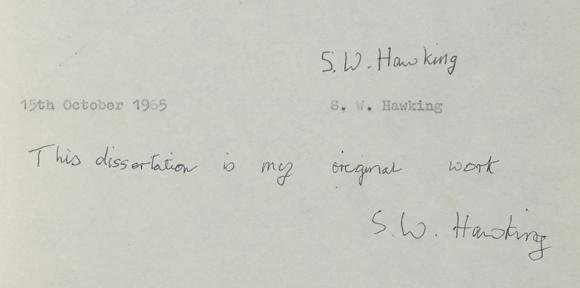
Stephen Hawking’s PhD thesis, Properties of expanding universes’, has been made freely available to anyone, anywhere in the world, after being made accessible via the University of Cambridge’s Open Access repository, Apollo.

Anyone, anywhere in the world should have free, unhindered access to not just my research, but to the research of every great and enquiring mind across the spectrum of human understanding.

Stephen Hawking

The 1966 doctoral thesis by the world’s most recognisable scientist is the most requested item in Apollo with the catalogue record alone attracting hundreds of views per month. In just the past few months, the University has received hundreds of requests from readers wishing to download Professor Hawking’s thesis in full.

To celebrate Open Access Week 2017, Cambridge University Library’s Office of Scholarly Communication has today announced Professor Hawking’s permission to make his thesis freely available and Open Access in Apollo. By making his PhD thesis Open Access, anyone can now freely download and read this historic and compelling research by the then little-known 24-year-old Cambridge postgraduate.

Professor Hawking said: “By making my PhD thesis Open Access, I hope to inspire people around the world to look up at the stars and not down at their feet; to wonder about our place in the universe and to try and make sense of the cosmos. Anyone, anywhere in the world should have free, unhindered access to not just my research, but to the research of every great and enquiring mind across the spectrum of human understanding.

“Each generation stands on the shoulders of those who have gone before them, just as I did as a young PhD student in Cambridge, inspired by the work of Isaac Newton, James Clerk Maxwell and Albert Einstein. It’s wonderful to hear how many people have already shown an interest in downloading my thesis – hopefully they won’t be disappointed now that they finally have access to it!”

Dr Arthur Smith, Deputy Head of Scholarly Communication, said: “Open Access enables research. By eliminating the barriers between people and knowledge we can realise new breakthroughs in all areas of science, medicine and technology. It is especially important for disseminating the knowledge acquired during doctoral research studies. PhD theses contain a vast trove of untapped and unique information just waiting to be used, but which is often locked away from view and scrutiny.

“From October 2017 onwards, all PhD students graduating from the University of Cambridge will be required to deposit an electronic copy of their doctoral work for future preservation. And like Professor Hawking, we hope that many students will also take the opportunity to freely distribute their work online by making their thesis Open Access. We would also invite former University alumni to consider making their theses Open Access, too.”

While the University is committed to archiving all theses it is often a struggle gaining permission to open up historic theses. With the online publication of Professor Hawking’s thesis, Cambridge now hopes to encourage its former academics – which includes 98 Nobel Affiliates – to make their work freely available to all.

To make more of the University’s theses Open Access in Apollo, the Office of Scholarly Communication and Cambridge University Library will digitise the theses of any alumni who wish to make their dissertation Open Access. Interested alumni should contact thesis@repository.cam.ac.uk

At a recent event to celebrate the 1,000th research dataset in Apollo, Dr Jessica Gardner, Director of Library Services, said: “Cambridge University Library has a 600-year-old history we are very proud of. It is home to the physical papers of such greats as Isaac Newton and Charles Darwin. Their research data was on paper and we have preserved that with great care and share it openly on line through our digital library.

“But our responsibility now is today’s researcher and today’s scientists and people working across all disciplines across our great university. Our preservation stewardship of that research data from the digital humanities across the biomedical and that is a core part of what we now do.”

Apollo is home to over 200,000 digital objects including 15,000 research articles, 10,000 images, 2,400 theses and 1,000 datasets. The items made available in Apollo have been accessed from nearly every country in the world and in 2017 have collectively received over one million downloads.

Professor Hawking’s 1966 doctoral thesis ‘Properties of expanding universes’ is available in Apollo at https://doi.org/10.17863/CAM.11283 or in high resolution on Cambridge Digital Library at https://cudl.lib.cam.ac.uk/view/MS-PHD-05437/1

For further information about Open Access Week, visit: www.openaccessweek.org


Creative Commons License
The text in this work is licensed under a Creative Commons Attribution 4.0 International License. For image use please see separate credits above.


First Detection of Gravitational Waves and Light Produced By Colliding Neutron Stars

First detection of gravitational waves and light produced by colliding neutron stars

source: www.cam.ac.uk

In a galaxy far away, two dead stars begin a final spiral into a massive collision. The resulting explosion unleashes a huge burst of energy, sending ripples across the very fabric of space. In the nuclear cauldron of the collision, atoms are ripped apart to form entirely new elements and scattered outward across the Universe.

What I am most excited about, personally, is a completely new way of measuring distances across the universe.

Ulrich Sperhake

It could be a scenario from science fiction, but it really happened 130 million years ago — in the NGC 4993 galaxy in the Hydra constellation, at a time here on Earth when dinosaurs still ruled, and flowering plants were only just evolving.

Today, dozens of UK scientists – including researchers from the University of Cambridge – and their international collaborators representing 70 observatories worldwide announced the detection of this event and the significant scientific firsts it has revealed about our Universe.

Those ripples in space finally reached Earth at 1.41pm UK time, on Thursday 17 August 2017, and were recorded by the twin detectors of the US-based Laser Interferometer Gravitational-wave Observatory (LIGO) and its European counterpart Virgo.

A few seconds later, the gamma-ray burst from the collision was recorded by two specialist space telescopes, and over following weeks, other space- and ground-based telescopes recorded the afterglow of the massive explosion. UK developed engineering and technology is at the heart of many of the instruments used for the detection and analysis.

Studying the data confirmed scientists’ initial conclusion that the event was the collision of a pair of neutron stars – the remnants of once gigantic stars, but collapsed down into approximately the size of a city. “These objects are made of matter in its most extreme, dense state, standing on the verge of total gravitational collapse,” said Michalis Agathos, from Cambridge’s Department of Applied Mathematics and Theoretical Physics. “By studying subtle effects of matter on the gravitational wave signal, such as the effects of tides that deform the neutron stars, we can infer the properties of matter in these extreme conditions.”

There are a number of “firsts” associated with this event, including the first detection of both gravitational waves and electromagnetic radiation (EM) – while existing astronomical observatories “see” EM across different frequencies (eg, optical, infra-red, gamma ray etc), gravitational waves are not EM but instead ripples in the fabric of space requiring completely different detection techniques. An analogy is that LIGO and Virgo “hear” the Universe.

The announcement also confirmed the first direct evidence that short gamma ray bursts are linked to colliding neutron stars. The shape of the gravitational waveform also provided a direct measure of the distance to the source, and it was the first confirmation and observation of the previously theoretical cataclysmic aftermaths of this kind of merger – a kilonova.

Additional research papers on the aftermath of the event have also produced a new understanding of how heavy elements such as gold and platinum are created by supernova and stellar collisions and then spread through the Universe. More such original science results are still under current analysis.

By combining gravitational-wave and electromagnetic signals together, researchers also used for the first time a new and novel technique to measure the expansion rate of the Universe.

While binary black holes produce “chirps” lasting a fraction of a second in the LIGO detector’s sensitive band, the August 17 chirp lasted approximately 100 seconds and was seen through the entire frequency range of LIGO — about the same range as common musical instruments. Scientists could identify the chirp source as objects that were much less massive than the black holes seen to date. In fact, “these long chirping signals from inspiralling neutron stars are really what many scientists expected LIGO and Virgo to see first,” said Christopher Moore, researcher at CENTRA, IST, Lisbon and member of the DAMTP/Cambridge LIGO group. “The shorter signals produced by the heavier black holes were a spectacular surprise that led to the awarding of the 2017 Nobel prize in physics.”

UK astronomers using the VISTA telescope in Chile were among the first to locate the new source. “We were really excited when we first got notification that a neutron star merger had been detected by LIGO,” said Professor Nial Tanvir from the University of Leicester, who leads a paper in Astrophysical Journal Letters today. “We immediately triggered observations on several telescopes in Chile to search for the explosion that we expected it to produce. In the end, we stayed up all night analysing the images as they came in, and it was remarkable how well the observations matched the theoretical predictions that had been made.”

“It is incredible to think that all the gold in the Earth was probably produced by merging neutron stars, similar to this event that exploded as kilonovae billions of years ago.”

“Not only is this the first time we have seen the light from the aftermath of an event that caused a gravitational wave, but we had never before caught two merging neutron stars in the act, so it will help us to figure out where some of the more exotic chemical elements on Earth come from,” said Dr Carlos Gonzalez-Fernandez of Cambridge’s Institute of Astronomy, who processed the follow-up images taken with the VISTA telescope.

“This is a spectacular discovery, and one of the first of many that we expect to come from combining together information from gravitational wave and electromagnetic observations,” said Nathan Johnson-McDaniel, researcher at DAMTP, who contributed to predictions of the amount of ejected matter using the gravitational wave measurements of the properties of the binary.

Though the LIGO detectors first picked up the gravitational wave in the United States, Virgo, in Italy, played a key role in the story. Due to its orientation with respect to the source at the time of detection, Virgo recovered a small signal; combined with the signal sizes and timing in the LIGO detectors, this allowed scientists to precisely triangulate the position in the sky. After performing a thorough vetting to make sure the signals were not an artefact of instrumentation, scientists concluded that a gravitational wave came from a relatively small patch of the southern sky.

“This event has the most precise sky localisation of all detected gravitational waves so far,” says Jo van den Brand of Nikhef (the Dutch National Institute for Subatomic Physics) and VU University Amsterdam, who is the spokesperson for the Virgo collaboration. “This record precision enabled astronomers to perform follow-up observations that led to a plethora of breath-taking results.”

Fermi was able to provide a localisation that was later confirmed and greatly refined with the coordinates provided by the combined LIGO-Virgo detection. With these coordinates, a handful of observatories around the world were able, hours later, to start searching the region of the sky where the signal was thought to originate. A new point of light, resembling a new star, was first found by optical telescopes. Ultimately, about 70 observatories on the ground and in space observed the event at their representative wavelengths. “What I am most excited about, personally, is a completely new way of measuring distances across the universe through combining the gravitational wave and electromagnetic signals. Obviously, this new cartography of the cosmos has just started with this first event, but I just wonder whether this is where we will see major surprises in the future,” said Ulrich Sperhake, Head of Cambridge’s gravitational wave group in LIGO.

In the weeks and months ahead, telescopes around the world will continue to observe the afterglow of the neutron star merger and gather further evidence about its various stages, its interaction with its surroundings, and the processes that produce the heaviest elements in the universe.

Reference: 
Physical Review Letters
“GW170817: Observation of Gravitational Waves from a Binary Neutron Star Inspiral.”

Science
“A Radio Counterpart to a Neutron Star Merger.”
“Swift and NuSTAR observations of GW170817: detection of a blue kilonova.”
“Illuminating Gravitational Waves: A Concordant Picture of Photons from a Neutron Star Merger.”

Astrophysical Journal Letters
“Gravitational Waves and Gamma-rays from a Binary Neutron Star Merger: GW170817 and GRB 170817A.”
“Multi-Messenger Observations of a Binary Neutron Star Merger.”

Nature
“A gravitational-wave standard siren measurement of the Hubble constant.”

Adapted from STFC and LIGO press releases. 


Creative Commons License
The text in this work is licensed under a Creative Commons Attribution 4.0 International License. For image use please see separate credits above.

Synthetic Organs, Nanobots and DNA ‘Scissors’: The Future of Medicine

Synthetic organs, nanobots and DNA ‘scissors’: the future of medicine

source: www.cam.ac.uk

Nanobots that patrol our bodies, killer immune cells hunting and destroying cancer cells, biological scissors that cut out defective genes: these are just some of technologies that Cambridge researchers are developing which are set to revolutionise medicine in the future.

In a new film to coincide with the recent launch of the Cambridge Academy of Therapeutic Sciences, researchers discuss some of the most exciting developments in medical research and set out their vision for the next 50 years.

Professor Jeremy Baumberg from the NanoPhotonics Centre discusses a future in which diagnoses do not have to rely on asking a patient how they are feeling, but rather are carried out by nanomachines that patrol our bodies, looking for and repairing problems. Professor Michelle Oyen from the Department of Engineering talks about using artificial scaffolds to create ‘off-the-shelf’ replacement organs that could help solve the shortage of donated organs. Dr Sanjay Sinha from the Wellcome Trust-MRC Stem Cell Institute sees us using stem cell ‘patches’ to repair damaged hearts and return their function back to normal.

Dr Alasdair Russell from the Cancer Research UK Cambridge Institute describes how recent breakthroughs in the use of CRISPR-Cas9 – a DNA editing tool – will enable us to snip out and replace defective regions of the genome, curing diseases in individual patients; and lawyer Dr Kathy Liddell, from the Cambridge Centre for Law, Medicine and Life Sciences, highlights how research around law and ethics will help to make gene editing safe.

Professor Gillian Griffiths, Director of the Cambridge Institute for Medical Research, envisages us weaponising ‘killer T cells’ – important immune system warriors – to hunt down and destroy even the most evasive of cancer cells.

All of these developments will help transform the field of medicine, says Professor Chris Lowe, Director of the Cambridge Academy of Therapeutic Sciences, who sees this as an exciting time for medicine. New developments have the potential to transform healthcare “right the way from how you handle the patient to actually delivering the final therapeutic product – and that’s the exciting thing”.

Read more about research on future therapeutics in Research Horizons magazine. 


Creative Commons License
The text in this work is licensed under a Creative Commons Attribution 4.0 International License. For image use please see separate credits above.
Winton Symposium Tackles The Challenge of Energy Storage and Distribution

Winton Symposium tackles the challenge of energy storage and distribution

source: www.cam.ac.uk

The sixth annual Winton Symposium will be held on 9 November at the University’s Cavendish Laboratory on the theme of Energy Storage and Distribution.

There is an urgent need to store and efficiently distribute energy to ensure the lights stay on.

Nalin Patel

Storage and distribution of energy is seen as the missing link between intermittent renewable energy and reliability of supply, but current technologies have considerable room for improvements in performance. Speakers at the annual symposium, which is free and open to the public, will discuss some of the new technologies in this important area, and how understanding the basic science of these can accelerate their development.

“As intermittent forms of renewable energies continue to contribute to a larger share of our energy mix, there is an urgent need to store and efficiently distribute energy to ensure the lights stay on,” said Dr Nalin Patel, Winton Programme Manager at the University of Cambridge.

The one-day event is an opportunity for students, researchers and industrialists from a variety of backgrounds to hear a series of talks given by world-leading experts and to join in the debate. Speakers at the event will include Professor Harold Wilson, Programme Director of the UK Atomic Energy Authority; Professor Katsuhiko Hirose, Professional Partner at Toyota Motor Corporation; and Professor David Larbalestier, Director of the Applied Superconductivity Center, National High Magnetic Field Laboratory at Florida State University. The full programme of speakers is available online.

The symposium is organised by Professor Sir Richard Friend, Cavendish Professor of Physics and Director of the Winton Programme for the Physics of Sustainability and Dr Nalin Patel the Winton Programme Manager.

There is no registration fee for the symposium and complimentary lunch and drinks reception will be provided, however participants are required to register online. The event is open for all to attend.


Creative Commons License
The text in this work is licensed under a Creative Commons Attribution 4.0 International License. For image use please see separate credits above.

Conservationists’ Eco-Footprints Suggest Education Alone Won’t Change Behaviour

Conservationists’ eco-footprints suggest education alone won’t change behaviour

source: www.cam.ac.uk

A new study shows that even those presumably best informed on the environment find it hard to consistently “walk the walk”, prompting scientists to question whether relying solely on information campaigns will ever be enough.

While it may be hard to accept, we have to start acknowledging that increased education alone is perhaps not the panacea we would hope

Andrew Balmford

Conservationists work to save the planet, and few are as knowledgeable when it comes to the environmental pressures of the Anthropocene.

However, the first wide-ranging study to compare the environmental footprint of conservationists to those of others – medics and economists, in this case – has found that, while conservationists behave in a marginally ‘greener’ manner, the differences are surprisingly modest.

Researchers say their findings add to increasing evidence that education and knowledge has little impact on individual behavior when it comes to major issues such as the environment and personal health.

Conservation scientists from the universities of Cambridge, UK, and Vermont, US, gathered data on a range of lifestyle choices – from bottled water use to air travel, meat consumption and family size – for 734 participants across the three groupings.

They found that fellow conservationists recycled more and ate less meat than either economists or medics, were similar to the other groups in how they travelled to work, but owned more cats and dogs.

The combined footprint score of the conservationists was roughly 16% less than that of economists, and 7% lower than the medics.

Nevertheless the average conservationist in the study’s sample took nine flights a year (half for work; half personal), ate meat or fish five times a week, and purchased very few offsets to their personal carbon emissions.

In fact, researchers found little correlation between the extent of environmental knowledge and environmentally-friendly behavior.

Moreover, greener action in one aspect of a person’s life did not predict it in any others – regardless of occupation. So a positive and relatively simple habit such as recycling did not appear to act as a “gateway” to more committed behaviour change.

The team suggest that overall improvements might be most effectively achieved through tailored interventions: targeting higher-impact behaviors such as meat consumption and flying through government regulation and by incentivising alternatives.

“While it may be hard to accept, we have to start acknowledging that increased education alone is perhaps not the panacea we would hope,” said lead author Andrew Balmford, Professor of Conservation Science at the University of Cambridge.

“Structural changes are key. For example, providing more affordable public transport, or removing subsidies for beef and lamb production. Just look at the effect of improved collection schemes on the uptake of recycling.

“The idea of ‘nudging’ – encouraging particular choices through changes in how cafes are laid out or travel tickets are sold, for instance – might have untapped potential to help us lower our footprint,” Balmford said.

“As conservationists we must do a great deal more to lead by example. Obvious starting points include changing the ways we interact, so that attending frequent international meetings is no longer regarded as essential to making scientific progress. For many of us flying is probably the largest contributor to our personal emissions.”

The study’s four authors offer their own mea culpa: pointing out that, between them, they have seven children, took 31 flights in 2016, and ate an average of two meat meals in the week before submitting their study – now published – to the journal Biological Conservation.

“I don’t think conservationists are hypocrites, I think that we are human – meaning that some decisions are rational, and others, we rationalise,” said study co-author Brendan Fisher from the University of Vermont’s Gund Institute for Environment and Rubenstein School of Environment and Natural Resources.

“Our results show that conservationists pick and choose from a buffet of pro-environmental behaviours the same as everyone else. We might eat less meat and compost more, but we fly more – and many of us still commute significant distances in gas cars.”

For the study, researchers distributed surveys on environmental behavior through conservation, economics and biomedical organisations to targeted newsletters, mailing lists and social media groups.

Of the self-selecting respondents, there were 300 conservationists, 207 economists and 227 medics from across the UK and US.

The participants were also asked a series of factual questions on environmental issues – from atmospheric change to species extinction – and ways to most effectively lower carbon footprints.

“Interestingly, conservationists scored no better than economists on environmental knowledge and awareness of pro-environmental actions,” said Balmford.

Overall footprint scores were higher for males, US nationals, economists, and people with higher degrees and larger incomes, but were unrelated to environmental knowledge.

Fisher says the study supports the idea that ‘values’ are a key driver of behaviour. Across the professions, attaching a high value to the environment was consistently associated with a lower footprint: fewer personal flights and less food waste, for example.

“It doesn’t matter if you are a medic, economist, or conservationist, our study shows that one of the most significant drivers of your behaviour is how much you value the environment,” Fisher said.

“Economists who care about the environment behave as well as conservationists.”


Creative Commons License
The text in this work is licensed under a Creative Commons Attribution 4.0 International License. For image use please see separate credits above.

Study Identifies Factors Linked To Dying Comfortably For The Very Old

Study identifies factors linked to dying comfortably for the very old

source: www.cam.ac.uk

Very old people are more likely to die comfortably if they die in a care home or at home, compared with dying in a hospital, suggests a new study from the University of Cambridge. Yet while the overwhelming majority of very old people reported symptoms at the end of life such as distress, pain and depression, the study found that these were not always treated effectively.

How we care for the oldest members of society towards the end of their lives is one of the big issues for societies across the world

Jane Fleming

In a study published in the journal BMC Geriatrics, the researchers argue that their findings highlight the need to improve training in end-of-life care for all staff, in all settings, and in particular to address the current shortage of palliative care doctors in the NHS.

As life expectancy increases, so more and more people are dying at increasingly older ages, often affected by multiple conditions such as dementia, heart disease and cancer, which make their end-of-life care complicated. In the UK, in just a quarter of a century the proportion of deaths occurring at the age of 85 or older has risen steeply from around one in five in 1990 to almost half of all current deaths.

Older people living with dementia commonly report multiple symptoms as they approach the end-of-life, and if these symptoms are not adequately controlled, they may increase distress and worsen an individual’s quality of life.

While some people close to the end-of-life may prefer to die at home, only a minority of the ‘oldest old’ (those aged 85 years and above) actually die in their own homes. In the UK, fewer older people die in hospices or receive specialist palliative care at home than younger age groups, and the trend for older deaths is gradually moving away from death in hospital towards long-term care facilities.

Little is known about symptom control for ‘older old’ people or whether care in different settings enables them to die comfortably. To address this gap in our knowledge, researchers from the Cambridge Institute of Public Health examined the associations between factors potentially related to comfort during very old people’s final illness: physical and cognitive disability, place of care and transitions in their final illness, and place of death. This involved a retrospective analysis of data for 180 study participants aged between 79 and 107 years.

The researchers found that just one in 10 participants died without symptoms of distress, pain, depression, and delirium or confusion, and most people had in fact experienced combinations of two or more of these symptoms. Of the treatable symptoms reported, pain was addressed in the majority, but only effectively for half of these; only a fraction of those with depression received treatment for their symptom.

Compared with people who died in hospital, the odds of being reported as having died comfortably were four times as high for people whose end-of-life care had been in a care home or who died at their usual address, whether that was their own home or a care home.

People living in the community who relied on formal services for support more than once a week, and people who were cared for at home during their final illness but then died in hospital, were less likely to have reportedly died comfortably.

“How we care for the oldest members of society towards the end of their lives is one of the big issues for societies across the world,” says Dr Jane Fleming from the Department of Public Health and Primary Care, the study’s first author. “The UK is not the only country where an urgent review of the funding for older people’s long-term care is needed, along with commitments to staff training and development in this often undervalued sector.

“It’s heartening that the majority of very old people in our study, including those with dementia, appear to have been comfortable at the end-of-life, but we need to do more to ensure that everyone is able to die comfortably, wherever they are.”

The authors of the study argue that it highlights the need to improve training in end-of-life care for all staff, at all levels and in all settings.

“Improving access to supportive and palliative care in the community should be a priority, otherwise staying at home may not always be the most comfortable setting for end-of-life care, and inadequacies of care may lead to admission before death in hospital,” adds co-author Dr Morag Farquhar, who is now based at the University of East Anglia.

Contrary to public perceptions, the authors say their study demonstrates that good care homes can provide end-of-life care comparable to hospice care for the very old, enabling continuity of care from familiar staff who know their residents. However, they say, this needs recognising and supporting through valuing staff, providing access to training and improving links with primary and community healthcare providers.

“In the UK, we particularly need to address the current shortage of palliative care doctors in the NHS, where training numbers are not going up to match demand, but the shortage is even greater in developing countries,” says co-author Rowan Calloway.

“In the future, community care will be increasingly reliant on non-specialists, so it will be crucial that all members of the multi-disciplinary teams needed to support very frail older people near the end of their lives have good training in palliative and supportive care skills.”

The study was supported by the Abbeyfield Society, Bupa Foundation, Medical Research Council, and the National Institute for Health Research Collaboration for Leadership in Applied Health and Care Cambridgeshire & Peterborough.

Reference
Fleming, J et al. Dying comfortably in very old age with or without dementia in different care settings – a representative “older old” population study. BMC Geriatrics; 26 Sept 2017; DOI: 10.1186/s12877-017-0605-2

Key findings and policy implications

The Cambridge City over – 75s Cohort Study


Creative Commons License
The text in this work is licensed under a Creative Commons Attribution 4.0 International License. For image use please see separate credits above.
No Evidence To Support Claims That Telephone Consultations Reduce GP Workload or Hospital Referrals

No evidence to support claims that telephone consultations reduce GP workload or hospital referrals

source: www.cam.ac.uk

Telephone consultations to determine whether a patient needs to see their GP face-to-face can deal with many problems, but a study led by researchers at the Cambridge Centre for Health Services Research (University of Cambridge and RAND Europe), found no evidence to support claims by companies offering to manage these services or by NHS England that the approach saves money or reduces the number of hospital referrals.

The NHS must be careful to ensure that it bases its information and recommendation on robust evidence.

Martin Roland

As UK general practices struggle with rising demand from patients, more work being transferred from secondary to primary care, and increasing difficulty in recruiting general practitioners, one proposed potential solution is a ‘telephone first’ approach, in which every patient asking to see a GP is initially phoned back by their doctor on the same day. At the end of this phone call the GP and the patient decide whether the problem needs a face-to-face consultation, or whether it has been satisfactorily resolved on the phone.

Two commercial companies provide similar types of management support for practices adopting the new approach, with claims that the approach dramatically reduces the need for face-to-face consultations, reduces workload stress for GPs and practice staff, increases continuity of care, reduces A&E attendance and emergency hospital admissions, and increases patient satisfaction.

Some of these claims are repeated in NHS England literature, including the assertion based on claims from one of the companies that practices using the approach have a 20% lower A&E usage and that “the model has demonstrated a cost saving of approximately £100k per practice through prevention of avoidable attendance and admissions to hospital”. Several Clinical Commissioning Groups have subsequently paid for the management support required for the approach to be adopted by practices in their area.

The National Institute for Health Research (NIHR) acknowledged the need for robust and independent evaluation of current services and therefore commissioned the team led by Martin Roland, Emeritus Professor of Health Services Research at the University of Cambridge. The results of the evaluation, which looked at data sources including GP and hospital records, patient surveys and economic analyses, are published today in The BMJ.

The study found that adoption of the ‘telephone first’ approach had a major effect on patterns of consultation: the number of telephone consultations increased 12-fold, and the number of face-to-face consultations fell by 38%.

However, the study found that the ‘telephone first’ approach was on average associated with increased overall GP workload; there was an overall increase of 8% in the mean time spent consulting by GPs, but this figure masks a wide variation between practices, with some practices experiencing a substantial reduction in workload and others a large increase.

Dr Jennifer Newbould from RAND Europe, part of the Cambridge Centre for Health Services Research, the study’s first author, says: “There are some positives to a ‘telephone first approach’; for example, we found clear evidence that a significant part of patient workload can be addressed through phone consultations. But we need to be careful about seeing this as a panacea: while this may increase a GP practice’s control over day-to-day workload, it does not necessarily decrease the amount of time GPs spend consulting and may, in some cases, increase it.”

The researchers found no evidence that the approach substantially reduced overall attendance at A&E departments or emergency hospital admissions: introduction of the ‘telephone first’ approach was followed by a small (2%) increase in hospital admissions, no initial change in A&E attendance, but a small (2% per year) decrease in the subsequent rate of rise of A&E attendance. However, far from reducing secondary care costs, they found overall secondary care costs increased slightly by £11,776 per 10,000 patients.

Professor Roland adds: “Importantly, we found no evidence to support claims made by one of the companies that support such services – claims that have been repeated by NHS England – that the approach would be substantially cost-saving or reduce hospital referrals. This has resulted in some Clinical Commissioning Groups across England buying their consultancy services based on unsubstantiated claims. The NHS must be careful to ensure that it bases its information and recommendation on robust evidence.”

The study was funded by the National Institute for Health Research.

Reference                                                   
Newbould, J et al. Tele-First. Evaluation of a ‘telephone first’ approach to demand management in English general practice: observational study. BMJ (2017). DOI: 10.1136/bmj.j4197


Creative Commons License
The text in this work is licensed under a Creative Commons Attribution 4.0 International License. For image use please see separate credits above.

App-Based Citizen Science Experiment Could Help Researchers Predict Future Pandemics

App-based citizen science experiment could help researchers predict future pandemics

source: www.cam.ac.uk

A new app gives UK residents the chance to get involved in an ambitious, ground-breaking science experiment that could save lives.

This could the best data set we’ve ever had on the movement of people in the UK – for a researchers like us, this is incredibly exciting.

Julia Gog

The most likely and immediate threat to our species is a global pandemic of highly infectious flu. Such a pandemic could be so serious that it currently tops the UK Government’s Risk Register.

Scientists from the University of Cambridge and London School of Hygiene and Tropical Medicine are attempting to collect a gold standard data set that can be used to predict how the next pandemic flu would spread through this country – and what can be done to stop it. They need your help.

UK residents can take part in the BBC Pandemic experiment simply by downloading the Pandemic app onto your smartphone via App Store or Google Play from today.

The app and results will be featured in a documentary on BBC Four in 2018, to be presented by Dr Hannah Fry and Dr Javid Abdelmoneim.

Data gathered via the app could be key in preparing for the next pandemic outbreak. In order to better understand how an infectious disease like flu can spread, researchers need data about how we travel and interact.

Two experiments will be conducted through the app: the National Outbreak, which is open to anyone in the UK from 27th September 2017; and the Haslemere Outbreak, a closed local study that is only open to people in the town of Haslemere, Surrey, and runs for 72 hours starting on Thursday 19th October 2017.

In the National Outbreak, the app will track your approximate movement at regular intervals over a 24 hour period – all data will be anonymised, so the app will not know exactly where or who you are. The app will also ask some questions about your journeys and the people you spent time with during those 24 hours.

All data collected will be grouped to ensure anonymity, and a research team from the University of Cambridge and the London School of Hygiene and Tropical Medicine will use it to predict how a flu pandemic might spread across the country – and determine what can be done to stop it.

Professor Julia Gog, who specialises in the mathematics of infectious diseases, and her colleagues from Cambridge’s Department of Applied Mathematics and Theoretical Physics have helped design the experiment and will be processing the data, running statistical analyses, and building and running the pandemic models.

“This will give us a chance to explore a range of different scenarios,” said Professor Gog. “This could the best data set we’ve ever had on the movement of people in the UK, and could help support future research projects to control infectious diseases – for a researchers like us, this is incredibly exciting.”

There are flu outbreaks every year but in the last 100 years, there have been four pandemics of a particularly deadly flu, including the Spanish Influenza outbreak which hit in 1918, killing up to 100 million people worldwide. Nearly a century later, a catastrophic flu pandemic still tops the UK Government’s Risk Register of threats to this country. Key to the Government’s response plan are mathematical models which simulate how a highly contagious disease may spread. These models help to decide how best to direct NHS resources, like vaccines and protective clothing. But the models are only as good as the data that goes into them.

The more people of all ages that take part in BBC Pandemic, the better that data will be.

By identifying the human networks and behaviours that spread a deadly flu, the app will help to make these models more accurate and, in turn, help to stem the next pandemic.

This project has been commissioned by the BBC, and is being undertaken in collaboration with researchers at the University of Cambridge and the London School of Hygiene and Tropical Medicine.

More information is available at the BBC website.


Creative Commons License
The text in this work is licensed under a Creative Commons Attribution 4.0 International License. For image use please see separate credits above.
New Type of Supercomputer Could Be Based On ‘Magic Dust’ Combination of Light and Matter

New type of supercomputer could be based on ‘magic dust’ combination of light and matter

source: www.cam.ac.uk

A team of researchers from the UK and Russia have successfully demonstrated that a type of ‘magic dust’ which combines light and matter can be used to solve complex problems and could eventually surpass the capabilities of even the most powerful supercomputers.

One referee said, ‘Who would be crazy enough to try to implement this?!’

Natalia Berloff

The researchers, from Cambridge, Southampton and Cardiff Universities in the UK and the Skolkovo Institute of Science and Technology in Russia, have used quantum particles known as polaritons – which are half light and half matter – to act as a type of ‘beacon’ showing the way to the simplest solution to complex problems. This entirely new design could form the basis of a new type of computer that can solve problems that are currently unsolvable, in diverse fields such as biology, finance or space travel. The results are reported in the journal Nature Materials.

Our technological progress — from modelling protein folding and behaviour of financial markets to devising new materials and sending fully automated missions into deep space — depends on our ability to find the optimal solution of a mathematical formulation of a problem: the absolute minimum number of steps that it takes to solve that problem.

The search for an optimal solution is analogous to looking for the lowest point in a mountainous terrain with many valleys, trenches, and drops. A hiker may go downhill and think that they have reached the lowest point of the entire landscape, but there may be a deeper drop just behind the next mountain. Such a search may seem daunting in natural terrain, but imagine its complexity in high-dimensional space. “This is exactly the problem to tackle when the objective function to minimise represents a real-life problem with many unknowns, parameters, and constraints,” said Professor Natalia Berloff of Cambridge’s Department of Applied Mathematics and Theoretical Physics and the Skolkovo Institute of Science and Technology, and the paper’s first author.

Modern supercomputers can only deal with a small subset of such problems when the dimension of the function to be minimised is small or when the underlying structure of the problem allows it to find the optimal solution quickly even for a function of large dimensionality. Even a hypothetical quantum computer, if realised, offers at best the quadratic speed-up for the “brute-force” search for the global minimum.

Berloff and her colleagues approached the problem from an unexpected angle: What if instead of moving along the mountainous terrain in search of the lowest point, one fills the landscape with a magical dust that only shines at the deepest level, becoming an easily detectible marker of the solution?

“A few years ago our purely theoretical proposal on how to do this was rejected by three scientific journals,” said Berloff. “One referee said, ‘Who would be crazy enough to try to implement this?!’ So we had to do it ourselves, and now we’ve proved our proposal with experimental data.”

Their ‘magic dust’ polaritons are created by shining a laser at stacked layers of selected atoms such as gallium, arsenic, indium, and aluminium. The electrons in these layers absorb and emit light of a specific colour. Polaritons are ten thousand times lighter than electrons and may achieve sufficient densities to form a new state of matter known as a Bose-Einstein condensate, where the quantum phases of polaritons synchronise and create a single macroscopic quantum object that can be detected through photoluminescence measurements.

The next question the researchers had to address was how to create a potential landscape that corresponds to the function to be minimised and to force polaritons to condense at its lowest point. To do this, the group focused on a particular type of optimisation problem, but a type that is general enough so that any other hard problem can be related to it, namely minimisation of the XY model which is one of the most fundamental models of statistical mechanics. The authors have shown that they can create polaritons at vertices of an arbitrary graph: as polaritons condense, the quantum phases of polaritons arrange themselves in a configuration that correspond to the absolute minimum of the objective function.

“We are just at the beginning of exploring the potential of polariton graphs for solving complex problems,” said co-author Professor Pavlos Lagoudakis, Head of the Hybrid Photonics Lab at the University of Southampton and the Skolkovo Institute of Science and Technology, where the experiments were performed. “We are currently scaling up our device to hundreds of nodes, while testing its fundamental computational power. The ultimate goal is a microchip quantum simulator operating at ambient conditions.”

Reference:
Natalia G. Berloff et al. ‘Realizing the classical XY Hamiltonian in polariton simulators.’ Nature Materials (2017). DOI: 10.1038/nmat4971


Creative Commons License
The text in this work is licensed under a Creative Commons Attribution 4.0 International License. For image use please see separate credits above.

Cambridge Scientist Leading UK’s £65m Scientific Collaboration With US

Cambridge scientist leading UK’s £65m scientific collaboration with US

source: www.cam.ac.uk

The UK is investing £65 million in a flagship global science project based in the United States that could change our understanding of the universe, securing the UK’s position as the international research partner of choice. Professor Mark Thomson from the University of Cambridge’s Cavendish Laboratory has been the elected co-leader of the international DUNE collaboration since its inception and is the overall scientific lead of this new UK initiative.

This UK investment in fundamental science will enable us to deliver critical systems to the DUNE experiment and to provide new opportunities for the next generation of scientists to work at the forefront of science and technology.

Mark Thomson

This week, UK Universities and Science Minister Jo Johnson signed the agreement with the US Energy Department to invest the sum in the Long-Baseline Neutrino Facility (LBNF) and the Deep Underground Neutrino Experiment (DUNE). DUNE will study the properties of mysterious particles called neutrinos, which could help explain more about how the universe works and why matter exists at all.

This latest investment is part of a long history of UK research collaboration with the US, and is the first major project of the wider UK-US Science and Technology agreement.

On signing the agreement in Washington DC, UK Science Minister, Jo Johnson said: “Our continued collaboration with the US on science and innovation is beneficial to both of our nations and through this agreement we are sharing expertise to enhance our understanding of many important topics that have the potential to be world changing.

“The UK is known as a nation of science and technical progress, with research and development being at the core of our industrial strategy.  By working with our key allies, we are maintaining our position as a global leader in research for years to come.”

“The international DUNE collaboration came together to realise a dream of a game-changing program of neutrino science; today’s announcement represents a major milestone in turning this dream into reality,” said Professor Thomson. “This UK investment in fundamental science will enable us to deliver critical systems to the DUNE experiment and to provide new opportunities for the next generation of scientists to work at the forefront of science and technology.”

This investment is a significant step which will secure future access for UK scientists to the international DUNE experiment. Investing in the next generation of detectors, like DUNE, helps the UK to maintain its world-leading position in science research and continue to develop skills in new cutting-edge technologies.

The UK’s Science and Technology Facilities Council (STFC) will manage the UK’s investment in the international facility, giving UK scientists and engineers the chance to take a leading role in the management and development of the DUNE far detector and the LBNF beam line and associated PIP-II accelerator development.

Accompanying Jo Johnson on the visit to the US, Chief Executive Designate at UK Research and Innovation, Sir Mark Walport said: “Research and innovation are global endeavours. Agreements like the one signed today by the United Kingdom and the United States set the framework for the great discoveries of the future, whether that be furthering our understanding of neutrinos or improving the accessibility of museum collections.

“Agreements like this also send a clear signal that UK researchers are outward looking and ready to work with the best talent wherever that may be. UK Research and Innovation is looking forward to extending partnerships in science and innovation around the world.”

DUNE will be the first large-scale US-hosted experiment run as a truly international project at the inter-governmental level, with more than 1,000 scientists and engineers from 31 countries building and operating the facility, including many from the UK.  The US is meeting the major civil construction costs for conventional facilities, but is seeking international partners to design and build major elements of the accelerator and detectors.  The total international partner contributions to the entire project are expected to be about $500M.

The UK research community is already a major contributor to the DUNE collaboration, with 14 UK universities and two STFC laboratories providing essential expertise and components to the experiment and facility. This ranges from the high-power neutrino production target, the readout planes and data acquisitions systems to the reconstruction software.

Dr Brian Bowsher, Chief Executive of STFC, said:“This investment is a significant and exciting step for the UK that builds on UK expertise.

“International partnerships are the key to building these world-leading experiments, and the UK’s continued collaboration with the US, through STFC, demonstrates that we are the science partner of choice in such agreements.

“I am looking forward to seeing our scientists work with our colleagues in the US in developing this experiment and the exciting science which will happen as a result.”

One aspect DUNE scientists will look for is the differences in behaviour between neutrinos and their antimatter counterparts, antineutrinos, which could give us clues as to why we live in a matter-dominated universe – in other words, why we are all here, instead of having been annihilated just after the Big Bang. DUNE will also watch for neutrinos produced when a star explodes, which could reveal the formation of neutron stars and black holes, and will investigate whether protons live forever or eventually decay, bringing us closer to fulfilling Einstein’s dream of a grand unified theory.

The DUNE experiment will attract students and young scientists from around the world, helping to foster the next generation of leaders in the field and to maintain the highly skilled scientific workforce worldwide.

The Cambridge team is playing a leading role in the development of the advanced pattern recognition and computational techniques that will be needed to interpret the data from the vast DUNE detectors.

Other than Cambridge, the UK universities involved in the project are Birmingham, Bristol, Durham, Edinburgh, Imperial, Lancaster, Liverpool, UCL, Manchester, Oxford, Sheffield, Sussex and Warwick.

Adapted from an STFC press release


Creative Commons License
The text in this work is licensed under a Creative Commons Attribution 4.0 International License. For image use please see separate credits above.

10 Quadrillionths of a Second To Extraction: Researchers Set Time Limit For Ultrafast Perovskite Solar Cells

10 quadrillionths of a second to extraction: Researchers set time limit for ultrafast perovskite solar cells

source: www.cam.ac.uk

Researchers have quantified the astonishingly high speeds at which future solar cells would have to operate in order to stretch what are presently seen as natural limits on their energy conversion efficiency.

The timescale that we calculated is now the time limit that we have to operate within if we want to create super-efficient, hot carrier solar devices.

Johannes Richter

The study, which investigated photovoltaic devices based on a type of materials called perovskites, suggests that these could achieve unprecedented levels of super-efficiency. But to do so, they will need to turn sunlight into electrons and then extract these as electrical charge within just quadrillionths of a second – a few “femtoseconds”, to give them their scientific name.

Moving electrons at this ultrafast rate would enable the creation of “hot carrier” cells. These are solar cells which can generate electricity more efficiently by making use of the added kinetic energy that electrons have for a brief moment just after they are created, while they are moving at high speed.

The amount of electrical energy that can be extracted from a hot carrier cell, relative to the amount of light absorbed, could potentially match or even break an energy efficiency rate of 30%. In rough terms, this is the maximum energy efficiency that solar cells can conceivably  achieve – although standard silicon cells typically have efficiencies closer to 20% in practice.

Despite the minuscule fractions of time involved, the authors of the new paper say that it is possible that perovskites could ultimately push this efficiency barrier.

The study, published in the journal Nature Communications, was carried out by academics in Italy and the UK. The British team involved researchers in the Cavendish Laboratory’s Optoelectronics research group of Professor Sir Richard Friend, a Fellow of St John’s College, Cambridge. The Italian team are based at the Politecnico di Milano in the group of Professor Guilio Cerullo.

Johannes Richter, a PhD student in the Optoelectronics group and the paper’s lead author, said: “The timescale that we calculated is now the time limit that we have to operate within if we want to create super-efficient, hot carrier solar devices. We would need to get electrons out before this tiny amount of time elapses.”

“We are talking about doing this extremely quickly, but it’s not impossible that it could happen. Perovskite cells are very thin and this gives us hope, because the distance that the electrons have to cover is therefore very short.”

Perovskites are a class of materials which could before long replace silicon as the material of choice for many photovoltaic devices. Although perovskite solar cells have only been developed within the past few years, they are already almost as energy-efficient as silicon.

Partly because they are considerably thinner, they are much cheaper to make. While silicon cells are about a millimetre thick, perovskite equivalents have a thickness of approximately one micrometre, about 100 times thinner than a human hair. They are also very flexible, meaning that in addition to being used to power buildings and machines, perovskite cells could eventually be incorporated into things like tents, or even clothing.

In the new study, the researchers wanted to know for how long the electrons produced by these cells retain their highest possible levels of energy. When sunlight hits the cell, light particles (or photons), are converted into electrons. These can be drawn out through an electrode to harvest electrical charge.

For a brief moment after they are created, the electrons are moving very quickly. However, they then start to collide, and lose energy. Electrons which retain their speed, prior to collision, are known as “hot” and their added kinetic energy means that they have the potential to produce more charge.

“Imagine if you had a pool table and each ball was moving at the same speed,” Richter explained. “After a certain amount of time, they are going to hit each other, which causes them to slow down and change direction. We wanted to know how long we have to extract the electrons before this happens.”

The Cambridge team took advantage of a method developed by their colleagues in Milan called two dimensional spectroscopy. This involves pumping light from two lasers on to samples of lead iodide perovskite cell in order to simulate sunlight, and then using a third “probe” laser to measure how much light is being absorbed.

Once the electrons have collided and slowed down, and are thus starting to take up space in the cell, the amount of light being absorbed changes. The time it took for this to happen in the study effectively allowed the researchers to establish how much time is available to extract electrons while they are still “hot”.

The study found that electron collision events started to happen between 10 and 100 femtoseconds after light was initially absorbed by the cell. To maximise energy efficiency, the electrons would thus need to reach the electrode in as little as 10 quadrillionths of a second.

The researchers are nonetheless optimistic that this might be possible. As well as taking advantage of the intrinsic thinness of perovskite, they believe that nanostructures could be created within the cells to reduce further the distance that the electrons need to travel.

“That approach is just an idea for now, but it is the sort of thing that we would require in order to overcome the very small timescales that we have measured,” Richter added.

The paper, Ultrafast carrier thermalization in lead iodide perovskite probed with two-dimensional electronic spectroscopy, is published in Nature Communications.


Creative Commons License
The text in this work is licensed under a Creative Commons Attribution 4.0 International License. For image use please see separate credits above.

Genome Editing Reveals Role of Gene Important For Human Embryo Development

Genome editing reveals role of gene important for human embryo development

source: www.cam.ac.uk

Researchers have used genome editing technology to reveal the role of a key gene in human embryos in the first few days of development. This is the first time that genome editing has been used to study gene function in human embryos, which could help scientists to better understand the biology of our early development.

This knowledge will be essential to develop new treatments against developmental disorders and could also help understand adult diseases such as diabetes that may originate during the early stage of life.

Ludovic Vallier

The team used genome editing techniques to stop a key gene from producing a protein called OCT4, which normally becomes active in the first few days of human embryo development. After the egg is fertilised, it divides until at about 7 days it forms a ball of around 200 cells called the ‘blastocyst’. The study found that human embryos need OCT4 to correctly form a blastocyst.

“We were surprised to see just how crucial this gene is for human embryo development, but we need to continue our work to confirm its role” says Dr Norah Fogarty from the Francis Crick Institute, first author of the study. “Other research methods, including studies in mice, suggested a later and more focussed role for OCT4, so our results highlight the need for human embryo research.”

Dr Kathy Niakan from the Francis Crick Institute, who led the research adds, “One way to find out what a gene does in the developing embryo is to see what happens when it isn’t working. Now we have demonstrated an efficient way of doing this, we hope that other scientists will use it to find out the roles of other genes. If we knew the key genes that embryos need to develop successfully, we could improve IVF treatments and understand some causes of pregnancy failure. It will take many years to achieve such an understanding, our study is just the first step.”

The research was published in Nature and led by scientists at the Francis Crick Institute, in collaboration with colleagues at Cambridge University, Oxford University, the Wellcome Trust Sanger Institute, Seoul National University and Bourn Hall Clinic. It was chiefly funded by the UK Medical Research Council, Wellcome and Cancer Research.

The team spent over a year optimising their techniques using mouse embryos and human embryonic stem cells before starting work on human embryos. To inactivate OCT4, they used an editing technique called CRISPR/Cas9 to change the DNA of 41 human embryos. After seven days, embryo development was stopped and the embryos were analysed.

The embryos used in the study were donated by couples who had undergone IVF treatment, with frozen embryos remaining in storage; the majority were donated by couples who had completed their family, and wanted their surplus embryos to be used for research. The study was done under a research licence and strict regulatory oversight from the Human Fertilisation and Embryology Authority (HFEA), the UK Government’s independent regulator overseeing infertility treatment and research.

As well as human embryo development, OCT4 is thought to be important in stem cell biology. ‘Pluripotent’ stem cells can become any other type of cell, and they can be derived from embryos or created from adult cells such as skin cells. Human embryonic stem cells are taken from a part of the developing embryo that has high levels of OCT4.

“We have the technology to create and use pluripotent stem cells, which is undoubtedly a fantastic achievement, but we still don’t understand exactly how these cells work,” explains Dr James Turner, co-author of the study from the Francis Crick Institute. “Learning more about how different genes cause cells to become and remain pluripotent will help us to produce and use stem cells more reliably.”

Sir Paul Nurse, Director of the Francis Crick Institute, says: “This is exciting and important research. The study has been carried out with full regulatory oversight and offers new knowledge of the biological processes at work in the first five or six days of a human embryo’s healthy development. Kathy Niakan and colleagues are providing new understanding of the genes responsible for a crucial change when groups of cells in the very early embryo first become organised and set on different paths of development. The processes at work in these embryonic cells will be of interest in many areas of stem cell biology and medicine.”

Dr. Kay Elder, study co-author from the Bourn Hall Clinic, says: “Successful IVF treatment is crucially dependent on culture systems that provide an optimal environment for healthy embryo development. Many embryos arrest in culture, or fail to continue developing after implantation; this research will significantly help treatment for infertile couples, by helping us to identify the factors that are essential for ensuring that human embryos can develop into healthy babies.”

Dr Ludovic Vallier, co-author on the study from the Wellcome Trust Sanger Institute and the Wellcome – MRC Cambridge Stem Cell Institute, said: “This study represents an important step in understanding human embryonic development. The acquisition of this knowledge will be essential to develop new treatments against developmental disorders and could also help understand adult diseases such as diabetes that may originate during the early stage of life. Thus, this research will open new fields of opportunity for basic and translational applications.”

Reference:
Norah M.E. Fogarty et al. ‘Genome editing of OCT4 reveals distinct mechanisms of lineage specification in human and mouse embryos.’ Nature (2017). DOI: 10.1038/nature24033.

Adapted from a Francis Crick Institute press release. 


Creative Commons License
The text in this work is licensed under a Creative Commons Attribution 4.0 International License. For image use please see separate credits above.

Cuts To Mental Health Services Putting Young People At Risk, Say Experts

Cuts to mental health services putting young people at risk, say experts

source: www.cam.ac.uk

Funding cuts and austerity measures are damaging young people’s access to mental health services, with potentially long-term consequences for their mental wellbeing, say researchers at the University of Cambridge.

We need to acknowledge the mental health suffering in our young people that has only been increasingly apparent in recent years, and resolve to improve young people’s access to effective mental health services.

Sharon Neufeld

In an article published today in the Journal of Public Mental Health, the team discuss the policy implications of their study published earlier in the year, which found that young people who have contact with mental health services in the community and in clinics are significantly less likely to suffer from clinical depression later in their adolescence than those with equivalent difficulties who do not receive treatment.

Young people’s mental health problems are associated with an increased risk of problems later on in adulthood, including poor mental health, lower income, unemployment, inability to maintain a stable cohabiting relationship, and greater contact with the criminal justice system. However, the team’s previous study suggested that access for adolescents with mental health problems to intervention in schools and clinics reduces mental health problems up to three years later and would therefore yield personal, economic, and societal benefits over an individual’s lifespan.

In the study, Sharon Neufeld and colleagues from the Department of Psychiatry at the University of Cambridge used data obtained between 2005-2010 – prior to funding cuts to Child and Adolescent Mental Health Services in the community and in NHS clinics. Between 2008 and 2013, funding for the services dropped by 5.4 per cent in real terms so that in 2012/2013, only 6 per cent of the NHS’ total mental health budget was spent on these services. The knock-on effect of this was that while in 2005/2006, 38% of 14-year olds with a mental disorder had made contact with mental health provision for young people in the past year, in 2014/2015 only 25% of all children and young people with a mental disorder had made such service contact.

One consequence of this has been that the number of young people attending A&E due to a psychiatric condition had doubled by 2014/2015, compared with 2010/2011.

“It’s important to improve young people’s mental health services in schools and strengthen the care pathway to  specialist Child and Adolescent Mental Health Services, in order to meet the NHS target of returning contact back up to 35% by 2020/2021,” says Mrs Neufeld.

“We need to acknowledge the mental health suffering in our young people that has only been increasingly apparent in recent years, and resolve to improve young people’s access to effective mental health services.”

She and her colleagues argue that as well as protecting funding for specialist Child and Adolescent Mental Health Services, funding for school-based counselling is also important as their study found that this was the second most used service for young people with a mental health disorder.

“The current government has promised to provide funding for mental health first aid training for teachers in secondary schools, which should enable them to better identify those with mental health issues and connect students to the appropriate support services,” says Professor Peter Jones. “But this is against a backdrop of freezing school budgets, the very budgets that typically fund school-based counselling.

“Funding for school-based counselling must be ring-fenced, whether it be funded through the education sector or NHS, to ensure young people have adequate service access prior to specialist mental health services.”

The researchers also argue that GPs could use more training in identifying mental disorder. The Royal College of General Practitioners reports that nine out of ten people with mental health problems are managed in primary care. However, even in the recent past, most GPs do not include a rotation in mental illness as part of their training. Such gaps in training, say the researchers, mean that GPs correctly identify less than a half (47%) of depression cases.

“This is a huge missed opportunity,” adds Professor Ian Goodyer. “GPs will encounter a large number of individuals with mental disorders, but have insufficient background knowledge to appropriately identify such cases.”

Reference
Sharon AS Neufeld, Peter B Jones and Ian M. Goodyer. Child and adolescent mental health services: longitudinal data sheds light on current policy for psychological interventions in the community.  Journal of Public Mental Health; Date; DOI 10.1108/JPMH-03-2017-0013


Creative Commons License
The text in this work is licensed under a Creative Commons Attribution 4.0 International License. For image use please see separate credits above.

A Rare Discovery Will Shed New Light On Mycenaean Funerary Practices

A rare discovery will shed new light on Mycenaean funerary practices

source: www.cam.ac.uk

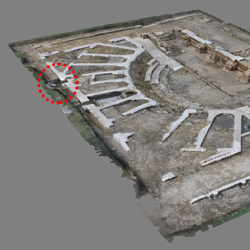
The discovery this summer of an impressive rock-cut tomb on a mountainside in Prosilio, near ancient Orchomenos in central Greece, will shed new light on Mycenaean funerary practices.

Finding an intact burial, let alone in a monumental tomb of the palatial period, 1370-1200 BC, makes our discovery all the more special.

Yannis Galanakis

For the first time, archaeologists have uncovered and carefully documented an intact burial in a monumental chamber tomb of the Mycenaean palatial period, around 3,350 years ago. Research into the material uncovered has only just begun but the discovery will expand our knowledge of Mycenaean funerals – from the treatment of the body to the selection of objects placed for burial.

The tomb is approached by an impressive rock-cut passageway, 20 m long, which leads to a deep façade some 5.40 m in height. A doorway gives access to the burial chamber. Its area of 42 sq m makes this the ninth largest known to date out of 4,000 examples excavated in the last 150 years in Greece. The partial collapse of the original chamber roof has helped to preserve the burial layer intact.

“Mycenaean chamber tombs are generally found by archaeologists to have been disturbed or looted. Most contain many burials, making an association between individual people and objects very difficult or impossible,” said Dr Yannis Galanakis of Cambridge’s Faculty of Classics, co-director of the five-year Prosilio project and an expert in Aegean archaeology.

“Finding an intact burial, let alone in a monumental tomb of the palatial period, 1370-1200 BC, makes our discovery all the more special for the knowledge we can now acquire about the tomb-using group and the practices they performed during and after the funeral.”

Once huge quantities of soil and rubble had been carefully excavated, the archaeologists found in the chamber the remains of a man, aged 40 to 50 years. He was accompanied by a selection of fine objects: jewellery made in a range of materials, combs, pins, a pair of horse bits, arrowheads, a bow, a sealstone, a signet ring, and a group of tinned clay vessels of various shapes.

“The size and quality of construction of the tomb correlates well with the discovered objects, all of which speak of a man from the upper echelons of the local society,” said Galanakis.

“Initial examination of the finds suggests a conscious selection by the tomb-using group responsible for the burial’s preparation of the objects interred with the body. The impression we get is that the tomb was built during the man’s life. It is indeed astonishing, and a very rare instance, to be able to excavate the remains of the man for whom the tomb must have been constructed.”

Galanakis was struck by the placement of different shapes and types of jewellery with a male burial, which challenges the commonly held assumption that jewellery in Mycenaean Greece should be chiefly associated with female burials. “It also chimes with the discovery of considerable quantities of jewellery by the University of Cincinnati in 2015 in the burial of the ‘griffin warrior’ at Pylos, which is older by a century than that of the man at Prosilio.”

Striking too is the absence of painted pottery, with the exception of two painted stirrup jars, often taken to contain aromatic oils and which may be associated with the final use and closure of the tomb around 1300 BC. Painted pottery is very common in Mycenaean tombs. Its absence from the initial burial is further confirmation of the conscious choices made in the selection of objects placed alongside this man’s burial at Prosilio.

The Prosilio team believes that this monumental structure, known as tomb 2, is associated with ancient Orchomenos, a major centre which controlled northern Boeotia, a region of Greece. Orchomenos, which is only 3.5 km away, oversaw in the 14th and 13th centuries BC the partial drainage of Lake Kopaïs – once the largest lake in Greece – a project that yielded a sizeable area of land for agriculture.

At its peak (1350-1250 BC), Orchomenos’s power is reflected in its most famous monument, the tholos tomb ‘of Minyas’, first excavated by Heinrich Schliemann in the 19th century and comparable only in size and refinement to the tholos tomb ‘of Atreus’ at Mycenae.

“Despite the tholos ‘of Minyas’ and some earlier important discoveries by Greek and German teams in the area, we still know very little about ancient Orchomenos. We hope that the continuation of our project will help us understand better Orchomenos’s position in the region and learn more about its population and their practices,” said Galanakis.

“The discovery this year enables us to ask questions such as why certain objects were selected for burial while others were not – and what kind of rituals were performed as part of funerary and post-funerary practices. The finds will spark new discussions about the role of burials in Mycenaean life during the palatial period.”

The five-year Prosilio project is in its first year. In subsequent years, the team aims to excavate more tombs and study and publish the archaeological data collected. The initiative is a collaboration between the Ephorate of Antiquities of Boeotia and the British School at Athens. Its directors are Dr Alexandra Charami (Director of the Ephorate of Antiquities of Boeotia) and Dr Yannis Galanakis, (Senior Lecturer in the Faculty of Classics and Director of the Museum of Classical Archaeology, University of Cambridge).

The Prosilio team also includes Kyriaki Kalliga, archaeologist of the Ephorate of Antiquities of Boeotia, Dr Panagiotis Karkanas, geo-archaeologist and Director of the Wiener Laboratory at the American School of Classical Studies in Athens, Dr Ioanna Moutafi, bio-archaeologist and senior researcher at the Wiener Laboratory, Emily Wright, field supervisor and PhD candidate in Archaeology at the University of Cambridge, and Professor Ann Brysbaert of the University of Leiden and Principal Investigator of the ERC project SETinSTONE. Some 25 students, specialists and workers helped in this year’s fieldwork.

The Prosilio project was conducted with permission from the Hellenic Ministry of Culture & Sports and Ioannis Papadopoulos, the owner of the land. The project was generously funded by, among other sources, the University of Cambridge (Faculty of Classics, the McDonald Institute, the Cambridge Humanities Research Grant scheme, and Sidney Sussex College), the Institute for Aegean Prehistory (INSTAP) and the British School at Athens.

Inset images: entrance to Prosilio tomb 2; horse bits found with the burial (Yannis Galanakis).


Creative Commons License
The text in this work is licensed under a Creative Commons Attribution 4.0 International License. For image use please see separate credits above.

Microfluidics Consortium European Open Day On October 12th

Microfluidics Consortium European Open Day


line

St John Cambridge


MF8 logo   https://www.cam.ac.uk/sites/www.cam.ac.uk/files/inner-images/logo.jpg

The mission of the MF8 consortium is to grow the  market for Microfluidics-enabled products and  services.MF7 US Open Day

Help us to make it happen!

With the support the Knowles Lab at the University of Cambridge  the MF8  Microfluidics Consortium invites you to join us at  St John’s College Cambridge  on Oct 12th from 9:30am to 4:30pm to  see leading edge technology demonstrations and  engage in the debates our consortium is championing

MF7 Open Day

including:

  • New Opportunities for Microfluidics
  • Standards in Microfluidics
  • Opportunities for collaboration in Microfluidics
  • Already over 50 delegates from 10 different countries!

Open Day delegates are also invited to Site Visits (to Dolomite Microfluidics or Fluidic Analytics) on the afternoon of Oct 11th

Click here for latest information and agenda

Click here to register and pay by credit cardMF7

Click here to find out more about the MF8 consortium


Collusion commissions: Call out to UK artists – all disciplines – to propose bold new works  

Collusion commissions: Out to UK artists – all disciplines – to propose bold new works  

APPLY NOW | deadline 17 October 2017 @ 12 noon

source: http://www.collusion.org.uk/commissions

WANTED: bold, ambitious proposals to deliver interactive, immersive experiences exploring the impact of technology on society

Collusion commissions support the creation of inspiring art and experiences by leading professional UK artists working with emerging technologies. We are looking to commission and present a series of groundbreaking new artworks across the broad spectrum of art, technology and human interaction. Bold, ambitious proposals will be selected that are creative, thought-provoking and take a fresh perspective on the themes and core concerns of our time.

Read the BRIEF, checkout the Q&A, fill out the PROPOSAL FORM and make sure you upload your BUDGET, using our template, to your proposal form. Here’s the key info:

  • We are seeking works that are originated creatively, which then move through to R&D before being manifested as full scale artworks.
  • Proposed works should also consider how they might illustrate, explore or address the United Nation’s Sustainable Development Goals. Technology will play a key role in addressing the Goals and artists can make a vital contribution by providing alternative perspectives.
  • The commissions are open to UK artists across all disciplines, as well as arts organisations, collectives and creatives assembled around cross-disciplinary making, including those working across art and technology.
  • We don’t expect artists to have all of the skills to build a project, but must demonstrate the experience and ability to manage and sustain a project from R&D to exhibition.
  • Successful projects will be in development from January 2018 to March 2019, leading to a major exhibition taking place in Cambridge in April 2019 as the culmination of the three-year in_collusion programme.
  • Collusion will support the development period as producers and in collaboration with academics and technology businesses in Cambridge
  • Projects will have outline budgets in the range of £10,000 – £20,000.
  • The deadline for applications is 12 noon on 17 October 2017 and all applicants will be notified of the outcome by email by 8 November 2017.

Simon Poulter and Rachel Drury, Collusion’s Directors, say: “In this call out we invite artists to come forward with proposals that situate creativity at the heart of digital culture. We want to hear from diverse voices with new ideas.”

Collusion’s partners for the commissioning programme are Arts Council England, the Greater Cambridge, Greater Peterborough Local Economic Partnership (GCGP), Arm, Cambridge Consultants, Anglia Ruskin University, and the Centre for Future Intelligence.

New Institute at the University of Cambridge: Cambridge Academy of Therapeutic Sciences (CATS)

The Cambridge Academy of Therapeutic Sciences (CATS) is a platform established to facilitate the development of new therapeutics and support the education and training of the next generation of world-leading researchers.

source: http://www.ats.cam.ac.uk/

We are creating a structure that transcends traditional boundaries between disciplines and between academics and industrialists. CATS provides a unique outwardly-focused mechanism in which fundamental and applied research into therapeutics and diagnostics can flourish and be translated into patient treatments with maximum efficiency.

Working in partnership, we are creating and supporting a vibrant, connected community of scientists working to tackle research and policy challenges.  The Academy embraces academics from across the University, scientists and managers from industry, key opinion leaders and thinkers concerned with regulatory, legal and policy issues. Local, national and international interactions will be facilitated by the structures and principles developed as part of the Academy concept. The Academy will also develop and deliver training and research programmes (Masters and PhD) to educate a new generation of scientists and clinicians in fields as diverse as toxicology, pharmacology, systems biology, medicinal chemistry, physics, engineering and mathematics as applied to medicine.

CATS is also home to the Cambridge Alliance on Medicines Safety. This industry/academia partnership has been established to build an active academic research programme amongst University scientists whose work relates to safety of medicines, with strong links to pharmaceutical and human-safety related companies.

Hewitsons Wins Two Lots With London Universities Purchasing Consortium

Hewitsons wins two lots with London Universities Purchasing Consortium

Hewitsons logo red

Hewitsons has won a place on a buying framework that gives universities and other organisations access to carefully-selected suppliers of products and services.


The London Universities Purchasing Consortium (LUPC) has named the law firm as one of its approved suppliers, following a rigorous evaluation process.


The LUPC is a non-profit professional buying organisation that saves its members money by allowing them to procure various goods and services collaboratively with one another.


The organisation has more than 70 members, including universities and colleges in and around the capital and national not-for-profit, public-sector and third-sector organisations from the arts, science and education sectors.


These members can now purchase Hewitsons’ dispute resolution and governance legal services through the LUPC’s online catalogue – the HE Contracts database (Lots 3 and 4, respectively) – or by requesting a quote from multiple suppliers via a tendering portal.


Last year, LUPC members spent £186 million through the consortium’s EU-compliant scheme, with this figure continuing to rise year on year.


Colin Jones, Managing Partner at Hewitsons, said: “Hewitsons is at the forefront of dispute resolution and governance law – both highly specialist practices – and continues to invest heavily in these areas.


“Our clients choose us for our expertise and our absolute client focus, which enable us to deliver top results. We are therefore delighted to have been awarded two lots on the LUPC framework, as this will allow us to deliver our services directly to an even wider client base.”


Jill Christiaens, Senior Contracts Manager at the LUPC, added: “Following the conclusion of a fiercely competitive process, we believe that we have appointed high calibre, expert firms and have provided a framework which will enable our national Member Institutions to benefit from savings in both costs and tendering time as well as meeting the legal services needs of our Members.”


Eric Wilkinson Appointed As Cambridge Consultants’ CEO

Eric Wilkinson appointed as Cambridge Consultants’ CEO

Eric Wilkinson

Alan Richardson will be retiring after 33 years with the company

Product design and development firm Cambridge Consultants announces that Eric Wilkinson has been appointed CEO, effective from October 1st. The announcement follows Alan Richardson’s retirement after a proud career with the company. Richardson will support a smooth transition as Executive Chairman, before his subsequent departure at the end of the year.

On his retirement, Alan Richardson commented, “Having worked closely with Eric for many years, I retire safe in the knowledge that the firm is in a strong position and set for further success. Eric’s broad and deep experience in our business, combined with our strong management team, will enable him to drive the business to even greater heights.”

The business has grown exponentially in the last five years under Richardson’s lead, with revenues growing by a factor of three and staff growing from 300 to 750, spanning sixteen time zones to give global reach. The company also accepted its third Queen’s Award yesterday, for the growth in its international sales, which have been the lynchpin of recent growth. This excellent performance has been built on a staff strongly engaged in the growth mission and Cambridge Consultants has been a Sunday Times Top 100 Company for the last four years and its US West Coast subsidiary Synapse is a Best Place to Work in Washington. The company has continued to harness breakthrough technologies including robotics, advanced sensors, machine learning, digital health and wireless connectivity to provide market leading innovative products for its clients. Strong growth has been achieved in consumer, medical, telecommunications, security and industrial markets, while the company has an internationally renowned product design capability, including two recent Red Dot Award wins.

Wilkinson’s appointment will continue the momentum and growth that have been achieved in the last five years. Wilkinson has been with Cambridge Consultants for 26 years and has been Chief Operations Officer since 2011. As a Board Member he has been a leading player in the development and implementation of the strategy that has delivered huge growth in recent years. He brings a wealth of experience in product development across medical, consumer and industrial technologies and has been the architect of the project management and product development processes that have enabled the business to scale. He has played a leading role in developing the company’s world-leading facilities, including the redevelopment and extension of its state of the art laboratories in Cambridge.

“Alan Richardson has played a pivotal role in all of these successes and I’m grateful for everything he has done to hand over such a strong and growing business”, said Wilkinson. “I can restate our commitment to employing ambitious, entrepreneurial technologists and designers in leading technology hubs, such as Cambridge, Boston, Seattle, San Francisco, Singapore and Tokyo. Today we’re actively recruiting for more than 100 roles. These teams will be our bedrock as we continue to deliver breakthrough innovation and world firsts for the benefit of our clients worldwide.”

source: https://www.cambridgeconsultants.com

Oxford and Cambridge Top World University Rankings

Oxford and Cambridge top world university rankings

Oxford
Image captionOxford is the world’s best university, according to the ranking

Two UK universities occupy the top spots in a global ranking for the first time.

The University of Oxford is top of the Times Higher Education World University Rankings, with Cambridge University second, up from fourth place last year.

A key factor in the rankings is income and both universities saw this rise in the past year, partly in the form of European Union research grants.

But this income could fall with Brexit, warned rankings director Phil Baty.

Times Higher Education, which compiles the rankings, said that margins were extremely tight at the top, with all the top-ranked institutions excelling against measures in teaching, research, citations, international outlook and income.

But Oxford and Cambridge saw significant increases in their total institutional income – up 24% and 11% respectively while their nearest rivals, the California Institute of Technology and Stanford University saw falls in income.

The researchers also point out that about a quarter of Cambridge’s research income, and a fifth of Oxford’s, come in the form of EU grants – a factor which they say underlines the risk Brexit could pose to the global performance of the UK’s leading universities.

The top of the global ranking of 1,000 universities in 77 countries is dominated by US institutions.

Other UK universities in the top 50 are Imperial College London in eighth place; University College London, 16th; London School of Economics and Political Science, 25th; University of Edinburgh, 27th; and King’s College London, 36th.

Times Higher: Top 20 Global Universities

  • 1: Oxford University
  • 2: Cambridge University
  • =3: California Institute of Technology
  • =3: Stanford University
  • 5: Massachusetts Institute of Technology
  • 6: Harvard University
  • 7: Princeton University
  • 8: Imperial College London
  • 9: University of Chicago
  • =10: ETH Zurich – Swiss Federal Institute of Technology
  • =10: University of Pennsylvania
  • 12: Yale University
  • 13: Johns Hopkins University
  • 14: Columbia University
  • 15: University of California, Los Angeles
  • 16: University College London
  • 17: Duke University
  • 18: University of California, Berkeley
  • 19: Cornell University
  • 20: Northwestern University
Cambridge punting
Image captionCambridge University rose from fourth to second place

The researchers say the findings show “a widening gulf between the UK’s super elite institutions and other universities”, with just over half of the UK’s top 200 institutions, dropping down the ranking.

Mr Baty said: “The UK higher education system is facing intense political pressure, with questions over the value for money provided by £9,250 tuition fees in England, our continued attractiveness to international students, the flow of research funding and academic talent post-Brexit, and even levels of vice-chancellors’ pay.

“But one thing this new data makes absolutely clear is that the UK has many of the very best universities in the world and it has one of the world’s strongest higher education systems.

“The data shows UK universities are consistently producing ground-breaking new research which is driving innovation, they are attracting international students and academic talent and are providing a world-class teaching environment.

“They are a huge national asset, and one that the country can ill-afford to undermine at a time when its place in the global order is under intense scrutiny.”

source: http://www.bbc.co.uk/news/education-41160914

Schneider Electric Takes Control of U.K. Software Firm Aveva — Update

Schneider Electric Takes Control of U.K. Software Firm Aveva — Update

05/09/2017 11:47am

Dow Jones News


Aveva (LSE:AVV)
Intraday Stock Chart

Today : Tuesday 5 September 2017

Click Here for more Aveva Charts.

By Ben Dummett and Nick Kostov

France’s Schneider Electric SE has agreed to take control of British engineering software provider Aveva Group PLC, the latest move by an industrial giant toward writing the software that will run the factories and machines of the future.

Under the deal, announced in a joint statement Tuesday, Schneider will fold its software assets into Aveva’s operations and pay the U.K. company more than GBP550 million ($710.4 million) in exchange for a 60% stake in the combined entity, in a so-called reverse takeover. Aveva would also distribute GBP100 million to shareholders following the deal’s completion.

The companies are combining to add heft as industrial giants like Siemens AG bulk up in software as manufacturing adopts more automation. Other companies including General Electric Co. and Robert Bosch GmbH have been working on digitizing their own manufacturing processes, and developing software platforms and automation tools to sell to other industrial players.

Also fearing disruption from Silicon Valley giants and tech startups, Schneider has already targeted U.K. software companies in the past to bolster its industrial software business. In 2013, it agreed to acquire Invensys PLC for GBP3.31 billion to better compete against rivals such as Siemens AG, Mitsubishi Electric Corp. and Rockwell Automation Inc. The combination would offer it opportunities to cut costs and access new customers.

“Through increased scale and complementary footprint the transaction will generate synergies that will benefit customers and shareholders alike,” said Jean-Pascal Tricoire, Schneider’s chief executive.

The planned transaction is similar to the structure of the companies’ previous attempt to merge their industrial software businesses in July 2015. Then, Schneider had agreed to combine its software assets with those of Aveva and pay GBP550 million in exchange for a 53.5% stake in the enlarged group. However, the deal collapsed after the two sides couldn’t agree on final terms.

Spun out of Cambridge University in 1967, Aveva provides engineering software to owners, operators and engineering contractors that operate in the power, oil-and-gas, marine and paper and pulp sectors, among others. It employs more than 1,700 people across 30 countries. Its other main markets include power, petrochemical and chemicals.

The deal comes at a time when Aveva is trying to reduce it reliance on the slowing oil-and-gas and marine markets. For the year ended March 31, Aveva boosted revenue by 7% to GBP215.8 million from the prior year, benefiting in part from currency moves. Discounting that, revenue was down 3.8%.

Schneider’s software is used to help manage manufacturing processes, design tools and train plant crews. It services an array of industries ranging from transportation to its largest market of food and beverages and pharmaceuticals, which generated about 16% of the company’s annual software revenue.

The combination will also give Aveva greater access to the U.S. market, where Schneider’s software business generates almost half of its annual sales. Aveva generates the bulk of its revenue in Europe, the Middle East and Asia.

“Aveva will significantly expand its scale and product portfolio, increase its capabilities in the owner operator market, diversify its end user markets and increase its geographic exposure to the North American market,” said Aveva Chairman Philip Aiken.

Aveva would maintain its listing on the London Stock Exchange and remain headquartered in Cambridge, U.K.


$1 Million Funding For Cambridge ‘Liver On A Chip’ Pioneers

$1 million funding for Cambridge ‘liver on a chip’ pioneers

Stemnovate Ruchi Sharma
source: http://www.businessweekly.co.uk

Two Cambridge companies are feeling a million dollars after sharing in an award equating to that amount from Innovate UK to develop what could prove a personalised medicine gamechanger.

ideaSpace-based Stemnovate and ANB Sensors in Cambourne are working to advance ‘liver on a chip’ technology that will improve drug testing and help patients by increasing efficacy and effectiveness and potentially develop individually tailored medicine.

The new stem cell technique negates the need for testing in animals or humans.

Dr Ruchi Sharma, Stemnovate’s CEO, founder and lead on the project, has long been concerned with limitations of animal testing for human drug development due to differences in species physiology.

She said: “It takes 10-15 years to launch a new drug with an average cost of approximately $5 billion. Drug failures and market withdrawal are hugely expensive and pose a great risk to patients.”

She stressed that one of the biggest challenges was figuring out which drug candidates were likely to harm the liver before testing them in humans. The ‘one size fits all,’ approach currently dominant in drug development was suboptimal and often led to drug failure putting patients at risk.

“This is not surprising; after all there are multiple differences between humans which range from genetic make up, physiology, environment and lifestyle – all of which may interact and limit the drug’s success for individual patients,” she adds.

“Having the organ on a chip, instead of in the human or an animal, has multiple benefits. For starters, it is more ethical as the process does not involve animal or human testing. It is also safer for the patients themselves.”

She said that the new technology enabled identification of problems early in the medicine development process and could reduce cost by as much as $30 million per product launch. It also improves launch success rate by a quarter, she argues.

Stemnovate and ANB Sensors Limited have teamed up with pharma to engineer the system. They claim it can faithfully replicate human liver biology by taking into account patients’ individual genetic backgrounds. This makes the technology more sensitive to individual patient’s circumstances, more accurate and more patient-friendly, according to Dr Nathan Lawrence, CTO at ANB Sensors.

“The team’s aim is to integrate stem cell research and engineering to help patients. Developing such microphysiological models which are representative of human physiology is a big and important part of our project.”

Stemnovate’s co-founders, Professor David Hay and Dr Adrian Fisher have a track record in this type of work. They have developed cutting edge stem cell and Microengineering platform technologies at the University of Edinburgh and in Cambridge.

Dr Hay is group leader at MRC Centre for Regenerative Medicine while Dr Fisher runs the electrochemical and micro engineering group in Cambridge in the Centre for Research in Electrochemical Science and Technology (CREST) and within the Campus for Research Excellence and Technological Enterprise (CREATE) in Singapore.

Their enthusiasm for the potential liver on a chip solution is shared by
Mario Monshouwer, senior scientific director for Janssen Pharmaceuticals, who believes that such new stem-cell based technologies will transform medicine discovery in the very near future.

• PHOTOGRAPH SHOWS: Stemnovate CEO Dr Ruchi Sharma

Cambridge Enterprise and Qkine To Drive Stem Cell and Regenerative Medicine Research

Cambridge Enterprise and Qkine to drive stem cell and regenerative medicine research

Structure of Activin
source: http://www.businessweekly.co.uk

Cambridge Enterprise, the commercialisation arm of the University of Cambridge, and specialist growth factor manufacturer Qkine Ltd have signed a key licensing deal for Activin A production technology.

Qkine is a recent spin-out from the university. The newly-licensed methodology, which was developed by one of the company’s founders Dr Marko Hyvönen, will be used to manufacture proteins utilised for control of stem cell growth and differentiation.

Growth factors are proteins that transmit signals from one cell to another in higher organisms, orchestrating organisation of the developing embryo and regulating biological functions and repair processes in adults.

Activin A, and others from its family of proteins, are essential ingredients used by stem cell scientists to mimic the environment in the human body. They allow carefully synchronised messages to be sent to stem cells, effectively telling them to turn into the desired cell type.

With exponential growth in the study of stem cells – for disease modelling, drug screening, precision medicine and development of new therapeutics –the need for high quality reagents for fine control of stem cell cultures is ever increasing.

Growing demand for Activin A and related growth factors and an opportunity to use protein engineering techniques to optimise these growth factors motivated Hyvönen and co-founder Dr Catherine Onley, a translational scientist, to start Qkine. Its mission is to produce high quality bioactive proteins for stem cell researchers and the regenerative medicine industry.

Hyvönen said: “I have been providing growth factors to the Cambridge stem cell community for almost a decade.

“Demand is growing from labs outside Cambridge and forming Qkine will allow us to focus on producing the highest quality cytokines for these scientists and establish a unique UK-based supplier of one of the enabling technologies for regenerative medicine, one of the priority areas for British manufacturing recently identified by the Government.”

Qkine Marko Hyvonen Catherine Onley
Qkine co-founders Dr Marko Hyvönen (picture courtesy – Chris Green) and Dr Catherine Onley (picture courtesy – Suzi Ovens)

Qkine was awarded a Cambridge Enterprise Pathfinder investment in December 2016 to facilitate the founding of the company. Qkine started operation as an embedded company at the Department of Biochemistry in April 2017.

Dr Iain Thomas, head of Life Sciences at Cambridge Enterprise, said: “Qkine is a great example of how opportunities are incubated in the University until the commercial time is right.

“We are delighted that Qkine is taking this technology into the stem cell and regenerative medicine markets both of which are important and rapidly growing.”

Virtual Reality Game Aims To Progress Dementia Research

Virtual Reality game aims to progress dementia research

Sea Quest Hero Glitchers
source: http://www.businessweekly.co.uk

University of East Anglia scientists have helped Deutsche Telekom unveil a virtual reality (VR) game in which players can help scientists fight dementia.

Building on the mobile game ‘Sea Hero Quest’ launched in 2016, just two minutes spent playing Sea Hero Quest VR collects the equivalent of five hours of lab based research.

The VR game presents scientists with the opportunity for cross validation of the data collected by the mobile game and scientists hope to build on the rich data set already collected by using the latest in virtual reality technologies to gain greater insight into human spatial navigation behaviours.

Sea Hero Quest has notched almost 3 million downloads, generating the equivalent of over 12,000 years of lab-based research, establishing the first global benchmark for human spatial navigation and forming the largest dementia study of its kind.

With this game, Deutsche Telekom aims to harness the power of VR gameplay to advance dementia research. It has been developed in collaboration with University College London, the University of East Anglia and Alzheimer’s Research UK. The game itself was developed jointly with independent game designers, Glitchers. The anonymous spatial navigation data collected is stored in a secure T-Systems server in Germany.

Michael Hornberger, Professor of Applied Dementia Research at the University of East Anglia commented: “In a clinical environment, VR allows an even more immersive and intuitive diagnostic assessment of navigation ability in people who may potentially develop dementia. Sea Hero Quest VR allows us to measure more intuitively when people are not sure of their bearings, for example by stopping and looking around. VR therefore has the potential to capture additional complementary data to Sea Hero Quest mobile.”

Hans-Christian Schwingen, Chief Brand Officer at Deutsche Telekom, said: “Building on the success of the mobile game Sea Hero Quest which collected the data of almost 3 million players, we are very proud to continue to push the boundaries of traditional medical research, working alongside our trusted partners and leveraging our expertise in this area.”

Dr. Hugo Spiers of University College London, who has been leading the analysis of the anonymous player data collected by Sea Hero Quest mobile, added: “Whilst Sea Hero Quest mobile game gave us an unprecedented data set in terms of its scale, allowing us gauge spatial navigation abilities at a population level, the VR game allows us to build on this by measuring subtle human behavioural reactions with much greater precision.

“With Sea Hero Quest VR we have also been able to replicate highly credible lab-based experiments such as the ‘Morris Water Maze’ (winner of the 2016 ‘Brain Prize’) that would not translate well to video or mobile game format. The intuitive nature of VR means that the study can be opened up to those who might not be able to grasp the function of the mobile game – some people with advanced dementia for example.”

“Of course, many researchers are already using VR based experiments within a lab-based setting” explained Maxwell Scott-Slade, creative director at Glitchers. “This is the first time, however, that experiments have been gamified and designed for the mass market consumer, allowing users to share scientifically valid data via the medium of engaging gameplay and extending their potential reach exponentially.”

Tim Parry, Director at Alzheimer’s Research UK says “Dementia is already one of the greatest health challenges we face and is predicted to affect over 130 million people worldwide by 2050.  Research holds real power for creating more accurate diagnostics and effective treatments that those living with dementia and their families really need.

“The reaction to Sea Hero Quest illustrates the public appetite to get involved in research and be part of ongoing efforts to tackle the condition. Deutsche Telekom’s ‘Sea Hero Quest’ project is just the kind of innovative cross sector partnership that we need to accelerate progress in this important area.”

The game has been developed to work with the Samsung Gear VR headset and is available to download for free from the Oculus Store. Sea Hero Quest mobile is still available to download for free via the App Store and Google Play.

Last year, 10.8 million people worldwide used virtual reality and it is forecast that by 2021, there will be over 16 million users in the UK.

• PHOTOGRAPH: Sea Quest Hero – Image courtesy of Glitchers Ltd

How Can Businesses Grow in the Face of Brexit Uncertainty? 

How can businesses grow in the face of Brexit uncertainty?

With uncertainty about the UK’s future trading relationship with the EU and concerns about a slowing domestic economy, now is the time for Cambridgeshire businesses to review how they target growth and manage risk, writes Steve Elsom , regional director of SME Banking at Lloyds Bank Commercial Banking

Earlier this month, Lloyds Bank’s Business in Britain Report revealed that less than a quarter (22 per cent) of companies in the East of England were confident that their trading environment would improve in the near future. That put them among the three least confident regions in the UK.

Across all the sectors we surveyed in the region, businesses told us they were reluctant to recruit more staff, and cautious about increasing investment.

At a time when uncertainty and instability are so prevalent in the global economy, ambitious Cambridgeshire businesses should review their strategies to check that they remain on course.

One glimpse at the news and the potential pitfalls are clear. With headwinds including skills shortages, accelerating inflation and the weak pound, managing the risks of operating in the current economic environment should be top of their agendas.

While the weaker pound has been welcome for many – making British goods and services more competitive to overseas buyers – importers, including manufacturers, have been hit with price hikes in their supply chains, forcing them to accept slimmer profit margins or charge higher prices.

Going for growth in itself presents a risk, but by acknowledging the challenges, you can see what works for your business.

Investing in growth means that, at least in the short term, costs are likely to rise, while a proportionate increase in profit may take some time to feed through.

To help bridge that gap, Cambridgeshire businesses must ensure they have the working capital they need to meet essential business costs, including payroll and tax.

This is especially true for the kinds of younger businesses that characterise Cambridgeshire’s ‘Silicon Fen’ region, as these can often struggle with cashflow and working capital.

So how can your business address the shortfall?

While most firms still use a traditional overdraft or business loan, there are many more tailored funding options designed to tackle exactly this issue.

Invoice finance and asset-based lending, for example, can unlock cash tied up in a business to help boost cash flow.

Invoice finance works by paying out up to 90 per cent of the value of an invoice, typically within 24 hours of it being issued, so you don’t have to wait up to 60 days to receive payment. This can be particularly helpful for firms trading overseas.

Asset-based lending, meanwhile, enables businesses that have capital tied up in stock, plant or property to increase their working capital by raising funds using those assets as security.

Money can be released from these assets into the business, funding growth plans and helping smooth over peaks and troughs in revenue.

While products like these are increasingly popular, we know from our own research that awareness of these forms of financing remains low.

Our Business in Britain report, which surveyed 1,500 firms across the country, found that only 35 per cent of SMEs knew about invoice finance, and just a quarter were aware of asset-based lending.

But they are essential parts of a financial toolkit available to businesses to manage risk and support growth.

Many SMEs may have had limited exposure to instruments like currency hedging, private placements and bonds, but they are also ways of funding growth and mitigating risk that a strong banking partner will be able to provide.

It’s vital to have the ear of a trusted adviser when considering these kinds of products. They will be able to help you understand the benefits they bring and if they are the right tool for the business you’re building.

It’s this kind of partnership working that ensures banks can provide the support and financing companies in Cambridgeshire need to prosper and to grow more confident.