All posts by Admin

Universal Bus Service To Go Electric, With Extended Route

A current Universal bus, 2022

source: www.cam.ac.uk

New electric buses will operate on the Universal bus route from next year, with the service extended to serve Girton College, Homerton College and Wolfson College.


The Universal bus is a pioneering initiative, and this new contract will support the University’s commitment to environmental sustainability, in particular sustainable business travel.

Professor David Cardwell, Pro-Vice-Chancellor for Strategy and Planning

As part of its commitment to sustainability and sustainable business travel, the University of Cambridge has agreed to award an eight-year contract to Whippet, to provide a fleet of new electric buses from July 2023.

The new contract will provide a ‘split service’, with half of Universal buses serving Girton College at the northern end of the route, and half routed along Grange Road and Newnham Road to better serve Wolfson College, with some returning to Hills Road to connect with Homerton College and the Faculty of Education.

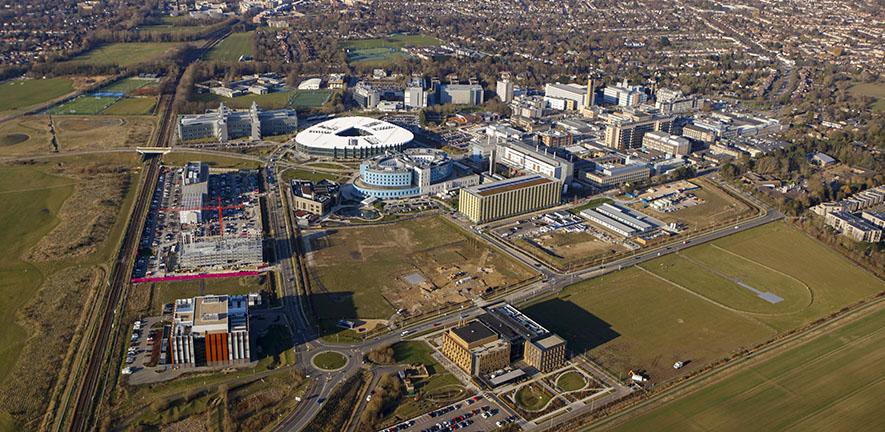
Route U, the University bus for everyone, is subsidised by the University of Cambridge, and carries around 60,000 people per week, linking Eddington with West Cambridge, the city centre, the train station and the Cambridge Biomedical Campus. University staff and students use the service, as well as Eddington residents, sixth-form students, shoppers, tourists and key workers.

The University’s Planning and Resources Committee approved the introduction of the electric service, replacing the existing diesel service, and the route extension. The £1 fare for University Card holders will be retained despite the significant additional investment from the University in the new bus service.

Professor David Cardwell, Pro-Vice-Chancellor for Strategy and Planning, said: “We are delighted to announce that the Universal bus service will operate with a fleet of new electric buses from next year, and that students, staff and members of the public will soon be able to also use the service at Girton College, Homerton College and Wolfson College.

“Colleagues, in particular the University’s Sustainability Team, have worked hard on what are significant enhancements to the existing service, and have welcomed the positive working relationship they have had with student representatives, and their perspective on the service.

“The Universal bus is a pioneering initiative, and this new contract will support the University’s commitment to environmental sustainability, in particular sustainable business travel, as well as its work to meet the access requirements of all students.”

Universal Bus – The University bus for everyone


Creative Commons License
The text in this work is licensed under a Creative Commons Attribution 4.0 International License. Images, including our videos, are Copyright ©University of Cambridge and licensors/contributors as identified.  All rights reserved. We make our image and video content available in a number of ways – as here, on our main website under its Terms and conditions, and on a range of channels including social media that permit your use and sharing of our content under their respective Terms.

Claims AI Can Boost Workplace Diversity Are ‘Spurious and Dangerous’, Researchers Argue


source: www.cam.ac.uk


Research highlights growing market in AI-powered recruitment tools that claim to bypass human bias to remove discrimination from hiring.


While companies may not be acting in bad faith, there is little accountability for how these products are built or tested

Eleanor Drage

Recent years have seen the emergence of AI tools marketed as an answer to lack of diversity in the workforce, from use of chatbots and CV scrapers to line up prospective candidates, through to analysis software for video interviews.

Those behind the technology claim it cancels out human biases against gender and ethnicity during recruitment, instead using algorithms that read vocabulary, speech patterns and even facial micro-expressions to assess huge pools of job applicants for the right personality type and “culture fit”.

However, in a new report published in Philosophy and Technology, researchers from Cambridge’s Centre for Gender Studies argue these claims make some uses of AI in hiring little better than an “automated pseudoscience” reminiscent of physiognomy or phrenology: the discredited beliefs that personality can be deduced from facial features or skull shape.

They say it is a dangerous example of “technosolutionism”: turning to technology to provide quick fixes for deep-rooted discrimination issues that require investment and changes to company culture.

In fact, the researchers have worked with a team of Cambridge computer science undergraduates to debunk these new hiring techniques by building an AI tool modelled on the technology, available at: https://personal-ambiguator-frontend.vercel.app/ 

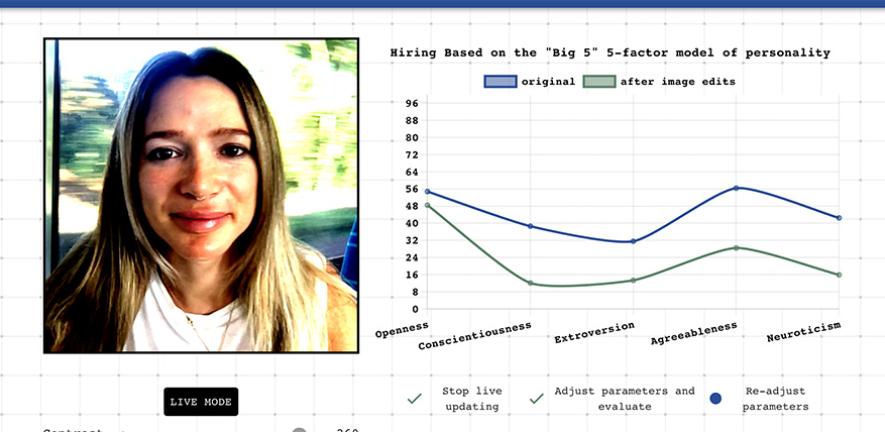
The ‘Personality Machine’ demonstrates how arbitrary changes in facial expression, clothing, lighting and background can give radically different personality readings – and so could make the difference between rejection and progression for a generation of job seekers vying for graduate positions.

The Cambridge team say that use of AI to narrow candidate pools may ultimately increase uniformity rather than diversity in the workforce, as the technology is calibrated to search for the employer’s fantasy “ideal candidate”.

This could see those with the right training and background “win over the algorithms” by replicating behaviours the AI is programmed to identify, and taking those attitudes into the workplace, say the researchers.

Additionally, as algorithms are honed using past data, they argue that candidates considered the best fit are likely to end up those that most closely resembling the current workforce.

“We are concerned that some vendors are wrapping ‘snake oil’ products in a shiny package and selling them to unsuspecting customers,” said co-author Dr Eleanor Drage.

“By claiming that racism, sexism and other forms of discrimination can be stripped away from the hiring process using artificial intelligence, these companies reduce race and gender down to insignificant data points, rather than systems of power that shape how we move through the world.”

The researchers point out that these AI recruitment tools are often proprietary – or “black box” – so how they work is a mystery.

“While companies may not be acting in bad faith, there is little accountability for how these products are built or tested,” said Drage. “As such, this technology, and the way it is marketed, could end up as dangerous sources of misinformation about how recruitment can be ‘de-biased’ and made fairer.”

Despite some pushback – the EU’s proposed AI Act classifies AI-powered hiring software as “high risk”, for example – researchers say that tools made by companies such as Retorio and HIreVue are deployed with little regulation, and point to surveys suggesting use of AI in hiring is snowballing.

A 2020 study of 500 organisations across various industries in five countries found 24% of businesses have implemented AI for recruitment purposes and 56% of hiring managers planned to adopt it in the next year.

Another poll of 334 leaders in human resources, conducted in April 2020, as the pandemic took hold, found that 86% of organisations were incorporating new virtual technology into hiring practices.

“This trend was in already in place as the pandemic began, and the accelerated shift to online working caused by COVID-19 is likely to see greater deployment of AI tools by HR departments in future,” said co-author Dr Kerry Mackereth, who presents the Good Robot podcast with Drage, in which the duo explore the ethics of technology.

Covid-19 is not the only factor, according to HR operatives the researchers have interviewed. “Volume recruitment is increasingly untenable for human resources teams that are desperate for software to cut costs as well as numbers of applicants needing personal attention,” said Mackereth.

Drage and Mackereth say many companies now use AI to analyse videos of candidates, interpreting personality by assessing regions of a face – similar to lie-detection AI – and scoring for the “big five” personality tropes: extroversion, agreeableness, openness, conscientiousness, and neuroticism.

The undergraduates behind the ‘Personality Machine’, which uses a similar technique to expose its flaws, say that while their tool may not help users beat the algorithm, it will give job seekers a flavour of the kinds of AI scrutiny they might be under – perhaps even without their knowledge.

“All too often, the hiring process is oblique and confusing,” said Euan Ong, one of the student developers. “We want to give people a visceral demonstration of the sorts of judgements that are now being made about them automatically.

“These tools are trained to predict personality based on common patterns in images of people they’ve previously seen, and often end up finding spurious correlations between personality and apparently unrelated properties of the image, like brightness. We made a toy version of the sorts of models we believe are used in practice, in order to experiment with it ourselves,” Ong said.


Creative Commons License
The text in this work is licensed under a Creative Commons Attribution 4.0 International License. Images, including our videos, are Copyright ©University of Cambridge and licensors/contributors as identified.  All rights reserved. We make our image and video content available in a number of ways – as here, on our main website under its Terms and conditions, and on a range of channels including social media that permit your use and sharing of our content under their respective Terms.

Students in Rwanda Confound Pandemic Predictions and Head Back To School

source: www.cam.ac.uk


New data from Rwanda, and some of the first published on how COVID-19 has impacted school attendance in the Global South, suggest that a widely-predicted spike in drop-out rates has “not materialised”.


We are still developing a comprehensive picture of the situation across Sub-Saharan Africa, but the impact on drop-outs appears far less extreme than initially feared

Pauline Rose

Ever since the pandemic forced schools around the world to close, analysts, academics and teachers have been warning that many students in poorer countries might not return. According to some estimates, more than 10 million school-age students are at risk of dropping out worldwide. There have been particular concerns about marginalised groups such as the very poorest children and girls.

The new study, which used enrolment data from 358 Rwandan secondary schools, collected both before and after the closures, found that rather than undergoing a sharp fall, student numbers actually rose when schools reopened. The cause appears to have been a combination of existing students returning, and the enrolment of other pupils who were out of school before the pandemic began.

Researchers say that this may represent an emerging trend, because as-yet unpublished results from other sub-Saharan countries, such as Ethiopia and Malawi, similarly show no steep fall in numbers.

Despite this, a more gradual, long-term decline in the numbers of children in school may be underway. The research tracked enrolment past the point where schools reopened in Rwanda, and up to May 2021. By that stage, some students did appear to be dropping out of the system. This was particularly true of those from marginalised groups.

The research was undertaken by a team from the University of Cambridge and the East African research and data collection firm, Laterite, and was carried out for the Mastercard Foundation’s Leaders in Teaching Initiative.

Professor Pauline Rose, Director of the Research for Equitable Access and Learning (REAL) Centre, at the Faculty of Education, University of Cambridge, said: “Given the seriousness of the impact of COVID-19, I wouldn’t have been surprised if enrolment rates had halved when schools reopened. We are still developing a comprehensive picture of the situation across Sub-Saharan Africa, but the impact on drop-outs appears far less extreme than initially feared.”

“It is important we continue to monitor the situation. There was clearly real enthusiasm for schools to reopen at first, but there are now signs that some children may potentially be disappearing from the system.”

Schools in Rwanda closed in March 2020 and did not reopen until November, when they did so on a staggered basis. The research collected aggregate enrolment data from before the pandemic, in February 2020, and a year later, in February 2021.

This showed that after schools reopened, enrolment rates rose in the Secondary 1 and Secondary 4 year groups: natural entry points into the Rwandan system because they mark the start of lower and upper secondary school respectively. Enrolment rose by 7% at the Secondary 1 level, and 11% at Secondary 4, in February 2021. Numbers remained steady in the other year groups.

Crucially, the Rwanda Basic Education Board decided to make all students return to the year group that they were previously in when schools reopened. This means that the Secondary 1 and 4 year groups comprised the same cohorts across 2020 and 2021. The rise in numbers was therefore almost certainly due to students who had previously dropped out re-joining their cohort in February 2021.

The study also gathered both enrolment and assessment data from a sample of 2,800 students in the Secondary 3 year group, which it followed up to May 2021.

By that stage, researchers found, some students had started to drop out. About 89% of the entire sample group were still in school by May 2021, but the figure was lower among girls, and particularly among students who were over the ‘expected’ cohort age because they had been kept back an additional year or more. The overage group were also disproportionately likely to come from less-wealthy backgrounds.

“Keeping track of these children is really important,” Mico Rudasingwa, Research Associate at Laterite said. “By the time they reach adolescence, those from the poorest backgrounds in particular are in danger of dropping out early to support with income generating activities for the household.”

The sample group of students also took a learning assessment, in the form of a numeracy test, in February 2020, and again in May 2021 – two terms after their return to school. The results were measured using a ‘latent ability score’ – given as a figure between 0 and 1 – which takes into account not only how many questions they got right, but how difficult those questions were. The average score rose from 0.47 in the first test to 0.52 in the second. Over 90% of the schools in the sample group recorded an average improvement in numeracy scores.

Although positive, these results should be treated with caution, as there is no counterfactual evidence available about how much their test results might have improved had the school closures never occurred. The learning levels of some groups also improved more than others. Boys generally outperformed girls by about 0.02 points on the latent ability scale, while overage students again lagged behind their peers, by about 0.03 points.

The study also collected teacher retention data by tracking 1,700 teachers in science, technology, engineering and maths (STEM) subjects before and after the closures. Around 94% of STEM teachers returned to their classes in early 2021, and almost half the schools surveyed saw an overall increase in STEM teachers through new recruitment. The report describes this low turnover rate as ‘encouraging’.

The full report is available on the REAL Centre website.


Creative Commons License
The text in this work is licensed under a Creative Commons Attribution 4.0 International License. Images, including our videos, are Copyright ©University of Cambridge and licensors/contributors as identified.  All rights reserved. We make our image and video content available in a number of ways – as here, on our main website under its Terms and conditions, and on a range of channels including social media that permit your use and sharing of our content under their respective Terms.

Referrals To Long COVID Clinic Fell By 79% Following Roll-Out Of The Vaccine

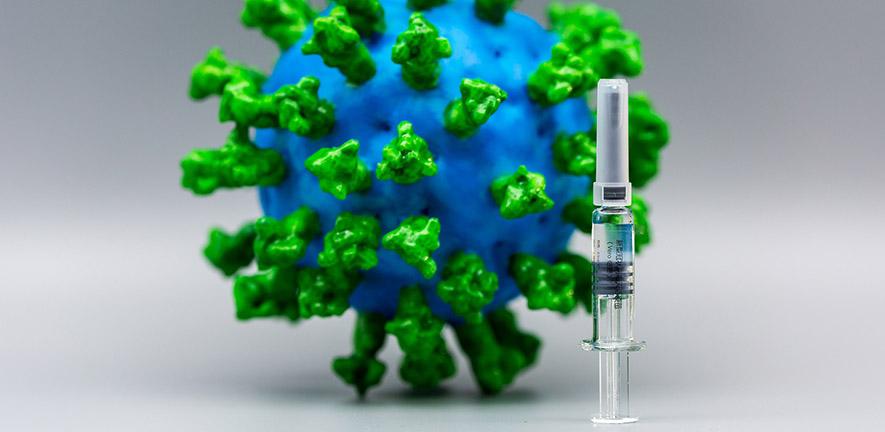
Model of coronavirus and hypodermic needle
source: www.cam.ac.uk


Referrals to Cambridge’s long COVID clinic fell dramatically in the period August 2021 to June 2022, which researchers say is likely due to the successful rollout of the vaccine.


We know that rollout of the vaccines has had a major impact on the number and severity of COVID infections, and evidence from our clinic suggests that it has also played an important role in reducing the rates of the most severe long COVID cases

Ben Krishna

According to the Office of National Statistics, in July this year an estimated 2 million people in the UK were living with self-reported long COVID – that is, symptoms continuing for more than four weeks after their first suspected coronavirus (COVID-19) infection. Patients report symptoms including fatigue, muscle aches, memory problems and shortness of breath more than six months post-acute COVID-19, and a significant number of patients have not fully recovered two years since the initial infection.

Two recent studies have suggested that vaccination strongly reduced long COVID symptoms one-to-three months after infection, but another study using a cohort of US Army Veterans suggested a more modest, 15% reduction at six months.

In May 2020, Addenbrooke’s Hospital, part of Cambridge University Hospitals NHS Foundation Trust (CUH), set up a long COVID clinic, with patients referred to the clinic based on a number of criteria, one of which is symptoms duration of at least five months. These patients tend to be those on the severe end of the symptom spectrum, having been referred following assessment by a team that includes a GP, mental health practitioners, physio and occupational therapists amongst other specialists.

Researchers at the Cambridge Institute of Therapeutic Immunology & Infectious Disease (CITIID) at the University of Cambridge and CUH, analysed data from the clinic and found a 79% drop in the number of patients being referred to the clinic from August 2021 to June 2022, compared to August 2020 to July 2021. The decrease began five months after people started receiving second doses of COVID-19 vaccines.

Six-month moving averages fell from around 10 referrals per month to just one or two referrals per month. This effect has so far been sustained until at least June 2022, despite four times more cases per month of acute COVID-19 in England across the same time periods.

Dr Ben Krishna from the University of Cambridge said: “Long COVID can have a significant impact on an individual’s life, and the large number of patients still experiencing symptoms many months after infection is placing additional strain on our healthcare services.

“We know that rollout of the vaccines has had a major impact on the number and severity of COVID infections, and evidence from our clinic suggests that it has also played an important role in reducing the rates of the most severe long COVID cases.”

The researchers say that it is possible – but unlikely – that the emergence of the Delta variant may also have affected long COVID rates. However, the observed reduction in long COVID rates in August 2021 was from patients experiencing symptoms for five months, which they say would suggest a change beginning in March 2021. This correlates well with the second doses of vaccination in the UK, but the Delta wave did not begin until April 2021.

The team say they also cannot rule out prior infections providing immunity that protects against long COVID from reinfections; however, primary infections were more common than reinfections around March-April 2021.

The team observed no changes in symptoms between those referred for long COVID before or after vaccination for any of the major symptoms such as fatigue (73% pre-vaccination vs 76% post vaccination) and shortness of breath (18% pre-vaccination vs 23% post-vaccination).

It is not yet clear what level of immunity is required to protect against long COVID, say the researchers. As immunity wanes over time, booster shots – including variant-specific booster shots – may be necessary to minimise long COVID risk.

Dr Nyaradzai Sithole from CUH said: “As the virus continues to circulate and infect – and in many cases, re-infect – people, it’s important that everyone is up-to-date with their vaccinations. This will not only help prevent, or at least lessen, their primary COVID infection, but should reduce their risk of long COVID. But whether with the emergence of new variants we will begin to see an uptick in the number of cases of long COVID remains to be seen.”

The study is published in Clinical Infectious Diseases.

The research as funded by the Addenbrooke’s Charitable Trust and the National Institute for Health and Care Research (NIHR), with support from the NIHR Cambridge Biomedical Research Centre.

Reference
Krishna, B et al. Reduced incidence of Long COVID referrals to the Cambridge University Teaching Hospital Long COVID clinic. Clinical Infectious Diseases; 1 Aug 2022; DOI: 10.1093/cid/ciac630


Creative Commons License
The text in this work is licensed under a Creative Commons Attribution 4.0 International License. Images, including our videos, are Copyright ©University of Cambridge and licensors/contributors as identified.  All rights reserved. We make our image and video content available in a number of ways – as here, on our main website under its Terms and conditions, and on a range of channels including social media that permit your use and sharing of our content under their respective Terms.

New Route To Evolution: How DNA From Our Mitochondria Gets Into Our Genomes

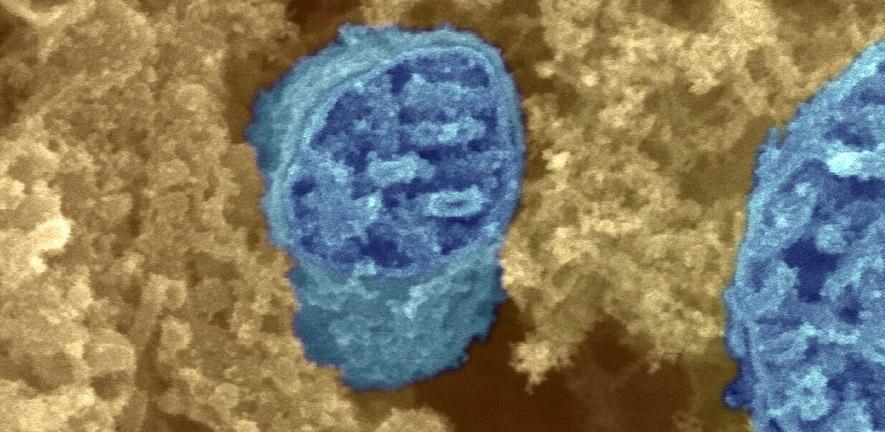
Mitochondria surrounded by cytoplasm
source: www.cam.ac.uk


Scientists have shown that in one in every 4,000 births, some of the genetic code from our mitochondria – the ‘batteries’ that power our cells – inserts itself into our DNA, revealing a surprising new insight into how humans evolve.


Mitochondrial DNA appears to act almost like a Band-Aid, a sticking plaster to help the nuclear genetic code repair itself. And sometimes this works, but on rare occasions if might make things worse or even trigger the development of tumours

Patrick Chinnery

In a study published today in Nature, researchers at the University of Cambridge and Queen Mary University of London show that mitochondrial DNA also appears in some cancer DNA, suggesting that it acts as a sticking plaster to try and repair damage to our genetic code.

Mitochondria are tiny ‘organelles’ that sit within our cells, where they act like batteries, providing energy in the form of the molecule ATP to power the cells. Each mitochondrion has its own DNA – mitochondrial DNA – that is distinct to the rest of the human genome, which is comprised of nuclear DNA.

Mitochondrial DNA is passed down the maternal line – that is, we inherit it from our mothers, not our fathers. However, a study published in PNAS in 2018 from researchers at the Cincinnati Children’s Hospital Medical Center in the USA reported evidence that suggested some mitochondrial DNA had been passed down the paternal line.

To investigate these claims, the Cambridge team looked at the DNA from over 11,000 families recruited to Genomics England’s 100,000 Genomes Project, searching for patterns that looked like paternal inheritance. The Cambridge team found mitochondrial DNA ‘inserts’ in the nuclear DNA of some children that were not present in that of their parents. This meant that the US team had probably reached the wrong conclusions: what they had observed were not paternally-inherited mitochondrial DNA, but rather these inserts.

Now, extending this work to over 66,000 people, the team showed that the new inserts are actually happening all the time, showing a new way our genome evolves.

Professor Patrick Chinnery, from the Medical Research Council Mitochondrial Biology Unit and Department of Clinical Neurosciences at the University of Cambridge, explained: “Billions of years ago, a primitive animal cell took in a bacterium that became what we now call mitochondria. These supply energy to the cell to allow it to function normally, while removing oxygen, which is toxic at high levels. Over time, bits of these primitive mitochondria have passed into the cell nucleus, allowing their genomes to talk to each other.

“This was all thought to have happened a very long time ago, mostly before we had even formed as a species, but what we’ve discovered is that that’s not true. We can see this happening right now, with bits of our mitochondrial genetic code transferring into the nuclear genome in a measurable way.”

The team estimate that mitochondrial DNA transfers to nuclear DNA in around one in every 4,000 births. If that individual has children of their own, they will pass these inserts on – the team found that most of us carry five of the new inserts, and one in seven of us (14%) carry very recent ones. Once in place, the inserts can occasionally lead to very rare diseases, including a rare genetic form of cancer.

It isn’t clear exactly how the mitochondrial DNA inserts itself – whether it does so directly or via an intermediary, such as RNA – but Professor Chinnery says it is likely to occur within the mother’s egg cells.

When the team looked at sequences taken from 12,500 tumour samples, they found that mitochondrial DNA was even more common in tumour DNA, arising in around one in 1,000 cancers, and in some cases, the mitochondrial DNA inserts actually causes the cancer.

“Our nuclear genetic code is breaking and being repaired all the time,” said Professor Chinnery. “Mitochondrial DNA appears to act almost like a Band-Aid, a sticking plaster to help the nuclear genetic code repair itself. And sometimes this works, but on rare occasions if might make things worse or even trigger the development of tumours.”

More than half (58%) of the insertions were in regions of the genome that code for proteins. In the majority of cases, the body recognises the invading mitochondrial DNA and silences it in a process known as methylation, whereby a molecule attaches itself to the insert and switches it off. A similar process occurs when viruses manage to insert themselves into our DNA. However, this method of silencing is not perfect, as some of the mitochondrial DNA inserts go on to be copied and move around the nucleus itself.

The team looked for evidence that the reverse might happen – that mitochondrial DNA absorbs parts of our nuclear DNA – but found none. There are likely to be several reasons why this should be the case.

Firstly, cells only have two copies of nuclear DNA, but thousands of copies of mitochondrial DNA, so the chances of mitochondrial DNA being broken and passing into the nucleus are much greater than the other way around.

Secondly, the DNA in mitochondria is packaged inside two membranes and there are no holes in the membrane, so it would be difficult for nuclear DNA to get in. By contrast, if mitochondrial DNA manages to get out, holes in the membrane surrounding nuclear DNA would allow it pass through with relative ease.

Professor Sir Mark Caulfield, Vice Principal for Health at Queen Mary University of London, said: “I am so delighted that the 100,000 Genomes Project has unlocked the dynamic interplay between mitochondrial DNA and our genome in the cell’s nucleus. This defines a new role in DNA repair, but also one that could occasionally trigger rare disease, or even malignancy.”

The research was mainly funded by the Medical Research Council, Wellcome, and the National Institute for Health Research.

Reference
Wei, E et al. Nuclear-embedded mitochondrial DNA sequences in 66,083 human genomes. Nature; 5 Oct 2022; DOI: 10.1038/s41586-022-05288-7


Creative Commons License
The text in this work is licensed under a Creative Commons Attribution 4.0 International License. Images, including our videos, are Copyright ©University of Cambridge and licensors/contributors as identified.  All rights reserved. We make our image and video content available in a number of ways – as here, on our main website under its Terms and conditions, and on a range of channels including social media that permit your use and sharing of our content under their respective Terms.

Cambridge University Marks Black History Month 2022

source: www.cam.ac.uk


Events and activities are being held across Cambridge University and the Colleges to mark Black History Month 2022. Throughout October, lectures, discussions, exhibitions and more will reflect on the experiences of the past, and explore the contribution of individuals and the achievements of communities.


Events taking place at Cambridge include:

Throughout October

Downing’s Early Black Cantabs
Downing College, Regent Street, Cambridge

Archive exhibition celebrating Downing College’s early black students, dating back more than 100 years. This exhibition shares research carried out in support of the Black Cantabs Research Society by the College Archivist and new profiles added over the past year.

View the online exhibition

The exhibition in the Maitland Robinson Library, Regent Street, is still available by appointment. Please contact the College Archivist, Jenny Ulph, for more information or to arrange to see the exhibition.


Saturday 1 October and Monday 31 October

St Catharine’s College, Trumpington Street, Cambridge

St Catharine’s College will again fly the flag of the Bahamas to commemorate its first Black student, Alfred F. Adderley CBE.

Flying the flag of the Bahamas to mark Black History Month

Thursday, 13 October

Black Women in Business with Dr Maggie Semple OBE and Jane Oremosu, 6.30pm to 8pm
Combination Room, Wolfson College, Barton Road, Cambridge

Wolfson student Annoa Abekah-Mensah chats with Dr Maggie Semple OBE and Jane Oremosu, two black women with extensive business acumen, about their work and experiences in the corporate space, and their professional services company I-Cubed Group which offers diversity and inclusion training.

Register for Black Women in Business with Dr Maggie Semple OBE and Jane Oremosu

Thursday, 13 October

Legal Profession, Public Office and Race – My Personal Journey, with Busola Johnson, 6-7pm
Lucy Cavendish College, Lady Margaret Road, Cambridge

Lucy Cavendish alumna Busola Johnson, a specialist prosecutor in the Special Crime and Counter Terrorism Division at the Crown Prosecution Service, will share her journey as a lawyer, discussing the legal professions, public office and race.

The event is free and open to all and will take place in the Wood-legh Room, in the Strathaird Building. There is no need to register.

Thursday, 20 October

Dreams from my Mother with Dame Elizabeth Anionwu, 6.30-8pm
Wolfson College, online event

Wolfson student Annoa Abekah-Mensah speaks with Dame Elizabeth Anionwu, a nurse, lecturer, professor and author, about her life – as detailed in her new autobiography Dreams from my Mother – discussing her time as a young child in care, her experience in nursing and journey into sickle-cell and thalassemia research, and her work in Black activism.

Register for Dreams from my Mother with Dame Elizabeth Anionwu event

Saturday, 22 October

Adderley Dinner
St Catharine’s College, Trumpington Street, Cambridge

The Adderley Dinner, named in memory of St Catharine’s first Black student and supported by the Master’s Fund, will celebrate the achievements of the College’s Black community and foster connections between current students and alumni. Invited guests will be welcomed by Lady Welland (2020) at a reception in the Master’s Lodge Dining Room. This event is primarily for members of the College community who identify as Black and mixed Black.

Sunday, 23 October

Choral Evensong
St Catharine’s College, Trumpington Street, Cambridge

Choral Evensong service live-streamed from the Chapel, with The Revd Shana Maloney preaching on the Magnificat and empowerment, and the work of Black composers featured among the musical performances.

Thursday, 27 October

How Can We Educate Children About Anti-Racism? with Laura Henry Allain MBE, 6.30-10pm
Combination Room, Wolfson College, Barton Road, Cambridge

Wolfson student Annoa Abekah-Mensah sits down with Laura Henry Allain MBE to discuss her work in education and race. Laura Henry-Allain MBE is an award-winning international writer, motivational and keynote speaker and consultant. She is the creator of the well-loved CBeebies show JoJo and Gran, of which she is the associate producer.

Register for How Can We Educate Children About Anti-Racism? with Laura Henry Allain MBE

Wednesday, 2 November

2022 Annual Race Equality Lecture, 5.30-6.30pm

The University’s 2022 Annual Race Equality Lecture will be given by sociologist Professor Ruha Benjamin, at the Department of African American Studies at Princeton University.

More details to follow.


Creative Commons License
The text in this work is licensed under a Creative Commons Attribution 4.0 International License. Images, including our videos, are Copyright ©University of Cambridge and licensors/contributors as identified.  All rights reserved. We make our image and video content available in a number of ways – as here, on our main website under its Terms and conditions, and on a range of channels including social media that permit your use and sharing of our content under their respective Terms.

Acting Vice-Chancellor Stresses Drive For Academic Excellence

Acting Vice-Chancellor stresses drive for academic excellence

Dr Anthony Freeling
source: www.cam.ac.uk


The acting Vice-Chancellor of the University of Cambridge, Dr Anthony Freeling, has been outlining his vision for the next nine months in the traditional Annual Address at the Senate House. Dr Freeling has taken over from Professor Stephen Toope and will lead the University until the new Vice-Chancellor takes office.


Together we form an extraordinary community who come together for the greater benefit of the whole

Dr Anthony Freeling

Professor Deborah Prentice, currently Provost of Princeton in the United States, has been nominated for the role. Dr Freeling, formerly President of Hughes Hall, is the first acting vice-chancellor in the University’s history. In his speech he used the analogy of running a relay race and said it was his role to ensure the baton was passed smoothly to his successor. He paid a heartfelt tribute to Professor Toope for steering Cambridge through some its most challenging times ever and making the University even more open to diverse talent, more financially transparent, and more collegial. He noted that the University “is about to begin an exciting new partnership to bring more than 1,000 young African scholars to Cambridge.”

Dr Freeling also stressed the importance of the University’s mission, describing academic excellence as the touchstone: “Whether addressing climate change, the cost of living or student wellbeing, the central University, the academic departments, and the colleges must work more closely than ever, and we must collaborate more effectively than ever. In short, working collaboratively to enhance Cambridge’s academic excellence will be the guiding principle of my time in office, and my unrelenting focus, before handing over the baton to my successor.”

He acknowledged that the months ahead will be challenging, “not least as we make the necessary adjustments to help our communities cope with the country’s cost of living crisis”, but vowed to “work across collegiate Cambridge to help us pull together and achieve this shared purpose.”

The University, he said, could only achieve its aims by working together: “We are united in our aspirations, and in our collective enterprise. Together, we form an extraordinary community who come together for the greater benefit of the whole.”

Dr Freeling emphasised the University’s commitment to freedom of speech: “We take great pride in being a self-governing community of scholars. We place great stock in protecting academic freedom. And we make great efforts to embed freedom of expression.” “The University’s governance”, he added, “relies ultimately on members of its Regent House engaging, discussing and voting on the issues that matter most to them.”

He ended his Address by urging members of the Regent House – the University’s governing body – to fully participate in the decision-making processes of the University saying it was “a democratic right, and democratic duty”.


Creative Commons License
The text in this work is licensed under a Creative Commons Attribution 4.0 International License. Images, including our videos, are Copyright ©University of Cambridge and licensors/contributors as identified.  All rights reserved. We make our image and video content available in a number of ways – as here, on our main website under its Terms and conditions, and on a range of channels including social media that permit your use and sharing of our content under their respective Terms.

Traumatic Brain Injury ‘Remains a Major Global Health Problem’ Say Experts

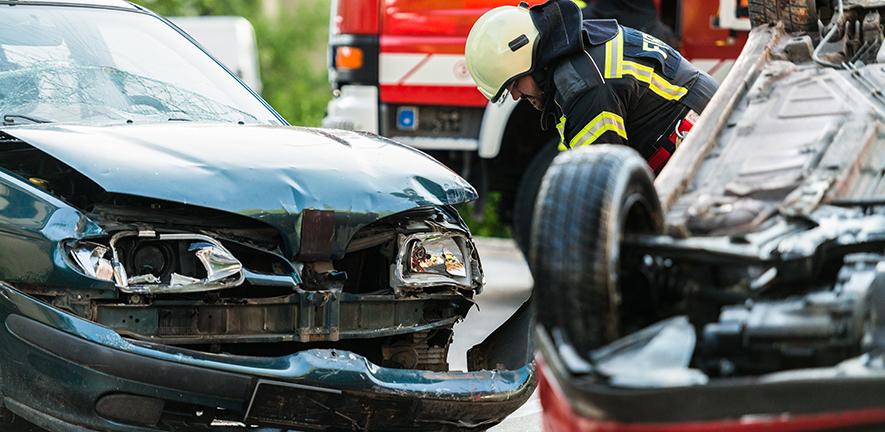
Firefighters At A Car Accident Scene
source: www.cam.ac.uk


A new report highlights the advances and challenges in prevention, clinical care, and research in traumatic brain injury, a leading cause of injury-related death and disability worldwide.


Over the last decade, large international collaborations have provided important information to improve understanding and care of TBI. However, significant problems remain, especially in low and middle income countries

David Menon

The report – the 2022 Lancet Neurology Commission – has been produced by world-leading experts, including co-lead author Professor David Menon from the Division of Anaesthesia at the University of Cambridge.

The Commission documents traumatic brain injury (TBI) as a global public health problem, which afflicts 55 million people worldwide, costs over US$400 billion per year, and is a leading cause of injury-related death and disability.

TBI is not only an acute condition but also a chronic disease with long-term consequences, including an increased risk of late-onset neurodegeneration, such as Parkinson’s disease and dementia. Road traffic incidents and falls are the main causes, but while in low- and middle-income countries, road traffic accidents account for almost three times the number of TBIs as falls, in high-income countries falls cause twice the number of TBIs compared to road traffic accidents. These data have clear consequences for prevention.

Over 90% of TBIs are categorized as ‘mild’, but over half of such patients do not fully recover by six months after injury. Improving outcome in these patients would be a huge public health benefit. A multidimensional approach to outcome assessment is advocated, including a focus on mental health and post-traumatic stress disorder. Outcome after TBI is poorer in females compared with males, but reasons for this are not clear.

Professor Menon said: “Traumatic brain injury remains a major global health problem, with substantial impact on patients, families and society.  Over the last decade, large international collaborations have provided important information to improve understanding and care of TBI.  However, significant problems remain, especially in low and middle income countries.  Continued collaborative efforts are needed to continue to improve patient outcomes and reduce the societal impact of TBI.”

The Commission identified substantial disparities in care, including lower treatment intensity for patients injured by low-energy mechanisms, deficiencies in access to rehabilitation and insufficient follow-up in patients with ‘mild’ TBI. In low- and middle-income countries, both pre-hospital and post-acute care are largely deficient.

The Commission presents substantial advances in diagnostics and treatment approaches. Blood-based biomarkers perform as well – or perhaps even better – than clinical decision rules for selecting patients with mild TBI for CT scanning, and can thus help reduce unnecessary radiation risks. They also have prognostic value for outcome. Genomic analyses suggests that 26% of outcome variance in TBI might be heritable, emphasizing the relevance of host response, which is modifiable. Advanced monitoring of the brain in patients with severe injuries in the intensive care setting provides better insight into derangements of brain function and metabolism, providing a basis for individualizing management to the needs of a patient. These advances have, however, not yet led to improved outcome. Mortality in patients with moderate to severe injuries appears to have decreased, but a greater number of survivors may have substantial disability.

Emeritus Professor Andrew Maas from the Antwerp University Hospital and University of Antwerp, Belgium, said: “Improving care pathways and removing current disparities in care for patients with TBI will require close collaboration between policymakers, clinicians and researchers, with input from patients and patient representatives.”

Professor Geoffrey Manley from the University of California, San Francisco and Zuckerberg San Francisco General Hospital and Trauma Center, USA, said: “This Commission represents true team science, involving over 300 authors and contributors from around the globe working closely with the team at Lancet Neurology. Much of the data reported come from large-scale collaborative studies, illustrating the strength of longer-term observational research. There can be no doubt that multidisciplinary international collaboration is the way forward”.

Reference
Lancet Neurology Commission. Lancet Neurology; 30 Sept 2022; DOI: 10.1016/S1474-4422(22)00309-X

Adapted form a press release from SMC Media


Creative Commons License
The text in this work is licensed under a Creative Commons Attribution 4.0 International License. Images, including our videos, are Copyright ©University of Cambridge and licensors/contributors as identified.  All rights reserved. We make our image and video content available in a number of ways – as here, on our main website under its Terms and conditions, and on a range of channels including social media that permit your use and sharing of our content under their respective Terms.

Breakthrough In Understanding Of How Cancer Spreads Could Lead To Better Treatments

Cancer cell migrating through blood vessel
source: www.cam.ac.uk


Cambridge scientists have discovered that cancer cells ‘hijack’ a process used by healthy cells to spread around the body, completely changing current ways of thinking around cancer metastasis.


These findings are among the most important to have come out of my lab for three decades

Richard Gilbertson

The team based at the Cancer Research UK (CRUK) Cambridge Institute, University of Cambridge, found that blocking the activity of the NALCN protein in cells in mice with cancer triggers metastasis.

The research, which was published in Nature Genetics today, also discovered that this process is not just restricted to cancer. To their surprise, when they removed NALCN from mice without cancer, this caused their healthy cells to leave their original tissue and travel around the body where they joined other organs.

They found, for example, that healthy cells from the pancreas migrated to the kidney where they became healthy kidney cells. This suggests that metastasis isn’t an abnormal process limited to cancer as previously thought, but is a normal process used by healthy cells that has been exploited by cancers to migrate to other parts of the body to generate metastases.

Group Leader for the study and Director of the CRUK Cambridge Centre, Professor Richard Gilbertson, said: “These findings are among the most important to have come out of my lab for three decades. Not only have we identified one of the elusive drivers of metastasis, but we have also turned a commonly held understanding of this on its head, showing how cancer hijacks processes in healthy cells for its own gains. If validated through further research, this could have far-reaching implications for how we prevent cancer from spreading and allow us to manipulate this process to repair damaged organs.”

Despite being one of the main causes of death in cancer patients, metastasis has remained incredibly difficult to prevent, largely because researchers have found it hard to identify key drivers of this process that could be targeted by drugs. Now that they have identified NALCN’s role in metastasis, the team are looking into various ways to restore its function, including using existing drugs on the market.

Lead researcher on the study Dr Eric Rahrmann, said: “We are incredibly excited to have identified a single protein that regulates not only how cancer spreads through the body, independent of tumour growth, but also normal tissue cell shedding and repair. We are developing a clearer picture on the processes that govern how cancer cells spread. We can now consider whether there are likely existing drugs which could be repurposed to prevent this mechanism from triggering cancer spreading in patients.”

NALCN stands for sodium (Na+) leak channel, non-selective. Sodium leak channels are expressed predominately in the central nervous system but are also found throughout the rest of the body. These channels sit across the membranes of cells and control the amount of salt – that is, sodium – that goes in and out of the cell. Controlling this process also alters the balance of electricity across the cell membrane. It is not yet clear why these channels seem to be implicated so directly in cancer metastasis.

The research was funded by CRUK, whose Director of Research, Dr Catherine Elliott, said: “Once cancer has spread from the first tumour, it is harder to treat because we are looking at multiple sites in the body and working with new tumours that may be resistant to treatment. Discovering that a cancer has spread is always devastating news for patients and their families and so we are delighted to have supported this incredible research which may one day allow us to prevent metastasis and turn cancer into a much more survivable disease.”

Reference
Rahrmann, EP et al. The NALCN channel regulates metastasis and nonmalignant cell dissemination. Nat Genetics; 29 Sept 2022; DOI: 10.1038/s41588-022-01182-0

Adapted from a press release from Cancer Research UK


Creative Commons License
The text in this work is licensed under a Creative Commons Attribution 4.0 International License. Images, including our videos, are Copyright ©University of Cambridge and licensors/contributors as identified.  All rights reserved. We make our image and video content available in a number of ways – as here, on our main website under its Terms and conditions, and on a range of channels including social media that permit your use and sharing of our content under their respective Terms.

Set Up Reserve Lab Capacity Now For Faster Response To Next Pandemic, Say Researchers

Female scientist in laboratory
source: www.cam.ac.uk


Researchers say a ‘human bottleneck’, due to historical cuts in public health funding, delayed the UK’s scale-up of COVID-19 testing in the early stages of the country’s pandemic response.


A pandemic like COVID-19 is guaranteed to happen again at some point.

Jordan Skittrall

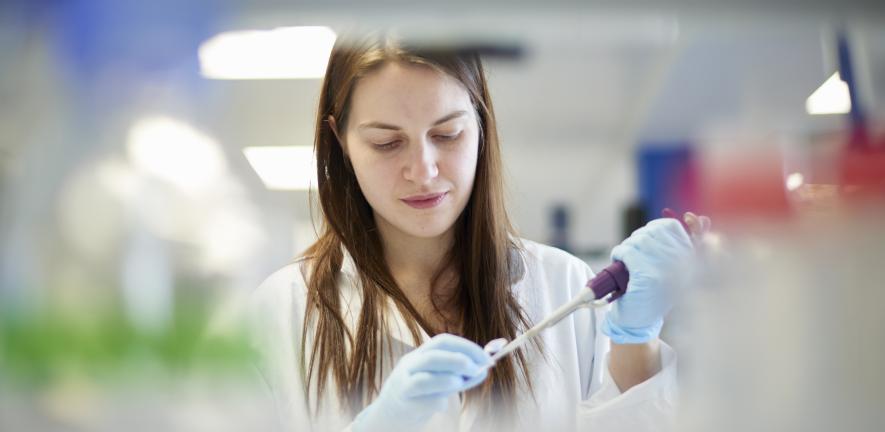
The researchers, who were on the front line of the UK’s early response to COVID-19 in 2020, say a system of reservist lab scientists should to be set up now to provide surge capacity that will help the country respond faster – and more effectively –  to future outbreaks of infectious disease.

They considered a number of options for providing scientific surge capacity and concluded that the best scenario would be a mix of highly skilled paid reservists, and volunteers who could be called on when required and trained rapidly.

In their report, published today in the journal The BMJ, the researchers say the lack of early COVID-19 PCR testing capacity had a knock-on effect on other health services in 2020. This included delaying the ability to make sure hospitals were COVID-secure and patients had surgery as safely as possible, and slowing down the identification of people with COVID-19 in the community – which delayed contact tracing.

“Because COVID-19 testing wasn’t scaled up quickly enough, we couldn’t detect all cases quickly enough to try and stop the spread of the disease,” said Dr Jordan Skittrall in the University of Cambridge’s Department of Pathology and first author of the report.

“It was frustrating to hear politicians’ promises to repeatedly scale up COVID-19 testing capacity during the early stage of the pandemic. The scale-up was extremely challenging: a lot of expertise is needed to get the tests working in the early stages of dealing with a new pathogen,” he added.

In early 2020, PCR testing for SARS-CoV-2, the virus that causes COVID-19, was a highly skilled job that required lab staff to undergo lengthy training. As the testing process was developed it became increasingly automated.

The researchers say that the risk of another pandemic like COVID-19 happening is ever-present: there have been outbreaks of infectious disease throughout history. But nobody can say for sure when it will happen.

They suggest that effective preparation for the next pandemic includes recruiting a relatively small number of highly skilled scientists, who would be paid on retainer, to help in the initial phases of an emergency.

It would also involve a large reserve of volunteer staff to provide essential testing capacity; these people would not need to have specialist skills but could be trained quickly in an emergency and paid only when needed. Those working in sectors of the economy likely to close during a pandemic – such as entertainment and hospitality – would be ideal candidates as voluntary reserves, the researchers say.

“There’s an extent to which the emergence of an infectious disease is a random process, but a pandemic like COVID-19 is guaranteed to happen again at some point,” said Skittrall, who is also an Honorary Specialty Registrar in Infectious Diseases and Medical Virology at Addenbrooke’s Hospital, part of Cambridge University Hospitals NHS Foundation Trust.

He added: “In the UK we’re in the privileged position of having the right scientific skills to respond to the next big outbreak. But we need to make sure that we have these people ready, so that when something does happen they can hit the ground running.”

As a clinician at Addenbrooke’s Hospital in Cambridge Skittrall put his normal work on hold to help interpret COVID-19 test results in the lab in early 2020, and ensure the right clinical responses were carried out.

“In early 2020 we were working until late at night, with very few people processing tests for the whole country,” said Skittrall. “The speed at which people were having to work, and the difficulty of trying to scale up the process in a busy hospital lab made me realise there was a real human bottleneck. We needed more people to process the tests.”

In their paper the scientists compare COVID-19 with other large-scale emergencies including war, where the military has a system of reservists for built-in surge capacity. But they say that unlike the military where reservists serve to deter warfare, having an ‘always-on’ capacity to deal with public health emergencies wouldn’t do anything to deter a new pandemic from emerging – and that’s why there has always been a pressure to close labs and streamline public health services.

Their suggested solution does not require sustained, cross-party political will to fund so is more likely to succeed; the researchers acknowledge there are many other pressures on the UK economy that must take priority.

They recommend that other countries should consider their requirements for surge capacity based on their own circumstances.

UK laboratories have now conducted over 200 million PCR tests for SARS-CoV-2, the virus that causes COVID-19.

Reference

Skittrall, JP et al. ‘Preparing for the next pandemic: reserve laboratory staff.’ The BMJ, September 2022. DOI: 10.1136/BMJ-2022-072467


Creative Commons License
The text in this work is licensed under a Creative Commons Attribution 4.0 International License. Images, including our videos, are Copyright ©University of Cambridge and licensors/contributors as identified.  All rights reserved. We make our image and video content available in a number of ways – as here, on our main website under its Terms and conditions, and on a range of channels including social media that permit your use and sharing of our content under their respective Terms.

Cambridge Recognised For Its Leadership In Knowledge Exchange

source: www.cam.ac.uk


Cambridge’s leadership in knowledge exchange has been recognised in today’s Knowledge Exchange Framework 2 (KEF2) results, published by Research England. Cambridge secured the highest performance scores in many areas of knowledge exchange, with very high engagement for intellectual property (IP) commercialisation, research partnerships, working with business, and working with the public and third sectors.


“The University of Cambridge has a fantastically rich knowledge exchange ecosystem. Here, unique and constantly-evolving support systems, physical spaces and development opportunities exist to enable the pursuit, dissemination and application of world-leading research and knowledge for the benefit of society”

Andy Neely

The KEF provides a range of information about the knowledge exchange activities of English higher education institutions – in other words, how each institution works with external partners, from businesses to community groups, for the benefit of the economy and society.

When compared with its peer group in cluster ‘V’ (very large, research-intensive universities), Cambridge shows:

  • very high engagement for research partnerships, as measured by co-authorship with non-academic partners and contributions to collaborative research
  • very high engagement for IP and commercialisation, and working with business
  • very high engagement for working with the public and third sector, as measured by income from contract research, consultancy and the provision of facilities and equipment services to these partners
  • high engagement for public and community engagement in line with the cluster average.

Professor Andy Neely, Pro-Vice-Chancellor for Enterprise and Business Relations at Cambridge, said: “The University of Cambridge has a fantastically rich knowledge exchange ecosystem. Here, unique and constantly-evolving support systems, physical spaces and development opportunities exist to enable the pursuit, dissemination and application of world-leading research and knowledge for the benefit of society.

“This ecosystem, together with productive relationships with our industry partners, many of them stretching back over decades with a shared history of innovation, and the many opportunities for public engagement, helps ensure that Cambridge is a vibrant and welcoming place for knowledge exchange.”

Dr Karen Kennedy, Director of the Strategic Partnerships Office, added: “By working in partnership with businesses and other organisations, we are able to turn our research into new technologies, therapeutics and applications that will make a positive difference to people’s lives, both in the UK and around the world. The KEF has an important role to play in highlighting the value of such collaborations and we are delighted that Cambridge has been recognised for its strength in this regard.”

Partnerships

Combining expertise at the University of Cambridge with the insights, resources and capabilities of commercial partners enhances the ability to change lives through, for example, pioneering new cures for disease, making breakthroughs in energy transition and shaping a more sustainable, more equitable future.

This has led, for instance, to the launch of the Cambridge Centre for Artificial Intelligence in Medicine in partnership with AstraZeneca and GSK, the creation of a recruitment programme for neurodiverse individuals in partnership with Aviva, and a partnership with KPMG to look at the future of work, starting with mental wellbeing.

With support from Cambridge Zero, which aims to maximise the University’s contribution towards achieving a resilient and sustainable zero-carbon world, work has been ongoing to establish broad academic–industry networks to promote wider collaborations in key decarbonisation challenge areas. In addition, a partnership with South Korean investment group WP Investment Company (WPIC) is seeking to progress research in sustainable energy systems, particularly the production of lithium and its use in batteries for electric vehicles.

Commercialisation

Cambridge scored highly for its IP commercialisation, in part because of work done by Cambridge Enterprise, the University’s commercialisation arm. Cambridge Enterprise works with academics to protect, develop and move innovations based on University research toward the market. Early stage innovations are licensed to existing companies for development or spun out as new companies. The goal is getting early stage ideas out of labs and into use, for the benefit of society and the economy.

Dr Diarmuid O’Brien, Chief Executive of Cambridge Enterprise, said: “University research and innovation have a vital role to play in confronting huge global challenges such as climate change. That is our mission, to help the University’s researchers bring positive change to the world through their research.”

In the financial year 2020-2021, Cambridge Enterprise approved £5.7m of investments in 21 companies, 7 of which were at seed stage. Among these were three companies developing new technologies focused on reducing carbon emissions – NyoboltEchion Technologies and Carbon Re. These three companies collectively raised over £20 million of investment and are helping to move the world to a more sustainable future.

Cambridge Enterprise is part of an extensive support infrastructure that helps postdocs, academics and staff plan, launch and fund successful ventures. Cambridge Enterprise and the Entrepreneurial Postdocs of Cambridge, for instance, together run an annual Postdoc Business Plan Competition designed to help accelerate the creation of businesses based on Cambridge research.

Now in its eighth year, the competition has led 73 teams through a programme of training, mentoring and business plan iteration. These 73 teams have gone on to raise over £69 million in investment. Among the winners of the competition is Dr Giorgia Longobardi (pictured), whose spin-out Cambridge GaN Devices has developed a range of power devices using the energy-efficient semiconductor gallium nitride, heralding a new era of greener electronics. The £20,000 first prize in 2016 was invested in, and helped accelerate, the company.

Public engagement

The University’s public engagement activities were also rated highly. Public engagement fulfils the University’s mission by creating bridges between researchers and the public, locally, regionally, nationally and internationally. Partnerships with civic organisations, charities, and arts and community groups help build and maintain relationships with our local communities.

Dr Lucinda Spokes, Head of Public Engagement, said: “Training and advice underpins everything we do. This provides researchers with the skills and confidence to work collaboratively with their communities and stakeholders sharing expertise to co-produce knowledge, improve research outcomes and deliver wider societal benefit.”

University of Cambridge Museums and Botanic Garden (UCM), along with the flagship Cambridge Festival, open up the University’s research and Collections to all, with over one million people visiting exhibitions, talks and activities each year. UCM enables significant contributions to connecting with some of the most vulnerable communities, reducing loneliness, enhancing health and wellbeing, and supporting the development of children and young people.

Digital public engagement, driven by necessity at the start of the pandemic, provided the University with new ways to engage with people both locally and globally. Since 2021, digital engagement as part of the Cambridge Festival has resulted in over 150K views of research-led content by audiences in over 170 countries.

KEF

The KEF has been developed by Research England, a public body who fund Higher Education Institutions to undertake research and knowledge exchange.

David Sweeney CBE, Executive Chair of Research England, said: “Knowledge exchange is integral to the mission and purpose of our universities, and its importance in contributing to societal and economic prosperity is strongly supported by the Government.

“Today’s new version of the Knowledge Exchange Framework takes further forward the vision and potential of KE activity, providing richer evidence to demonstrate universities’ strengths in different areas when set alongside their peers.”


Creative Commons License
The text in this work is licensed under a Creative Commons Attribution 4.0 International License. Images, including our videos, are Copyright ©University of Cambridge and licensors/contributors as identified.  All rights reserved. We make our image and video content available in a number of ways – as here, on our main website under its Terms and conditions, and on a range of channels including social media that permit your use and sharing of our content under their respective Terms.

Seawater Could Have Provided Phosphorous Required For Emerging Life

Artist Concept of an Early Earth
source: www.cam.ac.uk

The problem of how phosphorus became a universal ingredient for life on Earth may have been solved by researchers from the University of Cambridge and the University of Cape Town, who have recreated primordial seawater containing the element in the lab.


This could really change how we think about the environments in which life first originated

Nick Tosca

Their results, published in the journal Nature Communications, show that seawater might be the missing source of phosphate, meaning that it could have been available on a large enough scale for life without requiring special environmental conditions.

“This could really change how we think about the environments in which life first originated,” said co-author Professor Nick Tosca from Cambridge’s Department of Earth Sciences.

The study, which was led by Matthew Brady, a PhD student from Cambridge’s Department of Earth Sciences, shows that early seawater could have held one thousand to ten thousand times more phosphate than previously estimated — as long as the water contained a lot of iron.

Phosphate is an essential ingredient in creating life’s building blocks — forming a key component of DNA and RNA — but it is one of the least abundant elements in the cosmos in relation to its biological importance. When in its mineral form, phosphate is also relatively inaccessible — it can be hard to dissolve in water so that life can use it.

Scientists have long suspected that phosphorus became part of biology early on, but they have only recently begun to recognize the role of phosphate in directing the synthesis of molecules required by life on Earth.  “Experiments show it makes amazing things happen – chemists can synthesize crucial biomolecules if there is a lot of phosphate in solution,” said Tosca.

But the exact environment needed to produce phosphate has been a topic of discussion. Some studies have suggested that when iron is abundant then phosphate should actually be even less accessible to life. This is, however, controversial because early Earth would have had an oxygen-poor atmosphere where iron would have been widespread.

To understand how life came to depend on phosphate, and the sort of environment that this element would have formed in, they carried out geochemical modelling to recreate early conditions on Earth.

“It’s exciting to see how simple experiments in a bottle can overturn our thinking about the conditions that were present on the early Earth,” said Brady.

In the lab, they made up seawater with the same chemistry thought to have existed in Earth’s early history. They also ran their experiments in an atmosphere starved of oxygen, just like on ancient Earth.

The team’s results suggest that seawater itself could have been a major source of this essential element.

“This doesn’t necessarily mean that life on Earth started in seawater,” said Tosca, “It opens up a lot of possibilities for how seawater could have supplied phosphate to different environments— for instance, lakes, lagoons, or shorelines where sea spray could have carried the phosphate onto land.”

Previously scientists had come up with a range of ways of generating phosphate, some theories involving special environments such as acidic volcanic springs or alkaline lakes, and rare minerals found only in meteorites.

“We had a hunch that iron was key to phosphate solubility, but there just wasn’t enough data,” said Tosca. The idea for the team’s experiments came when they looked at waters that bathe sediments deposited in the modern Baltic Sea. “It is unusual because it’s high in both phosphate and iron — we started to wonder what was so different about those particular waters.”

In their experiments, the researchers added different amounts of iron to a range of synthetic seawater samples and tested how much phosphorous it could hold before crystals formed and minerals separated from the liquid. They then built these data points into a model that could predict how much phosphate ancient seawater could hold.

The Baltic Sea pore waters provided one set of modern samples they used to test their model. “We could reproduce that unusual water chemistry perfectly,” said Tosca. From there they went on to explore the chemistry of seawater before any biology was around.

The results also have implications for scientists trying to understand the possibilities for life beyond Earth. “If iron helps put more phosphate in solution, then this could have relevance to early Mars,” said Tosca.

Evidence for water on ancient Mars is abundant, including old river beds and flood deposits, and we also know that there was a lot of iron at the surface and the atmosphere was at times oxygen-poor, said Tosca.

Their simulations of surface waters filtering through rocks on the Martian surface suggest that iron-rich water might have supplied phosphates in this environment too.

“It’s going to be fascinating to see how the community uses our results to explore new, alternative pathways for the evolution of life on our planet and beyond,” said Brady.

Reference:
Matthew P Brady et al. ‘Marine phosphate availability and the chemical origins of life on Earth.’ Nature Communications (2022). DOI: 10.1038/s41467-022-32815-x


Creative Commons License
The text in this work is licensed under a Creative Commons Attribution 4.0 International License. Images, including our videos, are Copyright ©University of Cambridge and licensors/contributors as identified.  All rights reserved. We make our image and video content available in a number of ways – as here, on our main website under its Terms and conditions, and on a range of channels including social media that permit your use and sharing of our content under their respective Terms.

Lava From 2021 Icelandic Eruption Gives Rare View of Deep Churnings Beneath Volcano

Fagradalsfjall volcano, Iceland
source: www.cam.ac.uk


After centuries without volcanic activity, Iceland’s Reykjanes peninsula sprang to life in 2021 when lava erupted from the Fagradalsfjall volcano. New research involving the University of Cambridge helps us see what is going on deep beneath the volcano by reading the chemistry of lavas and volcanic gases almost as they were erupted.


I’ve looked at hundreds of samples from dead volcanoes, but never had the chance to observe such a spectacular example of magma mixing in real-time

John Maclennan

The study, published in the journal Nature and led by the University of Iceland, reports that the eruption was unusual because it was supplied by a particularly deep reservoir of magma originating around 15 kilometres beneath the surface, at the base of Earth’s crust.

Their results also show that volcanoes like this can be fed by complex plumbing systems, where different batches of magma can mix and travel to the surface in just a matter of days or weeks.

The researchers took measurements of lava and volcanic gases during the first 50 days of the eruption — giving them a near-real time report on the changing magma supply.

“I never expected to see the chemical composition of erupting lava change this quickly, showing us just how fast things can change in the depths beneath volcanoes,” said Simon Matthews from the University of Iceland.

The chemical fingerprint of lavas and the crystals inside them — together with the volcanic gases erupted — helped the researchers decode where the magma originated from and its journey to the surface. Until now, there has been a lack of information about the deepest parts of magmatic systems.

The results showed that, during the initial phases of the eruption, the lava was predominately coming from around the boundary between the crust and underlying mantle – the thick, rocky layer that makes up most of Earth’s interior. But over the following weeks, the composition of the lava changed, indicating the eruption was directly tapping magma from greater depths.

“Ever since Enlightenment thinkers started writing about volcanoes, scientists have drawn cross-sections to visualise how they might work below ground,” said co-author Professor Clive Oppenheimer from Cambridge’s Department of Geography. “This study draws together different strands of information from monitoring the chemistry of lava and gas emissions to describe what is happening up to 20 kilometres down.”

They used indicators including the magnesium contents of the lava and carbon dioxide levels in the volcanic gases as barometers to gauge how hot and deep the magma feeding the eruption was. They suggest that, for the magma to come from 15 kilometres below the surface, the eruption was fed by something like a high-speed train direct to the mantle.

“We’ve known for a while that magma coming from the mantle is variable,” said co-author Professor John Maclennan from Cambridge’s Department of Earth Sciences, “But we’ve had to work hard to find clues as to how this complex mixing happens.”

The authors point out that it has long been argued that different kinds of magma can mix deep in magmatic systems before an eruption. The new research shows that new magma can flow into a deep reservoir and mix with existing magma rapidly, in as little as 20 days.

Normally scientists use lavas erupted from old or extinct volcanoes to get a below ground view of volcanoes. But these samples are often too old to unravel processes happening over the course of a few days, “I’ve looked at hundreds of samples from dead volcanoes, but never had the chance to observe such a spectacular example of magma mixing in real-time,” said Maclennan.

Magma mixing has been shown to be an important process in triggering volcanic eruptions, so the study findings could have implications for understanding what drove the eruption and for future monitoring of volcanic activity in Iceland and at similar volcanoes.

Reference:
Sæmundur A. Halldórsson et al. ‘Rapid shifting of a deep magmatic source at Fagradalsfjall volcano, Iceland.’ Nature (2022). DOI: 10.1038/s41586-022-04981-x.


Creative Commons License
The text in this work is licensed under a Creative Commons Attribution 4.0 International License. Images, including our videos, are Copyright ©University of Cambridge and licensors/contributors as identified.  All rights reserved. We make our image and video content available in a number of ways – as here, on our main website under its Terms and conditions, and on a range of channels including social media that permit your use and sharing of our content under their respective Terms.

Regius Professor of Divinity On His Role As Queen’s Scottish Chaplain

Cambridge Regius Professor of Divinity and Dean of the Chapel Royal for the Church of Scotland, the Very Reverend Professor David Fergusson
source: www.cam.ac.uk


In these days of mourning, much has rightly been made of the length of Queen Elizabeth’s reign, its historic moments, and distinctive characteristics.


As Dean of the Chapel Royal in Scotland, I have been privileged to add my own words of appreciation.

While the events that have punctuated her life have been recited, some constant features of this long reign have often gone unnoticed, especially those qualities that outlasted so many movements, trends, and fashions in our national life.

The Queen always turned up and stuck to the programme. This might seem easy with staff to organise and plan ahead, but it required a discipline to adhere steadfastly to a schedule that was demanded and often dictated by others. Looking forwards was also a characteristic attitude displayed by The Queen. It seems that she didn’t dwell long on the past or reflect nostalgically on what was once the case. There was an unsentimental focus on the task at hand.

Paying attention to other people was another hallmark of her long reign. Every teacher, health care worker or counter assistant knows how demanding this can be. We speak of ‘emotional labour’ – the effort involved in listening, reflecting, and responding in the right way to different needs, circumstances and personalities. The Queen gave her undivided attention, however briefly or however long, to those around her.

On the affairs of politics, The Queen always remained discreet. But on one matter she was anxious to tell us what she really thought. Since the turn of the millennium, she became increasingly explicit in her festive broadcasts on the significance of her faith. There was acknowledged a dependence on the grace of God to fulfil her work, a dependence that was strengthened by daily habits of devotion. And there was also an appeal to the example of Christ as a way of living. The theme of service was never far away from these reflections, nor was the sense that other faiths also stressed the importance of loving God and one’s neighbour above all else. A consciousness of divine vocation sustained her since she unexpectedly became heir to the throne after the abdication crisis of 1936; reaffirmed at her accession and coronation, this sen

Cambridge Organist’s Musical Moment of Sorrow Goes Viral

Pembroke College Director of Music Anna Lapwood
source: www.cam.ac.uk


Anna Lapwood never expected that playing the organ in the London Underground might interest anyone other than the odd passer-by or her Twitter followers until an unrehearsed duet with a security guard went viral on Sunday.


Lascia ch’io Pianga actually translates as ‘let me weep’. It’s an expression of sorrow

The 27-year old Director of Music at Pembroke College and London Bridge security guard Marcella de Gale posted a recording of themselves playing George Frideric Handel’s sorrowful aria ‘Lascia ch’io Pianga‘ after a chance encounter at the station led to some impromptu duets.

Four million Twitter views, a stint on breakfast television and a deluge of media requests from around the world later, Lapwood is amazed by the media interest, but not the emotional effect that this piece of music has had on so many people at this moment of national mourning following the death of Queen Elizabeth II.

“Lascia ch’io Pianga actually translates as ‘let me weep’. It’s an expression of sorrow, and it happens to come at a time when many of us are having to process grief and are not sure how to express that,” she said.

Capturing that moment on video happened on Sunday accidentally – naturally – doing something she does all the time. She dropped by to play a couple of pieces on the organ installed beneath the vaulted ceilings of London Bridge tube and rail station, something she often does when passing the station with a little time to spare.

“I played duets with four people that day,” Lapwood said.

She was only planning to hang around for about 10 minutes, but then Marcella wandered over and asked to sing along.

“We played a couple of pieces together and she clearly had a voice that had been trained in the past – then she requested that Handel and it was one of those goosebump moments.”

Lapwood, who earned her music degree at Oxford before coming to the University of Cambridge, always props her phone up on the organ when she visits London Bridge to capture reactions to the instrument from passing commuters.

“I love capturing people’s responses to this instrument – it’s not often that organs are this accessible in a public space, and I love the fact it makes it an instrument people can literally just stumble across.”

Her only explanation for the explosion of interest in her and Marcella’s rendition of Handel’s 1711 aria for his opera Rinaldo is timing.

“Music is how we get to the heart of a conversation much quicker,” she said. “It allows humans to connect without the need for words.”

Lapwood’s seven-year tenure at Pembroke as Director of Music started at the age of 21 and she has been on a mission to bring organ music and music in general to the masses ever since. She set up a girls’ choir at Pembroke, inviting girls 11-18 from local schools to sing. Under her tenure the choirs have released two recordings, and she also has her own album, Images, out on Signum.


Creative Commons License
The text in this work is licensed under a Creative Commons Attribution 4.0 International License. Images, including our videos, are Copyright ©University of Cambridge and licensors/contributors as identified.  All rights reserved. We make our image and video content available in a number of ways – as here, on our main website under its Terms and conditions, and on a range of channels including social media that permit your use and sharing of our content under their respective Terms.

New Phases of Water Detected

New Phases of Water Detected


Abstract image of water
source: www.cam.ac.uk


Water can be liquid, gas or ice, right? Think again.


One way to visualise this phase is that the oxygen atoms form a solid lattice, and protons flow like a liquid through the lattice, like kids running through a maze

Venkat Kapil

Scientists at the University of Cambridge have discovered that water in a one-molecule layer acts like neither a liquid nor a solid, and that it becomes highly conductive at high pressures.

Much is known about how ‘bulk water’ behaves: it expands when it freezes, and it has a high boiling point. But when water is compressed to the nanoscale, its properties change dramatically.

By developing a new way to predict this unusual behaviour with unprecedented accuracy, the researchers have detected several new phases of water at the molecular level.

Water trapped between membranes or in tiny nanoscale cavities is common – it can be found in everything from membranes in our bodies to geological formations. But this nanoconfined water behaves very differently from the water we drink.

Until now, the challenges of experimentally characterising the phases of water on the nanoscale have prevented a full understanding of its behaviour. But in a paper published in the journal Nature, the Cambridge-led team describe how they have used advances in computational approaches to predict the phase diagram of a one-molecule thick layer of water with unprecedented accuracy.

They used a combination of computational approaches to enable the first-principles level investigation of a single layer of water.

The researchers found that water which is confined into a one-molecule thick layer goes through several phases, including a ‘hexatic’ phase and a ‘superionic’ phase. In the hexatic phase, the water acts as neither a solid nor a liquid, but something in between. In the superionic phase, which occurs at higher pressures, the water becomes highly conductive, propelling protons quickly through ice in a way resembling the flow of electrons in a conductor.

Understanding the behaviour of water at the nanoscale is critical to many new technologies. The success of medical treatments can be reliant on how water trapped in small cavities in our bodies will react. The development of highly conductive electrolytes for batteries, water desalination, and the frictionless transport of fluids are all reliant on predicting how confined water will behave.

“For all of these areas, understanding the behaviour of water is the foundational question,” said Dr Venkat Kapil from Cambridge’s Yusuf Hamied Department of Chemistry, the paper’s first author. “Our approach allows the study of a single layer of water in a graphene-like channel with unprecedented predictive accuracy.”

The researchers found that the one-molecule thick layer of water within the nanochannel showed rich and diverse phase behaviour. Their approach predicts several phases which include the hexatic phase–an intermediate between a solid and a liquid–and also a superionic phase, in which the water has a high electrical conductivity.

“The hexatic phase is neither a solid nor a liquid, but an intermediate, which agrees with previous theories about two-dimensional materials,” said Kapil. “Our approach also suggests that this phase can be seen experimentally by confining water in a graphene channel.

“The existence of the superionic phase at easily accessible conditions is peculiar, as this phase is generally found in extreme conditions like the core of Uranus and Neptune. One way to visualise this phase is that the oxygen atoms form a solid lattice, and protons flow like a liquid through the lattice, like kids running through a maze.”

The researchers say this superionic phase could be important for future electrolyte and battery materials as it shows an electrical conductivity 100 to 1,000 times higher than current battery materials.

The results will not only help with understanding how water works at the nanoscale, but also suggest that ‘nanoconfinement’ could be a new route into finding superionic behaviour of other materials.

Dr Venkat Kapil is a Junior Research Fellow at Churchill College, Cambridge. The research team included Dr Christoph Schran and Professor Angelos Michaelides from the Yusuf Hamied Department of Chemistry ICE group, working with Professor Chris Pickard at the Department of Materials Science & Metallurgy, Dr Andrea Zen from the University of Naples Federico II and Dr Ji Chen from Peking University.

Reference:
Angelos Michaelides et al. ‘The first-principles phase diagram of monolayer nanoconfined water.’ Nature (2022). DOI: 10.1038/s41586-022-05036-x


Creative Commons License
The text in this work is licensed under a Creative Commons Attribution 4.0 International License. Images, including our videos, are Copyright ©University of Cambridge and licensors/contributors as identified.  All rights reserved. We make our image and video content available in a number of ways – as here, on our main website under its Terms and conditions, and on a range of channels including social media that permit your use and sharing of our content under their respective Terms.

Competition With China a ‘Driving Force’ For Clean Energy Funding in the 21st Century

Competition with China a ‘driving force’ for clean energy funding in the 21st century

Solar panels in Dunhuang, Gansu, China
source: www.cam.ac.uk


Analysis of energy RD&D investment in major economies also found that commitments at COP21 yielded some positives. Ultimately, however, trends over this century are not consistent with the ‘cleantech’ funding levels needed to meet climate goals, say researchers.


Competition is only half the battle, we also need global cooperation

Laura Diaz Anadon

The first major study of driving forces behind government funding of energy RD&D – and the public institutions generating it – over the 21st century shows that competition created by China’s rise as a technology superpower led to significant increases in clean energy investment.

The new study, led by University of Cambridge and University of California, Berkeley, and published in the journal Nature Energy, also finds that cooperation commitments at a UN climate conference were not just empty words, and did boost ‘cleantech’ innovation, albeit a long way off levels required to hit net zero or prevent two-degree warming.

The research covers eight major economies – Germany, France, US, UK, Korea, India, China and Japan – in the years between 2000 and 2018, and finds that total energy funding among seven of these (excluding India) grew from $10.9 billion to $20.1 billion, an 84% increase.

The share of RD&D (research, development and demonstration) funding for clean technologies – from solar and wind to efficient energy storage – across these seven economies went from 46% to 63% during the first 18 years of this century.

However, it came at the expense of nuclear energy investment, which fell from 42% to 24%, while fossil fuel funding remained ‘sticky’ and relatively unchanged – propped up by huge increases in fossil fuel RD&D spending from China (over $1.5 billion from 2001 to 2018).

“Levels of investment in clean energy have yet to come close to achieving meaningful global decarbonisation,” said Prof Laura Diaz Anadon from the University of Cambridge, a corresponding author on the study.

“Annual government funding for energy RD&D needed to have at least doubled between 2010 and 2020 to better enable future emissions cuts in line with the two-degree Celsius goal,” Anadon said.

Prof Jonas Meckling, study first author from the University of California, Berkeley, said: “Our research reveals the drivers of clean energy investment that had most impact in the 21st century. A mix of cooperation and competition between nations, and a strategic shift towards commercialisation, led to advances that policymakers must build upon.”

Many consider high oil prices a key incentive for government spending on energy innovation as alternatives are sought, such as in the 1970s. Yet the study shows clean energy RD&D continued to grow despite declining oil costs after 2008, leading researchers to assess other possible ‘drivers’ of cleantech investment this century.

The research team conducted their analysis by creating two datasets. One tracked RD&D funding from China, India and the member countries of the International Energy Agency.

The other inventoried 57 public institutions working on energy innovation across eight major economies. These include agencies that fund energy tech such as ARPA-E in the US, the Carbon Trust in the UK, and India’s National Institute of Solar Energy.

The study found intensifying competition in clean energy markets created a ‘cumulative’ investment boost across major economies – primarily driven by China, which grew cleantech RD&D spending at double-digit rates every year (bar one) between 2003 and 2014.

As original solar and wind industries in the US and Europe fought to keep up, an analysis of government reports conducted for the study shows RD&D pushes in major economies were increasingly justified by referencing competitive threats from China. This included US investments post-2008 crash, Germany’s push into electric vehicles, and the EU Green Deal.

The study pinpoints 2014 as the year China became a major player in cleantech across a range of areas, accelerating a gradual shift towards clean energy commercialisation and economic strategy that had already begun in other countries.

For example, after 2014, public RD&D institutions across the eight economies with a stated goal of “competitiveness and economic growth” increased by 14 percentage points.

In addition, some 39% of RD&D institutions ran as government-business partnerships before 2014, but increased focus on commercialisation with the rise of China saw this jump to 63% of institutions established or repurposed from 2015 onwards.

“Competition with China helped grow some clean technologies, but stymied others,” said Anadon. “Research and development for onshore wind increased in major economics when Chinese firms entered the market. However, cleantech that was easily shippable, such as solar PV, suffered from intense Chinese investment that eliminated international competitors.”

“Competition is only half the battle, we also need global cooperation,” she said.

The study shows the “Mission Innovation” – a global initiative to boost cleantech development announced at COP21 in 2015 by President Obama, and backed by 20 nations including China and India – failed to double clean energy RD&D spending by 2020, a stated aim.

However, it did lead to significant increases in RD&D for new clean and nuclear energy in the eight major economies for at least three years following launch, with government documents explicitly referencing Mission Innovation as the rationale for expanding clean energy funding.

The team also investigated how this century’s crises influenced RD&D. Stimulus packages following the 2008 financial crash and COVID-19 pandemic did little for new clean energy efforts, instead typically boosting RD&D funding for “incumbent” energy: fossil (including carbon capture and storage) and nuclear.

“Unlike the financial crash and pandemic, Russia’s war on Ukraine has caused an international crisis with energy at its core,” Anadon added. “This could lead to a global shift in government policies that harness both competition and cooperation to boost clean energy investment, such as a trade club for climate goods.”


Creative Commons License
The text in this work is licensed under a Creative Commons Attribution 4.0 International License. Images, including our videos, are Copyright ©University of Cambridge and licensors/contributors as identified.  All rights reserved. We make our image and video content available in a number of ways – as here, on our main website under its Terms and conditions, and on a range of channels including social media that permit your use and sharing of our content under their respective Terms.

Queen Elizabeth II

1926-2022

source: www.cam.ac.uk

The University of Cambridge community is deeply saddened to hear of the death of Her Majesty The Queen.

Vice-Chancellor Professor Stephen J Toope said: “This news brings great sorrow for the United Kingdom as a whole, for the Commonwealth, and most particularly for members of the Royal Family, to whom we extend our heartfelt condolences.

“Her Majesty The Queen’s reign defined the United Kingdom of the 20th and early 21st centuries. Her Majesty’s devotion to public service and the common good, her dignity, her sense of duty and her strong moral compass, will always be an inspiration.”

Queen Elizabeth II had a long association with the University through her family, and one that she characterised as happy. Her father King George VI, two sons, Princes Charles and Edward, and two cousins, Princes William and Richard of Gloucester, all studied at Cambridge. A grandson, Prince William, was created Duke of Cambridge and spent a term studying at the University, while her husband Prince Philip, Duke of Edinburgh, was an enthusiastic and supportive Chancellor from 1976 to 2011.

The Queen visited the University and Colleges on numerous occasions during her reign, seeing Cambridge through a time of great change. At the time of Her Majesty’s first visit as monarch in 1955, women had only recently been admitted to full degrees, the great majority of undergraduates were male, and student behaviour was perhaps a little more colourful: several veterinary students attempted to welcome the Queen by laying down their gowns for her to walk over, in homage to the famous story of Sir Walter Raleigh and Queen Elizabeth I.

While maintaining her customary neutrality and rarely taking up a public position on an issue, during that visit The Queen chose to tour Newnham and Girton, both Colleges for women – perhaps a quiet signal of support. In 1948 Her Majesty Queen Elizabeth The Queen Mother had been the first woman admitted to a degree in the Senate House.

On her most recent visit, in 2019, The Queen lunched with Fellows, staff and students at Queens’ College – of which, like The Queen Mother, she was Patroness.

Dr Mohamed El-Erian, the President, said: “Queens’ College was honoured to have Her Majesty as our Patroness. We will always remember with deep affection and great appreciation her visits to the College. On every occasion, she engaged our students, Fellows and staff in her uniquely interesting, elegant, and gracious manner.

“We are enormously grateful for all her wonderful contributions to Queens’, including how she inspired so many members of our community. She will be sorely missed.”

The University has a long history of connections with the Crown. Its existence as a body entitled to regulate its own affairs was confirmed in a writ issued by King Henry III in 1231. Monarchs and members of their families have founded Colleges (King’s and Queens’ most obviously, but also Trinity, St John’s and Christ’s); and have been both Chancellors and students. The Crown has established or designated certain professorships as Regius Professorships. The Queen designated two such during her reign: the Regius Chair of Botany in 2009 and the Regius Chair of Engineering in 2011 – the latter to commemorate the Duke of Edinburgh’s 35 years as Chancellor.

Emeritus Vice-Chancellor Professor Sir Leszek Borysiewicz said: “I had the privilege of meeting Her Majesty The Queen on several occasions. When she opened buildings and attended major events in Cambridge, she always engaged warmly with our staff and students as well as showing a continued interest in the University.

“On each occasion it was an honour and pleasure to meet with her, particularly in the knowledge that she always valued Cambridge University’s contribution to the education and wellbeing of the United Kingdom and Commonwealth.”

Remembering Queen Elizabeth II​

Great St Mary’s, the University Church, will be open 9am to 6pm daily, and a Book of Condolence, provided by the City of Cambridge, will be available to the public.

There will be spoken services on Friday 9 Sept and Saturday 10 Sept at 9am, 12noon, 6pm, as well as brief prayers held on the hour.

Details of an ecumenical Act of Remembrance to be held at the University Church will be announced shortly on Great St Mary’s website.

The Queen on her most recent visit to Cambridge, in 2019, meeting Fellows and students of Queens’ College, of which she was Patroness.

Statement on 2022 Admissions

source: www.cam.ac.uk


The University of Cambridge is publishing initial figures from the 2022 admissions cycle. With a few decisions still outstanding, the University will be admitting just under 3,600 undergraduates this year.


Every student who gets a place at Cambridge thoroughly deserves it

Dr Sam Lucy

We would like to congratulate those who successfully met the terms of their offers. This is a cohort of students who have faced immense disruption to their education so their excellent results this summer are a testament to their effort and determination.

The University will welcome another record number of state school students. Around 72.5% will come from the maintained sector (up from 71.6% in 2021). A total of 84 students were admitted through the August Reconsideration Pool (formerly Adjustment). These are students from less advantaged backgrounds who are likely to have narrowly missed out on an offer in January but who then went on to achieve high grades at A-level, demonstrating their potential for Cambridge.

A further 47 students have been successful in securing a place on the University’s Foundation Year. This provides fully funded, year-long study in the Arts, Humanities and Social Sciences for those who have faced educational disruption or disadvantage.

The Director of Admissions for the Cambridge Colleges, Dr Sam Lucy, said:

“We’re delighted to be welcoming another cohort of talented young people on to our courses this year who have shown real resilience in going on to achieve superb results. Every student who gets a place at Cambridge thoroughly deserves it. We know that many will have faced challenging circumstances in the last two years and the Colleges are ready to help with the transition to university level study. Once again, more than a quarter of our students will have come from less advantaged backgrounds* with just over 7% having been eligible for Free School Meals while at school. Our Foundation Year programme will give an opportunity to those who have faced additional hurdles in their route to higher education.”

Around 21% of freshers will be international, slightly down on last year. With more than 22,000 applications for 2022 entry, competition has remained high, with 6 applications per place.

Notes

*Using a combination of POLAR 4 Q1 + 2 and IMD measurements.


Creative Commons License
The text in this work is licensed under a Creative Commons Attribution 4.0 International License. Images, including our videos, are Copyright ©University of Cambridge and licensors/contributors as identified.  All rights reserved. We make our image and video content available in a number of ways – as here, on our main website under its Terms and conditions, and on a range of channels including social media that permit your use and sharing of our content under their respective Terms.

Cambridge’s new community joins Open Cambridge

source: www.cam.ac.uk

Eddington, Cambridge’s newest neighbourhood in the North-West of the City, is holding a family-friendly day introducing you to tips and tricks to lead a more sustainable life.

Sustainable YOU

Brook Leys parkland at Eddington. Credit: University of Cambridge.

On Saturday 10 September, head on down to Eddington’s Market Square at the centre of the community for a feast of activity and bookable events.

From ecology walking tours with Eddington’s ecologist Mike Dean to a special talk with Professor of Regional Transformation and Economic Security, Shailaja Fennell, as well as a vegan market and your chance to practise a circular economy by taking part in a toy-swap – there is something for everyone!

Professor Shailaja Fennell. Credit: University of Cambridge

“As a new neighbourhood in Cambridge, we are delighted to host a range of free events for the community that support the theme of sustainability. At Eddington, there are unique features that support environmentally sustainable living: but the ethos of Sustainable YOU is to highlight the small and discreet changes that individuals can try to make a difference. Through our range of activities, we hope people can learn, participate or take at least one small lesson that supports a step towards greater sustainability.”

Biky Wan, Public Relations Manager at the University of Cambridge’s Estates Division.

Eddington Market Square. Credit: Phil Mynott

Partners from local charities and organisations will be on hand to provide tips on a range of topics including sustainable travel from the University’s Transport Team, refills to reduce single-use plastics from local business Green Blue You, as well as local wildlife and other charities.

Sarah, who runs the Green Blue You refill stall. Credit: University of Cambridge

Children take part in the Cycling Festival held at Eddington. Credit: University of Cambridge

Members of the public walk around Eddington during an Ecology walk. Credit: University of Cambridge

A young boy on a cycle. Credit: University of Cambridge

A butterfly rests on some lavender. Credit: University of Cambridge

A small boy plays with a toy at the Eddington Toy Swap. Credit: University of Cambridge

What is Eddington?

Eddington, part of the University of Cambridge’s plan to safeguard its future and maintain its reputation as a world leader, is a new community providing much needed housing for University key workers and students as well as the wider community.

The first residents of this neighbourhood were key workers and post-graduate students who moved into their homes in 2017.

Close to the City, Eddington has environmental sustainability and low-carbon living as a guiding principle. Environmental features include an underground waste and recycling storage system, extensive solar panels, as well as active travel planning that has resulted in over 80% of residents travelling to work by bus, foot or bicycle, and initiatives that support local biodiversity.

“It has been a rare pleasure to work on Eddington. Few developments set out with biodiversity targets as ambitious, and even fewer actually achieve them.”

Mike Dean, Project Ecologist at Eddington

“The contribution that Eddington is making to the local biodiversity resource demonstrates what can be done when ecology is a key influence on scheme design and there is a strong commitment to both the protection of existing important features, and the creation and management of new habitats that are ecologically significant and that can be enjoyed by the local community. We hope you can join for a tour as part of the day,” added Dean.

For full activity listings for Sustainable YOU visit www.eddington-cambridge.co.uk

About Open Cambridge

Wildflowers at Eddington. Credit: Sir Cam

Open Cambridge is a celebration of our community, the heritage, history and stories of Cambridge and the surrounding area and provides an inclusive platform to showcase extraordinary spaces, places and people.

Run over ten days and in conjunction with Heritage Open Days, it is designed to offer special access to places that are normally closed to the public or charge admission. The initiative provides an annual opportunity for people to discover the local history and heritage of their community.

To view the full programme: https://www.opencambridge.cam.ac.uk/

Sign up for mailings: https://www.opencambridge.cam.ac.uk/sign-updates

Follow us on social media: https://twitter.com/opencambridgeuk

Cambridge Biomedical Campus Celebrates 60 Years With £2bn Boost To UK Economy

Aerial shot of Cambridge Biomedical Campus
source: www.cam.ac.uk


A new economic impact report  details the financial contributions of the Cambridge Biomedical Campus (CBC), which celebrates its 60th anniversary this autumn. The independent report by the Centre for Economics and Business Research (Cebr) for the first time calculates the economic benefits of CBC also highlights the health and research benefits for the region.


The success we have on the site is not just limited to improved healthcare and treatments for patients – we generate jobs and income for businesses across Cambridge and the East of England

Kristin-Anne Rutter

The key findings of the report are:

  • The campus supported an aggregate economic footprint of £2.2 billion worth of Gross Value Added to the UK economy and that as well as being the largest employment site in Cambridge, over 15,000 additional roles are supported across the regional supply chain and local businesses.
  • For every 10 jobs directly generated by organisations on the CBC, a further 2.7 jobs are supported within Cambridge City and South Cambridgeshire; one in every six jobs in the local authority areas are either directly or indirectly supported by the campus.
  • Employment on site is growing much faster than the rest of the UK and that £721m is spent by employees across the regional economy.

Looking at the wider economic picture, the research highlights that in 2021 the site reported a collaborative operating income of £1.9 billion, as well as contributing £291million to the Exchequer through tax revenues.

In addition to the new report, a series of events are planned to celebrate the success of the campus spanning 60 years and to tell more stories about the globally significant research that goes on.

Dr Kristin-Anne Rutter, Executive Director at Cambridge Biomedical Campus, said: “The economic impact report for the first time demonstrates the importance of the Cambridge Biomedical Campus to the region, and to the thousands of people who work here and rely on the organisations, whether it’s as a patient or someone working on the site. The success we have on the site is not just limited to improved healthcare and treatments for patients – we generate jobs and income for businesses across Cambridge and the East of England. We do this through collaboration, with research, industry and the NHS working together to drive innovation which is then shared.

“The report is an important milestone, so too is our 60th anniversary and throughout September we’ll be highlighting some of the amazing developments and ideas which have happened since Addenbrookes hospital and the MRC Laboratory of Molecular Biology arrived on the Hills Road site. We’ll be sharing how the campus has grown and how science is taken from laboratories into hospitals, to diagnose and treat patients with world-leading innovative healthcare.”

Alongside the major economic impact of CBC, the research that takes place on the campus has very real and direct healthcare benefits, fuelled by innovation and discoveries that sit at the very forefront of life sciences technology and knowhow.

Read the report


Life-saving treatments

Below are some of the case studies of how patients have been given, or are set to benefit from life-saving treatments, discovered and developed at CBC but with the potential to literally change the lives of people across the world.

Cytosponge: A ‘sponge on a string’ test to detect oesophageal cancer

Around 9,100 people are diagnosed with oesophageal cancer each year in the UK. A big challenge with this type of cancer is that many people don’t realise there’s a problem until they start to have trouble swallowing. Often, these symptoms aren’t recognisable until a later stage in the disease.

But there may be an opportunity to detect the disease earlier. Some people develop a condition – called Barrett’s oesophagus – prior to developing into cancer. Barrett’s oesophagus is much more common than oesophageal cancer, and although it will only become cancer in a handful of cases, it presents an opportunity for doctors to spot a problem early and intervene before cancer develops. But the typical test for Barrett’s oesophagus, endoscopy, is both invasive and expensive.

Enter the Cytosponge.Cytosponge-TFF3 test is a ‘sponge on a string’ device coupled with a laboratory test called TFF3 developed by scientists funded by the Medical Research Council (MRC) and Cancer Research UK – a simple, quick and affordable test for Barrett’s oesophagus that can be done in a GP surgery.

Read more

Ethanol breath biopsy clinical trial for early lung cancer detection

A new clinical trial has launched at Royal Papworth Hospital in Cambridge which is using ethanol (an alcohol) detected in exhaled breath as a potential tool to diagnose lung cancer earlier. The EVOLUTION trial is recruiting patients who definitely have lung cancer and healthy volunteers who definitely do not.
A liquid solution containing a metabolic probe is administered intravenously, travels around the body and when it reacts with a lung tumour causes the release of ethanol. After a set amount of time, patients breathe at regular intervals into a special mask which collects the ethanol which is then analysed in the laboratory. The eVOC probe (Exogenous Volatile Organic Compound) has been developed by Cambridge company Owlstone Medical, who have collaborated with Royal Papworth Hospital’s thoracic oncology research team for previous breath biopsy studies.

Changing the future of ovarian cancer

Each year, about 7,500 women in the UK are diagnosed with ovarian cancer, and around 5,000 will have the most aggressive form of the disease. The cure rate for women with ovarian cancer is very low, despite new medicines coming into the clinic. Only 43% of women in England survive five years beyond their ovarian cancer diagnosis, compared with more than 80% of people for more common cancers, such as breast (85%) and prostate (87%). This is because the disease is often diagnosed late, treatment options are limited, and many women develop resistance to current therapies. Research by Professors James Brenton and Evis Sala, at the Cancer Research UK Cambridge Centre, aims to address this.

Read more

Life-changing artificial pancreas

An artificial pancreas developed by Cambridge researchers is helping protect very young children with type 1 diabetes at a particularly vulnerable time of their lives.

The artificial pancreas uses an algorithm – CamAPS FX – to determine the amount of insulin administered by a device worn by the child. It is available through a number of NHS trusts across the UK, including Cambridge University Hospitals NHS Foundation Trust, and the team hope it will soon be available even more widely.

Read more

Adapted from a press release by Cambridge University Health Partners


Creative Commons License
The text in this work is licensed under a Creative Commons Attribution 4.0 International License. Images, including our videos, are Copyright ©University of Cambridge and licensors/contributors as identified.  All rights reserved. We make our image and video content available in a number of ways – as here, on our main website under its Terms and conditions, and on a range of channels including social media that permit your use and sharing of our content under their respective Terms.

Robots Can Be Used To Assess Children’s Mental Wellbeing, Study Suggests

Robot shaking hands with Dr Micol Spitale

source: www.cam.ac.uk

Robots can be better at detecting mental wellbeing issues in children than parent-reported or self-reported testing, a new study suggests.


Children might see the robot as a confidante – they feel like they won’t get into trouble if they share secrets with it

Nida Itrat Abbasi

A team of roboticists, computer scientists and psychiatrists from the University of Cambridge carried out a study with 28 children between the ages of eight and 13, and had a child-sized humanoid robot administer a series of standard psychological questionnaires to assess the mental wellbeing of each participant.

The children were willing to confide in the robot, in some cases sharing information with the robot that they had not yet shared via the standard assessment method of online or in-person questionnaires. This is the first time that robots have been used to assess mental wellbeing in children.

The researchers say that robots could be a useful addition to traditional methods of mental health assessment, although they are not intended to be a substitute for professional mental health support. The results will be presented today at the 31st IEEE International Conference on Robot & Human Interactive Communication (RO-MAN) in Naples, Italy.

During the COVID-19 pandemic, home schooling, financial pressures, and isolation from peers and friends impacted the mental health of many children. Even before the pandemic however, anxiety and depression among children in the UK has been on the rise, but the resources and support to address mental wellbeing are severely limited.

Professor Hatice Gunes, who leads the Affective Intelligence and Robotics Laboratory in Cambridge’s Department of Computer Science and Technology, has been studying how socially-assistive robots (SARs) can be used as mental wellbeing ‘coaches’ for adults, but in recent years has also been studying how they may be beneficial to children.

“After I became a mother, I was much more interested in how children express themselves as they grow, and how that might overlap with my work in robotics,” said Gunes. “Children are quite tactile, and they’re drawn to technology. If they’re using a screen-based tool, they’re withdrawn from the physical world. But robots are perfect because they’re in the physical world – they’re more interactive, so the children are more engaged.”

With colleagues in Cambridge’s Department of Psychiatry, Gunes and her team designed an experiment to see if robots could be a useful tool to assess mental wellbeing in children.

“There are times when traditional methods aren’t able to catch mental wellbeing lapses in children, as sometimes the changes are incredibly subtle,” said Nida Itrat Abbasi, the study’s first author. “We wanted to see whether robots might be able to help with this process.”

For the study, 28 participants between ages eight and 13 each took part in a one-to-one 45-minute session with a Nao robot – a humanoid robot about 60 centimetres tall. A parent or guardian, along with members of the research team, observed from an adjacent room. Prior to each session, children and their parent or guardian completed standard online questionnaire to assess each child’s mental wellbeing.

During each session, the robot performed four different tasks: 1) asked open-ended questions about happy and sad memories over the last week; 2) administered the Short Mood and Feelings Questionnaire (SMFQ); 3) administered a picture task inspired by the Children’s Apperception Test (CAT), where children are asked to answer questions related to pictures shown; and 4) administered the Revised Children’s Anxiety and Depression Scale (RCADS) for generalised anxiety, panic disorder and low mood.

Children were divided into three different groups following the SMFQ, according to how likely they were to be struggling with their mental wellbeing. Participants interacted with the robot throughout the session by speaking with it, or by touching sensors on the robot’s hands and feet. Additional sensors tracked participants’ heartbeat, head and eye movements during the session.

Study participants all said they enjoyed talking with the robot: some shared information with the robot that they hadn’t shared either in person or on the online questionnaire.

The researchers found that children with varying levels of wellbeing concerns interacted differently with the robot. For children that might not be experiencing mental wellbeing-related problems, the researchers found that interacting with the robot led to more positive response ratings to the questionnaires. However, for children that might be experiencing wellbeing related concerns, the robot may have enabled them to divulge their true feelings and experiences, leading to more negative response ratings to the questionnaire.

“Since the robot we use is child-sized, and completely non-threatening, children might see the robot as a confidante – they feel like they won’t get into trouble if they share secrets with it,” said Abbasi. “Other researchers have found that children are more likely to divulge private information – like that they’re being bullied, for example – to a robot than they would be to an adult.”

The researchers say that while their results show that robots could be a useful tool for psychological assessment of children, they are not a substitute for human interaction.

“We don’t have any intention of replacing psychologists or other mental health professionals with robots, since their expertise far surpasses anything a robot can do,” said co-author Dr Micol Spitale. “However, our work suggests that robots could be a useful tool in helping children to open up and share things they might not be comfortable sharing at first.”

The researchers say that they hope to expand their survey in future, by including more participants and following them over time. They are also investigating whether similar results could be achieved if children interact with the robot via video chat.

The research was supported in part by the Engineering and Physical Sciences Research Council (EPSRC), part of UK Research and Innovation (UKRI), and NIHR Cambridge Biomedical Research Centre. Hatice Gunes is a Fellow of Trinity Hall, Cambridge.

Reference:
Nida Itrat Abbasi et al. ‘Can Robots Help in the Evaluation of Mental Wellbeing in Children? An Empirical Study.’ Paper presented to the 31st IEEE International Conference on Robot & Human Interactive Communication (RO-MAN), Naples, Italy, 29 August – 2 September 2022.


Creative Commons License
The text in this work is licensed under a Creative Commons Attribution 4.0 International License. Images, including our videos, are Copyright ©University of Cambridge and licensors/contributors as identified.  All rights reserved. We make our image and video content available in a number of ways – as here, on our main website under its Terms and conditions, and on a range of channels including social media that permit your use and sharing of our content under their respective Terms.

Cannabis Users No Less Likely To Be Motivated Or Able To Enjoy Life’s Pleasure

Female hands rolling a marijuana joint
source: www.cam.ac.uk


Adult and adolescent cannabis users are no more likely than non-users to lack motivation or be unable to enjoy life’s pleasure, new research has shown, suggesting there is no scientific basis for the stereotype often portrayed in the media.


We’re so used to seeing ‘lazy stoners’ on our screens that we don’t stop to ask whether they’re an accurate representation of cannabis users. Our work implies that this is in itself a lazy stereotype

Martine Skumlien

Cannabis users also show no difference in motivation for rewards, pleasure taken from rewards, or the brain’s response when seeking rewards, compared to non-users.

Cannabis is the third most commonly used controlled substance worldwide, after alcohol and nicotine. A 2018 report from the NHS Digital Lifestyles Team stated that almost one in five (19%) of 15-year-olds in England had used cannabis in the previous 12 months, while in 2020 the National Institute on Drug Abuse reported the proportion in the United States to be 28% of 15-16-year-olds.

A common stereotype of cannabis users is the ‘stoner’ – think Jesse Pinkman in Breaking Bad, The Dude in The Big Lebowski, or, more recently, Argyle in Stranger Things. These are individuals who are generally depicted as lazy and apathetic.

At the same time, there has been considerable concern of the potential impact of cannabis use on the developing brain and that using cannabis during adolescence might have a damaging effect at an important time in an individual’s life.

A team led by scientists at UCL, the University of Cambridge and the Institute of Psychiatry, Psychology & Neuroscience at King’s College London carried out a study examining whether cannabis users show higher levels of apathy (loss of motivation) and anhedonia (loss of interest in or pleasure from rewards) when compared to controls and whether they were less willing to exert physical effort to receive a reward. The research was part of the CannTEEN study.

The results are published in the International Journal of Neuropsychopharmacology.

The team recruited 274 adolescent and adult cannabis users who had used cannabis at least weekly over the past three months, with an average of four days per week, and matched them with non-users of the same age and gender.

Participants completed questionnaires to measure anhedonia, asking them to rate statements such as “I would enjoy being with family or close friends”. They also completed questionnaires to measure their levels of apathy, which asked them to rate characteristics such as how interested they were in learning new things or how likely they were to see a job through to the end.

Cannabis users scored slightly lower than non-users on anhedonia – in other words, they appeared better able to enjoy themselves – but there was no significant difference when it came to apathy. The researchers also found no link between frequency of cannabis use and either apathy or anhedonia in the people who used cannabis.

Martine Skumlien, a PhD candidate in the Department of Psychiatry at the University of Cambridge, said: “We were surprised to see that there was really very little difference between cannabis users and non-users when it came to lack of motivation or lack of enjoyment, even among those who used cannabis every day. This is contrary to the stereotypical portrayal we see on TV and in movies.”

In general, adolescents tended to score higher than adults on anhedonia and apathy in both user and non-user groups, but cannabis use did not augment this difference.

Dr Will Lawn, from the Institute of Psychiatry, Psychology and Neuroscience at King’s College London, said: “There’s been a lot of concern that cannabis use in adolescence might lead to worse outcomes than cannabis use during adulthood. But our study, one of the first to directly compare adolescents and adults who use cannabis, suggests that adolescents are no more vulnerable than adults to the harmful effects of cannabis on motivation, the experience of pleasure, or the brain’s response to reward.

“In fact, it seems cannabis may have no link – or at most only weak associations – with these outcomes in general. However, we need studies that look for these associations over a long period of time to confirm these findings.”

Just over half of participants also carried out a number of behavioural tasks. The first of these assessed physical effort. Participants were given the option to perform button-presses in order to win points, which were later exchanged for chocolates or sweets to take home. There were three difficulty levels and three reward levels; more difficult trials required faster button pressing. On each trial the participant could choose to accept or reject the offer; points were only accrued if the trial was accepted and completed.

In a second task, measuring how much pleasure they received from rewards, participants were first told to estimate how much they wanted to receive each of three rewards (30 seconds of one of their favourite songs, one piece of chocolate or a sweet, and a £1 coin) on a scale from ‘do not want at all’ to ‘intensely want’. They then received each reward in turn and were asked to rate how pleasurable they found them on a scale from ‘do not like at all’ to ‘intensely like’.

The researchers found no difference between users and non-users or between age groups on either the physical effort task or the real reward pleasure task, confirming evidence from other studies that found no, or very little, difference.

Skumlien added: “We’re so used to seeing ‘lazy stoners’ on our screens that we don’t stop to ask whether they’re an accurate representation of cannabis users. Our work implies that this is in itself a lazy stereotype, and that people who use cannabis are no more likely to lack motivation or be lazier than people who don’t.

“Unfair assumptions can be stigmatising and could get in the way of messages around harm reduction. We need to be honest and frank about what are and are not the harmful consequences of drug use.”

Earlier this year, the team published a study that used functional magnetic resonance imaging (fMRI) to look at brain activity in the same participants as they took part in a brain imaging task measuring reward processing. The task involved participants viewing orange or blue squares while in the scanner. The orange squares would lead to a monetary reward, after a delay, if the participant made a response.

The researchers used this set up to investigate how the brain responds to rewards, focusing in particular on the ventral striatum, a key region in the brain’s reward system. They found no relationship between activity in this region and cannabis use, suggesting that cannabis users had similar reward systems as non-users.

Professor Barbara Sahakian, from the Department of Psychiatry at the University of Cambridge, said: “Our evidence indicates that cannabis use does not appear to have an effect on motivation for recreational users. The participants in our study included users who took cannabis on average four days a week and they were no more likely to lack motivation. However, we cannot rule out the possibility that greater use, as seen in some people with cannabis-use disorder, has an effect.

“Until we have future research studies that follow adolescent users, starting from onset through to young adulthood, and which combine measures of motivation and brain imaging, we cannot determine for certain that regular cannabis use won’t negatively impact motivation and the developing brain.”

This research was funded by the Medical Research Council with additional support from the Aker Foundation, National Institute for Health Research and Wellcome.

References

Skumlien, M, et al. Anhedonia, apathy, pleasure, and effort-based decision-making in adult and adolescent cannabis users and controls. IJNP; 24 Aug 2022; DOI: 10.1093/ijnp/pyac056

Skumlien, M, et al. Neural responses to reward anticipation and feedback in adult and adolescent cannabis users and controls. Neuropsychopharmacology; 6 April 2022; DOI: 10.1038/s41386-022-01316-2
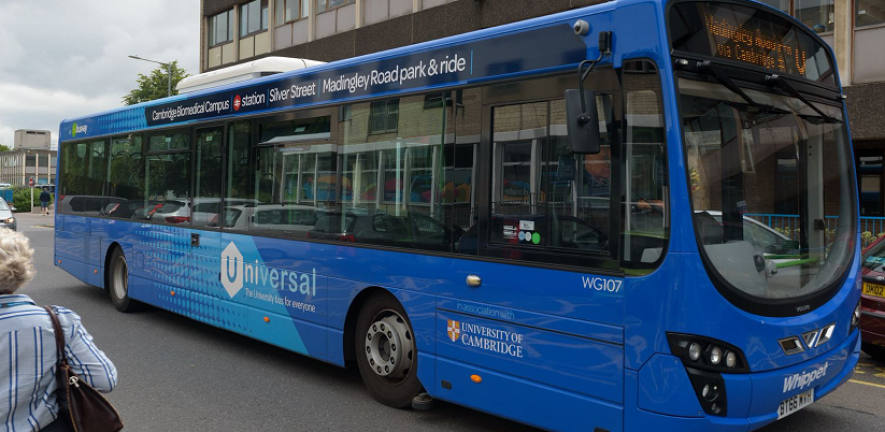

Creative Commons License
The text in this work is licensed under a Creative Commons Attribution 4.0 International License. Images, including our videos, are Copyright ©University of Cambridge and licensors/contributors as identified.  All rights reserved. We make our image and video content available in a number of ways – as here, on our main website under its Terms and conditions, and on a range of channels including social media that permit your use and sharing of our content under their respective Terms.

Scientists Develop New Method To Assess Ozone Layer Recovery

Scientists develop new method to assess ozone layer recovery

View of Earth from 40,000 feet

source: www.cam.ac.uk

Researchers have developed a new method for assessing the impacts of ozone-destroying substances that threaten the recovery of the ozone layer.


The Montreal Protocol is successfully protecting the ozone layer, but there is increasing evidence to suggest the ozone hole is recovering slower than expected

John Pyle

Published in the journal Nature, their method – the Integrated Ozone Depletion (IOD) metric – provides a useful tool for policymakers and scientists.

The IOD has been designed to provide a straightforward way to measure the effects of unregulated emissions of substances that deplete the ozone layer, and evaluate how effective ozone layer protection measures are.

The ozone layer is found in a region of the earth’s atmosphere known as the stratosphere, and acts as an important protection barrier against most of the sun’s harmful ultraviolet rays.

Ozone-depleting gases such as chlorofluorocarbons, better known as CFCs, have been phased out under the Montreal Protocol – an international treaty agreed to protect the ozone layer.

The Montreal Protocol has been largely successful, but illegal breaches are jeopardising its efficacy.

The IOD indicates the impact of any new emissions on the ozone layer by considering three things: the strength of the emission, how long it will remain in the atmosphere, and how much ozone is chemically destroyed by it.

For environmental protection and human health policies, the IOD represents a simple means of calculating the impact of any given emission scenario on ozone recovery.

This new metric has been developed by researchers at the National Centre for Atmospheric Science at the University of Cambridge and the National Centre for Earth Observation at the University of Leeds.

Professor John Pyle, from the National Centre for Atmospheric Science and the University of Cambridge, has dedicated his career to studying the depletion of ozone in the stratosphere and helping develop the Montreal Protocol. He is the lead author of the current Nature paper.

“Following the Montreal Protocol, we are now in a new phase – assessing the recovery of the ozone layer,” said Pyle, from Cambridge’s Yusuf Hamied Department of Chemistry. “This new phase calls for new metrics, like the Integrated Ozone Depletion – which we refer to as the IOD. Our new metric can measure the impact of emissions – regardless of their size. Using an atmospheric chemistry computer model, we have been able to demonstrate a simple linear relationship between the IOD, the size of the emissions and the chemical lifetimes. So, with knowledge of the lifetimes, it is a simple matter to calculate the IOD, making this an excellent metric both for science and policy.”

“The Montreal Protocol is successfully protecting the ozone layer, but there is increasing evidence to suggest the ozone hole is recovering slower than expected. The IOD will be very useful for monitoring ozone recovery, and especially relevant to regulators who need to phase out substances with the potential to chemically destroy ozone.”

The IOD metric has been created using a computer model of the atmosphere, called the UK Chemistry and Aerosols model (UKCA). The National Centre for Atmospheric Science and the Met Office developed the UKCA model to calculate future projections of important chemicals, such as ozone in the stratosphere.

“We have used the UKCA model to develop the IOD metric, which will enable us to estimate the effect of any new illegal or unregulated emissions on the ozone layer. In the UKCA model we can perform experiments with different types and concentrations of CFCs, and other ozone-depleting substances,” said co-author Dr Luke Abraham, also from the University of Cambridge. “We can estimate how chemicals in the atmosphere will change in the future, and assess their impact on the ozone layer over the coming century.”

The research was supported in part by the Natural Environment Research Council (NERC), part of UK Research and Innovation (UKRI).

Reference:
John A Pyle et al. ‘Integrated ozone depletion as a metric for ozone recovery.’ Nature (2022). DOI: 10.1038/s41586-022-04968-8

Adapted from a press release by the National Centre for Atmospheric Science.


Creative Commons License
The text in this work is licensed under a Creative Commons Attribution 4.0 International License. Images, including our videos, are Copyright ©University of Cambridge and licensors/contributors as identified.  All rights reserved. We make our image and video content available in a number of ways – as here, on our main website under its Terms and conditions, and on a range of channels including social media that permit your use and sharing of our content under their respective Terms.

Medieval Monks Were ‘Riddled With Worms’, Study Finds

source: www.cam.ac.uk


Research examining traces of parasites in the remains of medieval Cambridge residents suggests that local friars were almost twice as likely as ordinary working townspeople to have intestinal worms – despite monasteries of the period having far more sanitary facilities.


One possibility is that the friars manured their vegetable gardens with human faeces

Piers Mitchell

A new analysis of remains from medieval Cambridge shows that local Augustinian friars were almost twice as likely as the city’s general population to be infected by intestinal parasites.

This is despite most Augustinian monasteries of the period having latrine blocks and hand-washing facilities, unlike the houses of ordinary working people.

Researchers from the University of Cambridge’s Department of Archaeology say the difference in parasitic infection may be down to monks manuring crops in friary gardens with their own faeces, or purchasing fertiliser containing human or pig excrement.

The study, published today in the International Journal of Paleopathology, is the first to compare parasite prevalence in people from the same medieval community who were living different lifestyles, and so might have differed in their infection risk.

The population of medieval Cambridge consisted of residents of monasteries, friaries and nunneries of various major Christian orders, along with merchants, traders, craftsmen, labourers, farmers, and staff and students at the early university.

Cambridge archaeologists investigated samples of soil taken from around the pelvises of adult remains from the former cemetery of All Saints by the Castle parish church, as well as from the grounds where the city’s Augustinian Friary once stood.

Most of the parish church burials date from the 12-14th century, and those interred within were primarily of a lower socio-economic status, mainly agricultural workers.

The Augustinian friary in Cambridge was an international study house, known as a studium generale, where clergy from across Britain and Europe would come to read manuscripts. It was founded in the 1280s and lasted until 1538 before suffering the fate of most English monasteries: closed or destroyed as part of Henry VIII’s break with the Roman Church.

The researchers tested 19 monks from the friary grounds and 25 locals from All Saints cemetery, and found that 11 of the friars (58%) were infected by worms, compared with just eight of the general townspeople (32%).

They say these rates are likely the minimum, and that actual numbers of infections would have been higher, but some traces of worm eggs in the pelvic sediment would have been destroyed over time by fungi and insects.

The 32% prevalence of parasites among townspeople is in line with studies of medieval burials in other European countries, suggesting this is not particularly low – but rather the infection rates in the monastery were remarkably high.

“The friars of medieval Cambridge appear to have been riddled with parasites,” said study lead author Dr Piers Mitchell from Cambridge’s Department of Archaeology. “This is the first time anyone has attempted to work out how common parasites were in people following different lifestyles in the same medieval town.”

Cambridge researcher Tianyi Wang, who did the microscopy to spot the parasite eggs, said: “Roundworm was the most common infection, but we found evidence for whipworm infection as well. These are both spread by poor sanitation.”

Standard sanitation in medieval towns relied on the cesspit toilet: holes in the ground used for faeces and household waste. In monasteries, however, running water systems were a common feature – including to rinse out the latrine – although that has yet to be confirmed at the Cambridge site, which is only partly excavated.

Not all people buried in Augustinian friaries were actually clergy, as wealthy people from the town could pay to be interred there. However, the team could tell which graves belonged to friars from the remains of their clothing.

“The friars were buried wearing the belts they wore as standard clothing of the order, and we could see the metal buckles at excavation,” said Craig Cessford of the Cambridge Archaeological Unit.

As roundworm and whipworm are spread by poor sanitation, researchers argue that the difference in infection rates between the friars and the general population must have been due to how each group dealt with their human waste.

“One possibility is that the friars manured their vegetable gardens with human faeces, not unusual in the medieval period, and this may have led to repeated infection with the worms,” said Mitchell.

Medieval records reveal how Cambridge residents may have understood parasites such as roundworm and whipworm. John Stockton, a medical practitioner in Cambridge who died in 1361, left a manuscript to Peterhouse college that included a section on De Lumbricis (‘on worms’).

It notes that intestinal worms are generated by excess of various kinds of mucus: “Long round worms form from an excess of salt phlegm, short round worms from sour phlegm, while short and broad worms came from natural or sweet phlegm.”

The text prescribes “bitter medicinal plants” such as aloe and wormwood, but recommends they are disguised with “honey or other sweet things” to help the medicine go down.

Another text – Tabula medicine – found favour with leading Cambridge doctors of the 15th century, and suggests remedies as recommended by individual Franciscan monks, such as Symon Welles, who advocated mixing a powder made from moles into a curative drink.

Overall, those buried in medieval England’s monasteries had lived longer than those in parish cemeteries, according to previous research, perhaps due to a more nourishing diet, a luxury of wealth.


Creative Commons License
The text in this work is licensed under a Creative Commons Attribution 4.0 International License. Images, including our videos, are Copyright ©University of Cambridge and licensors/contributors as identified.  All rights reserved. We make our image and video content available in a number of ways – as here, on our main website under its Terms and conditions, and on a range of channels including social media that permit your use and sharing of our content under their respective Terms.