All posts by Admin

Low-impact hub generates electrical current from pure plant power

Low-impact hub generates electrical current from pure plant power

Source: www.cam.ac.uk


Green wall technology and semi-transparent solar panels have been combined to generate electrical current from a renewable source of energy both day and night.


This prototype is intended to inspire the imagination, and encourage people to consider what could be achieved with these pioneering technologies

Margherita Cesca, MCMM Architettura

A prototype “green bus shelter” that could eventually generate enough electricity to light itself, has been built by a collaboration of University of Cambridge researchers and eco-companies.

The ongoing living experiment, hosted by the Cambridge University Botanic Garden and open to the visiting public, is incorporated in a distinct wooden hub, designed by architects MCMM to resemble a structure like a bus shelter. Eight vertical green wall units – created by green wall specialists, Scotscape – are housed along with four semi-transparent solar panels and two flexible solar panels provided by Polysolar.

The hub has specially adapted vertical green walls that harvest electrons naturally produced as a by-product of photosynthesis and metabolic activity, and convert them into electrical current. It is the brainchild of Professor Christopher Howe and Dr Paolo Bombelli of the Department of Biochemistry. Their previous experiments resulted in a device able to power a radio using the current generated by moss.

The thin-film solar panels turn light into electricity by using mainly the blue and green radiation of the solar spectrum. Plants grow behind the solar glass, ‘sharing the light’ by utilising the red spectrum radiation needed for photosynthesis, while avoiding the scorching effect of UV light. The plants generate electrical currents as a consequence of photosynthesis and metabolic activity during the day and night.

“Ideally you can have the solar panels generating during the day, and the biological system at night. To address the world’s energy needs, we need a portfolio of many

different technologies, and it’s even better if these technologies can operate in synergy,” said Bombell


i.

The structure of the hub allows different combinations of the photovoltaic and biological systems to be tested. On the north east aspect of the hub, plants receive light directly, without being exposed to too much direct sun. On the south west orientation, a green wall panel is housed behind a semi-transparent solar panel so that the effect on the plants and their ability to generate current can be monitored. Next to that, in the same orientation, a single solar panel stands alone, and two further panels are also mounted on the roof.

“The combination of horticulture with renewable energy production constitutes a powerful solution to food and resource shortages on an increasingly populated planet,” explained Joanna Slota-Newson from Polysolar. “We build our semi-transparent solar panels into greenhouses, producing electrical energy from the sun which can in turn be used to power irrigation pumps or artificial lighting, while offering a controlled environment to improve agricultural yields. In this collaboration with Cambridge University, the public can experience the plants’ healthy growth behind Polysolar panels.”

The green wall panels in the hub are made from a synthetic material containing pockets, each holding a litre of soil and several plants. The pockets are fitted with a lining of carbon fibre on the back, which acts as an anode to receive electrons from the metabolism of plants and bacteria in the soil, and a carbon/catalyst plate on the front which acts as a cathode.

When a plant photosynthesises, energy from the sun is used to convert carbon dioxide into organic compounds that the plant needs to grow. Some of the compounds – such as carbohydrates, proteins and lipids – are leached into the soil where they are broken down by bacteria, which in turn release by-products, including electrons, as part of the process.

Electrons have a negative charge so, when they are generated, protons (with a positive charge) are also created. When the anode and cathode are connected to each other by a wire acting as an external circuit, the negative charges migrate between those two electrodes. Simultaneously, the positive charges migrate from the anodic region to the cathode through a wet system, in this case the soil. The cathode contains a catalyst that enables the electrons, protons and atmospheric oxygen to recombine to form water, thus completing the circuit and permitting an electrical current to be generated in the external circuit.

The P2P hub therfore generates electrical current from the combination of biological and physical elements. Each element of the hub is monitored separately, and members of the public can track the findings in real time, at a dedicated website and on a computer embedded in the hub itself.

Margherita Cesca, Senior Architect and Director of MCMM Architettura, the hub’s designer, is pleased that it has garnered so much interest. “This prototype is intended to inspire the imagination, and encourage people to consider what could be achieved with these pioneering technologies. The challenging design incorporates and showcases green wall and solar panels as well as glass, creating an interesting element which sits beautifully within Cambridge University Botanic Garden,” she said.

Bombelli added: “The long-term aim of the P2P solar hub research is to develop a range of self-powered sustainable buildings for multi-purpose use all over the world, from bus stops to refugee shelters.”

P2P is an outreach activity developed under the umbrella of the BPV (BioPhotoVoltaic) project working in collaboration with green technology companies including MCMM, Polysolar and Scotscape. The BPV project includes scientists from the Departments of Biochemistry, Plant Sciences, Physics and Chemistry at the University of Cambridge, together with the University of Edinburgh, Imperial College London and the University of Cape Town.

The innovative prototype solar hub will be unveiled at the Botanic Garden during an event at the Cambridge Science Festival, Trap the light fantastic: plant to power, on Tuesday 10 March.

– See more at: http://www.cam.ac.uk/research/news/low-impact-hub-generates-electrical-current-from-pure-plant-power#sthash.weiGXb1M.dpuf

Join our free Chinese/UK Internship Programme!

Join our free Chinese/UK Internship Programme!


2015 promises to be a flagship year for the UK in China and for China in the UK, with the first ever UK-China Year of Cultural Exchange. On the bilateral trade side, there already exist great potential for further acceleration of commercial links between UK and China, and we have good reason to be even more optimistic as China continues to open up.
The IMF’s forecasts suggest China’s import market will be worth over £3tn by 2020. There will be numerous opportunities as China commits further to research & innovation, renewable energy usage & environmental protection, and light rail infrastructure. The financial services, healthcare, e-commence, logistics and telecom sector will continue to open up to foreign participation, and the ongoing shift into a consumer economy, to name just a few.

Nevertheless language and culture differences can be problematic and cause headaches for British firms doing business with Chinese companies and in China. Indeed research shows language and culture are among the biggest barriers to companies’ building their links with China, and especially true for SMEs.

Now help is available to reduce the risks and overcome the pitfalls that will make a real difference to your investment in China.

Benefits of Chinese-speaking interns

You are invited to participate in our Bilingual Intern Programme, which offers you dedicated assistance to your China endeavours, at virtually no cost to you. The programme is an integral part of the students’ master course, and so, exempt from the national minimum wage. There is no mandatory financial commitment required from the employer’s side. In addition, placement fee will be taken care of by the university, the higher education institution.

These bilingual students (Chinese as well as home & EU) are studying at Master’s level at one of Britain’s leading universities.  They can work for you at different levels. They can offer reassuring advice on the cultural pitfalls that can unseat the uninformed business person. On a different level, they will be able to contribute to developing your China market strategy or improving your operational efficiency in dealing with China.

The interns can work for your company for a period of six to twelve weeks (or longer if mutually agreed) according to your needs and requirements. We will make sure everything goes smoothly for you, from initial interview to final placement.

Track Record of Our Intern Programme

This is the seventh year we have run this programme and is going from strength to strength. Last year record numbers of positions were generated from both the private and public sectors. The profiles of employers that have signed up our programme has varied from SMEs to large multinational corporations, with industries ranging from banking to insurance, from software development to industrial design, from electronics to engineering, from medical instruments to logistics & distribution and in clean energy. Interns from last year worked in positions such as China business development, China market research, digital marketing, sales & marketing, finance and accounting, Paralegal support, and more. Past years’ internship portfolios reveal a remarkable breadth of experience and the feedback from the companies that have participated clearly demonstrates the benefits such internships can bring both to employers and students.

But don’t just take our word for it – here are some of the comments from previous employers of interns under this programme as to the value and benefit from offering a work placement. “The intern we took on was absolutely outstanding and “exceeded all our expectation “. “The intern proved to be an asset to the company “as outlined by another company. One company describe their intern as “punctual, hardworking and inquisitive, showing considerable diligence and interest in the company’s business development into China”. Finally, one employer nicely summed it up by just saying, the intern was “an excellent addition to our team“.

Act now to secure one of these top interns!

The interns will be available to start from the middle of June 2015. However the number of students is limited. So if you are interested, act now by contacting us on 01223 421966, or emailing intern@chinabusinesssolutions.com.

How much equity would different universities take from your spinout?

How much equity would different universities take from your spinout?

OBR has recently published a paper in Nature Biotechnology, examining spinout practices from nearly 100 of the world’s top universities.

The goals of the paper were two-fold:
(1) To give bioentrepreneurs practical advice on how to navigate their university technology transfer offices (TTOs); and
(2) To shine a light on this otherwise opaque process.

What we found was shocking variability in equity stakes that different universities take. For instance, some universities take 5% whilst others take over 67%. Not only are some taking 10-15 times more equity than their peers (leaving very little for the entrepreneurs and investors), but many universities are also failing to make this information public. This is despite the fact that much of their research is being funded by taxpayers’ money.

Read our Nature Biotechnology paper here

It has been a monumental effort by OBR over the past year to get this data, and I’d like to express my sincere thanks to the many OBR contributors who made this happen. We hope this article can start a conversation and bring clarity to this important issue.

New Technology Centre Announced For Cambridge Science Park

New Technology Centre Announced For Cambridge Science Park

Source: cam.ac.uk


Sir John Bradfield Centre will be in the heart of the science park thanks to £4.8 million investment.

We hope to promote a culture in which we not only help to develop technologies and companies, but also the entrepreneurs who will build the industries of the future.

Sir Gregory Winter, Master of Trinity College 

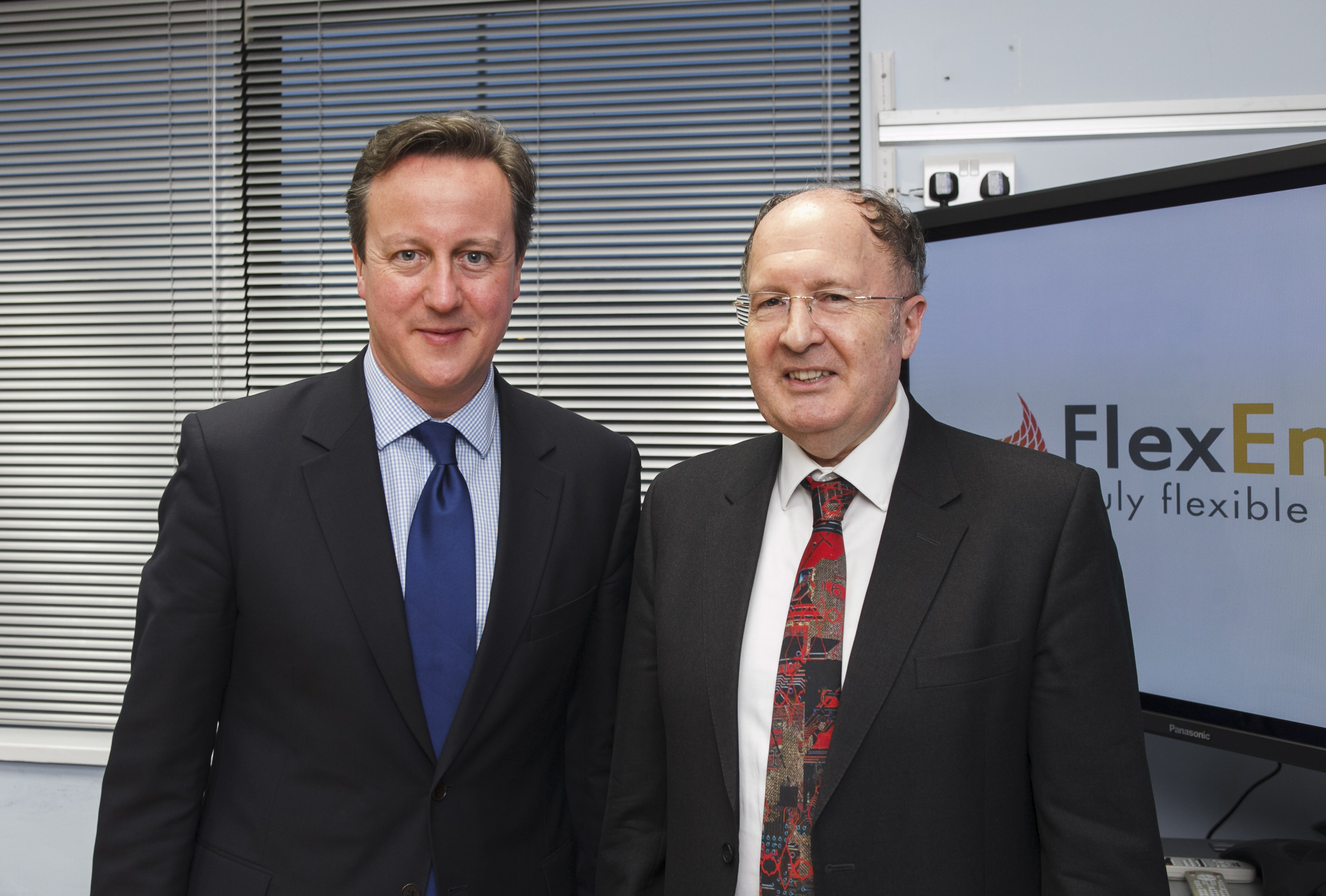
The Prime Minister David Cameron announced a £4.8 million partnership yesterday at the Cambridge Science Park to build a new technology centre.

The joint investment between Trinity College and the Department of Business, Innovation and Skills is part of plans to build the Sir John Bradfield Centre in the heart of the science park.

Trinity College, the College of Sir Isaac Newton among many other distinguished scientists, has long been at the centre of scientific innovation in Cambridge University.

The College was an early promoter of technology transfer to industry with the development of the Cambridge Science Park, which is now occupied by more than 90 companies with some 5,000 employees.

The College would like to do more to translate Cambridge research into companies and products; particularly in the very early stage companies.


It is known that science incubators can help in these early stages, in particular by providing teams and start-up companies with flexible and affordable space, education, mentoring and finance. It is expected that these companies will thrive in the self-sustaining entrepreneurial culture of the new centre and the Science Park.

Sir Gregory Winter, Master of Trinity College said: “Trinity College is pleased to help on all these fronts by providing a highly flexible building at the heart of the Science Park, and working with other partners to help with education, mentoring and seed financing.

“We hope to promote a culture in which we not only help to develop technologies and companies, but also the entrepreneurs who will build the industries of the future.

“We are particularly pleased to associate this building with Sir John Bradfield, former Senior Bursar of the College, who was instrumental in the creation of the Cambridge Science Park.”

More information:
  • Sir John Bradfield 1925 – 2014: One name alone is synonymous with the foundation of Cambridge Science Park: Sir John Bradfield, Senior Bursar of Trinity College from 1956 to 1992. Right from the start, Sir John saw that establishing and developing the links between the University and hi-tech tenants was critical to the success of Cambridge Science Park. His evident fascination in science and technology was deep rooted. Sir John won a scholarship to study natural sciences at Trinity College in 1942 and he became a research fellow in zoology in 1947. On October 13th 2014, Sir John passed away at Trinity College, on his way to a Cambridge Science Park Forum.
  • The proposed Technology Centre will be a new building on a 1.25 acre site providing a net internal floor area of 36,000 sq ft over three floors. Two thirds of the building will be innovation and lab space. In addition, about 6,000 sq ft will provide space for a café, retail unit, conference and meeting rooms and communal networking area.

– See more at: http://www.cam.ac.uk/news/new-technology-centre-announced-for-cambridge-science-park#sthash.RMDaPp8l.dpuf

Michelangelo bronzes discovered

Michelangelo bronzes discovered

Source: www.cam.ac.uk

It was thought that no bronzes by Michelangelo had survived – now experts believe they have found not one, but two – with a tiny detail in a 500-year-old drawing providing vital evidence.

The bronzes are exceptionally powerful and compelling works of art that deserve close-up study

Victoria Avery

They are naked, beautiful, muscular and ride triumphantly on two ferocious panthers. And now the secret of who created these magnificent metre-high bronze male nudes could well be solved. A team of international experts led by the University of Cambridge and Fitzwilliam Museum has gathered compelling evidence that argues that these masterpieces, which have spent over a century in relative obscurity, are early works by Michelangelo, made just after he completed the marble David and as he was about to embark on the Sistine Chapel ceiling.

If the attribution is correct, they are the only surviving Michelangelo bronzes in the world.

They are a non-matching pair, one figure older and lithe, the other young and athletic. Long admired for the beauty of their anatomy and powerful expressions, their first recorded attribution was to Michelangelo when they appeared in the collection of Adolphe de Rothschild in the 19th century. But, since they are undocumented and unsigned, this attribution was dismissed and over the last 120 years, the bronzes have been attributed to various other talented sculptors.

That changed last autumn when Prof Paul Joannides, Emeritus Professor of Art History at the University of Cambridge, connected them to a drawing by one of Michelangelo’s apprentices now in the Musée Fabre, Montpellier, France.

A Sheet of studies with Virgin embracing Infant Jesus, c.1508, is a student’s faithful copy of various slightly earlier lost sketches by Michelangelo. In one corner is a composition of a muscular youth riding a panther, which is very similar in pose to the bronzes, and drawn in the abrupt, forceful manner that Michelangelo employed in designs for sculpture. This suggests that Michelangelo was working up this very unusual theme for a work in three dimensions.

This revelation triggered further art-historical research with input from a number of international experts. The bronzes were compared with other works by Michelangelo and found to be very similar in style and anatomy to his works of 1500-1510; a date confirmed by the preliminary conclusions of initial scientific analysis. Interdisciplinary research is continuing; the findings and conclusions of which will be presented at an international conference on Monday 6 July, 2015.

It is a common misconception that Michelangelo sculpted almost exclusively in marble and never in bronze. However it is historically verifiable that he was associated with bronze throughout his 75-year-long career.  Michelangelo is documented as having made a two-thirds life-size David for a French grandee, and an over twice life-size statue of Pope Julius II.  Sadly neither survives – the first disappeared during the French Revolution; the second was melted down for artillery less than three years after it was made.

Dr Victoria Avery, Keeper of the Applied Arts Department of the Fitzwilliam Museum, commented: “It has been fantastically exciting to have been able to participate in this ground-breaking project, which has involved input from many art-historians in the UK, Europe and the States, and to draw on evidence from conservation scientists and anatomists. The bronzes are exceptionally powerful and compelling works of art that deserve close-up study – we hope the public will come and examine them for themselves, and engage with this ongoing debate.”

The bronzes have gone on display in advance of the Fitzwilliam Museum’s bicentenary in 2016 and before its next major exhibition Treasured Possessions, the result of a interdisciplinary University research project revealing hidden items in the Museum’s reserves. The bronzes and a selection of the evidence are now on display in the Italian galleries at the Fitzwilliam Museum, Cambridge, from February 3 until 9 August 2015. Admission to the Fitzwilliam is free.

Click on images to enlarge:

Researchers behind the discovery
Prof Paul Joannides – Emeritus Professor of Art History, University of Cambridge
Dr Victoria Avery – Keeper of Applied Arts, Fitzwilliam Museum
Dr Robert van Langh – Head of Conservation, Rijksmuseum
Arie Pappot – Junior conservator of metals, Rijksmuseum
Professor Peter Abrahams – Clinical Anatomist, Warwick Medical School, University of WarwickLead consultants
Martin Gayford – Art critic and author of Michelangelo: An Epic Life (2013)
Dr Charles Avery – Independent art historian, Cambridge (UK)
Dr Andrew Butterfield – Author of The Sculptures of Andrea del Verrocchio and many other publications on Renaissance art

– See more at: http://www.cam.ac.uk/research/news/michelangelo-bronzes-discovered#sthash.y9TS7D0D.dpuf

New life breathed into Plastic Logic as Cambridge drops manufacturing for IP

New life breathed into Plastic Logic as Cambridge drops manufacturing for IP

Source: www.cabume.co.uk

FlexEnable Flex OLED

Fifteen years and several hundred millions pounds after it spun out of Cambridge University’s physics department, the company formerly known as Plastic Logic says it now has the technology and strategic plan necessary to make a dent in a range of markets including Internet of Things and wearable technologies using IP from its groundbreaking plastic electronics platform.

It is the advances in the last two years in particular with organic transistors which are now stable, yet flexible enough to wrap around a pencil and powerful enough to drive displays, sensors and programmable logic circuits backed by a high yield, low temperature manufacturing process, that has persuaded Plastic Logic to split into two entities, one to focus on IP in Cambridge, the other on mass production in Germany.

The rebranded Plastic Logic Germany to focus on plastic electronics production from its multi-million pound manufacturing plant in Dresden while Cambridge concentrates on exploiting thevast intellectual property portfolio and plastic electronics knowhow it has developed over the last decade and a half under a new company, FlexEnable.

The main technology advances have come in the last two years and this new launch seems to have breathed new life into a company that was already operating a new IP-focused strategy, but whose name was struggling to shake of its history which included some of the biggest private funding rounds ever seen in a Cambridge startup and a high profile and ultimately doomed attempt to enter the ereader market.

Though in-house ereaders have been off the menu for a few years now, display technology is still integral to FlexEnable’s future, though this time end user product development will come from collaborators. The company that once attempted to build a fully vertically integrated business that went from the materials science right through to the customer’s palms will now become an enabling partner to companies.

Operating through three divisions, FabEnable, ProductEnable and MaterialEnable, the company will either help manufacturers upgrade their own lines to integrate flexible electronics production, work with companies to develop their own products based on flexible electronics or get involved at a much more fundamental scientific level with companies or research groups working to develop new flexible materials.

Though Dresden remains a large scale manufacturer of plastic electronics, FlexEnable will provide prototyping and small scale manufacturing.

The company’s current technology is able to produce 25 micron thick substrates that can be used to create a transistor with a quarter of a millimetre bend radius, a curvature with unique mechanical properties according to former Plastic Logic CEO and now FlexEnable’s CEO, Indro Mukerjee. The fact that the production process doesn’t involve temperatures much over 80ºC not only means improved yields, but that it can be integrated with a wide range of flexible materials.

The organic thin film transistor technology is now capable of driving active matrix organic LEDs, LCD and many other display and sensor materials. Programmable array logic circuits, which can be programmed for different functions by digital printing, have been created in flexible plastic while a range of sensor array technology has been developed for use in medical devices, contactless control of devices and gesture recognition.

FlexEnable has come up with a number of show products to attract potential partners and to demonstrate some of the directions the technology could go. These include a wearable display on the sleeve of a waterproof jacket which could be used to display a map, a wrap around display for smartphones that can become a tablet, or a smart credit card that can have an active matrix display, fingerprint sensors and logic on a single sheet of plastic.

Revenues are already being generated by FlexEnable technology licenses and the company has worked with Samsung owned NovaLed on fully flexible Amoled displays.

All Plastic Logic’s 45 or so Cambridge staff are understood to have transferred to FlexEnable which will continue to be run by Mukerjee and which is still almost entirely owned by Russian state-owned nanotech company, Rusnano.

Funding for the new venture comes from existing investors, but Mukerjee says the company will undertake a funding round soon with the support of Rusnano. Russia will no longer be a venue for plastic electronics manufacturing, as was planned when Rusnano invested $150m with promises of up to $500m in equity funding and loans to follow, but it will house a focused electronics centre to be shared with a consortium of other companies.

Cambridge meets Cambridge in £18m Biotech Acquisition

Cambridge meets Cambridge in £18m Biotech Acquisition

Source: www.cabume.co.uk

Firefly branded boxes and vialsAbcam is paying £18.5 million cash to add biomarker detection capabilities to its business as it looks to expand its traditional offering of supplying proteins.

Firefly BioWorks, which has 15 employees based in Cambridge, Massachusetts, has developed a novel multiplex assay platform for the detection of biomarkers, based on a microfabrication technology developed at the Massachusetts Institute of Technology.

Its first product is for the detection of microRNAs (miRNAs), which Abcam says fits well with the strategy it outlined in September last year to establish new growth platforms and supports its wider ‘mission’ of enabling “scientists to discover more.”

The move into helping identify proteins and not just supplying them carries extra significance as this strategic expansion is happening under the stewardship of Alan Hirzel, the successor to Abcam’s hugely successful founding CEO, Dr Jonathan Milner.

“The acquisition of Firefly represents a compelling strategic fit for Abcam, expanding our Kits and Assays business into the new areas where life science researchers tell us they have the greatest needs,” said Hirzel. “RNA is one of the hottest areas in science for our consumers and we are excited about the scientific and commercial potential in what is a new product area for Abcam.

“We are also delighted to be working with our new colleagues at Firefly to offer researchers access to a novel technology that will enable them to assess the role of miRNA in a broad range of areas including epigenetics and cancer biomarker discovery, as well as generally across biological research.”

GCGP ECONOMIC DEVELOPMENT FUNDS REACH £100M

GCGP ECONOMIC DEVELOPMENT FUNDS REACH £100M

Source: www.cabume.co.uk

11 board members spell out £100m with individual placards Cambridge and Peterborough’s economic development body has secured an additional £38 million of investment to support economic growth in area, taking the total raised from the UK government’s Growth Deal to over £100 million.

The Greater Cambridge Greater Peterborough Local Enterprise Partnership (GCGP Lep) says the funding will help in the generation of 15,500 new jobs and construction of 10,000 new homes across the Lep area.

Specifically, the funding will be invested into the following projects over the next five years:

• Ely Southern Bypass: Funding to support the construction of the much-needed Ely Southern Bypass – 1.7km of road that will connect the A142 to the Stuntney Causeway, relieving congestion in the city and supporting the creation of 4,500 new jobs and 3,000 new homes.

• Growing Places Fund: A £16.6 million boost to the LEP’s successful Growing Places Fund scheme that provides affordable loan funding to overcome key barriers to growth.

• Institute of Advanced Construction and a Highways & Civil Engineering Academy: A significant contribution towards the creation of a new national centre for higher level construction skills near King’s Lynn, and a local Highways & Civil Engineering centre near Huntingdon to provide skilled labour for the many key transport schemes planned over the coming years.

• M11 Junction 8 upgrade: Funding towards development work to upgrade the busy M11 Junction 8 interchange located near Stansted Airport

Lucideon Looks To UK’s Scientific Heartlands With New Site in Cambridge

Lucideon Looks To UK’s Scientific Heartlands With New Site in Cambridge

International materials development consultancy Lucideon is continuing on a growth curve with the opening of new offices in Cambridge Science Park.

Operating as Lucideon Cambridge Polymer Limited, the new site will be the hub of development of novel polymer systems for high value applications in industry, particularly in the healthcare sector.

Lucideon develops cutting-edge materials technologies for sectors including medical devices, ceramics and nuclear.  Current work includes the development of field-enhanced processing technology to reduce the energy used to produce ceramics, inorganic controlled release technologies for the healthcare industries, and a new technology, MIDAR, which can be used to encapsulate nuclear industry waste.

The decision to have a base in Europe’s longest-serving and largest centre for commercial research and development forms part of Lucideon’s ambitious expansion plans, which include opening offices in North Carolina, Turkey, Japan and Australia.

Tony Kinsella, Chief Executive at Lucideon, said: “As our strategy for the future is based on innovation and developing cutting-edge technologies it seemed a natural move for us to be part of the thriving and energetic science, engineering and business communities that exist in the greater Cambridge area.”

Lucideon has worked with, and continues to work with, the University of Cambridge on numerous research projects, including EU-funded R&D.  The company has also sponsored post doctorate places at the university for some years.

The Cambridge office will be headed up by Dr Xiang Zhang – a Royal Society Industrial Fellow – with scientists and engineers from Lucideon working there on secondment initially.

In line with the company’s plans to hire 100 new staff over the next three years, new roles will be added at the office. Lucideon also hopes to strengthen links with the high-tech sector companies within the area.

Mr Kinsella added: “We already have close links with the scientific excellence of the University of Cambridge through the work of our Head of Medical Materials, Dr Xiang Zhang – and we can only see this strengthening with the opening of the new office.”

Computers using digital footprints are better judges of personality than friends and family

Computers using digital footprints are better judges of personality than friends and family

Source: www.cam.ac.uk


Researchers have found that, based on enough Facebook Likes, computers can judge your personality traits better than your friends, family and even your partner. Using a new algorithm, researchers have calculated the average number of Likes artificial intelligence (AI) needs to draw personality inferences about you as accurately as your partner or parents.


People may choose to augment their own intuitions and judgments with this kind of data analysis when making important life decisions

Wu Youyou

A new study, published today in the journal PNAS, compares the ability of computers and people to make accurate judgments about our personalities. People’s judgments were based on their familiarity with the judged individual, while computer models used a specific digital signal: Facebook Likes.

The results show that by mining Facebook Likes, the computer model was able to predict a person’s personality more accurately than most of their friends and family. Given enough Likes to analyse, only a person’s spouse rivalled the computer for accuracy of broad psychological traits.

Researchers at the University of Cambridge and Stanford University describe the finding as an “emphatic demonstration” of the capacity of computers to discover an individual’s psychological traits through pure data analysis, showing machines can know us better than we’d previously thought: an “important milestone” on the path towards more social human-computer interactions.

“In the future, computers could be able to infer our psychological traits and react accordingly, leading to the emergence of emotionally-intelligent and socially skilled machines,” said lead author Wu Youyou, from Cambridge’s Psychometrics Centre.

“In this context, the human-computer interactions depicted in science fiction films such as Her seem to be within our reach.”

The researchers say these results might raise concerns over privacy as such technology develops; the research team support policies giving users full control of their digital footprint.

In the study, a computer could more accurately predict the subject’s personality than a work colleague by analysing just ten Likes; more than a friend or a cohabitant (roommate) with 70, a family member (parent, sibling) with 150, and a spouse with 300 Likes.

Given that an average Facebook user has about 227 Likes (and this number is growing steadily), the researchers say that this kind of AI has the potential to know us better than our closest companions.

The latest results build on previous work from the University of Cambridge, published in March 2013, which showed that a variety of psychological and demographic characteristics could be predicted with startling accuracy through Facebook Likes.

In the new study, researchers used a sample of 86,220 volunteers on Facebook who completed a 100-item personality questionnaire through the ‘myPersonality‘ app, as well as providing access to their Likes.

These results provided self-reported personality scores for what are known in psychological practice as the ‘big five’ traits: openness, conscientiousness, extraversion, agreeableness, and neuroticism—the OCEAN model. Through this, researchers could establish which Likes equated with higher levels of particular traits e.g. liking ‘Salvador Dali’ or ‘meditation’ showed a high degree of openness.

Users of the ‘myPersonality’ app were then given the option of inviting friends and family to judge the psychological traits of the user through a shorter version of the personality test. These were the human judges in the study—those listed on Facebook as friends or family expressing their judgement of a subject’s personality using a 10-item questionnaire

Researchers were able to get a sample of 17,622 participants judged by one friend or family member, and a sample of 14,410 judged by two.

To gauge the accuracy of these measurements, the online personality judgements were corroborated with a meta-analysis of previous psychological studies over decades which looked at how people’s colleagues, family and so on judge their personality. Researchers found their online values similar to the averages from years of person-to-person research.

In this way, the researchers were able to come up with accuracy comparisons between computer algorithms and the personality judgements made by humans. Given enough Likes, the computers came closer to a person’s self-reported personality than their brothers, mothers or partners.

Dr Michal Kosinski, co-author and researcher at Stanford, says machines have a couple of key advantages that make these results possible: the ability to retain and access vast quantities of information, and the ability to analyse it with algorithmsthe techniques of ‘Big Data’.

“Big Data and machine-learning provide accuracy that the human mind has a hard time achieving, as humans tend to give too much weight to one or two examples, or lapse into non-rational ways of thinking,” he said. Nevertheless, the authors concede that detection of some traits might be best left to human abilities, those without digital footprints or dependant on subtle cognition.

The authors of the study write that automated, accurate, and cheap personality assessments could improve societal and personal decision-making in many ways—from recruitment to romance.

“The ability to judge personality is an essential component of social living—from day-to-day decisions to long-term plans such as whom to marry, trust, hire, or elect as president,” said Cambridge co-author Dr David Stillwell. “The results of such data analysis can be very useful in aiding people when making decisions.”

Youyou explains: “Recruiters could better match candidates with jobs based on their personality; products and services could adjust their behaviour to best match their users’ characters and changing moods.

“People may choose to augment their own intuitions and judgments with this kind of data analysis when making important life decisions such as choosing activities, career paths, or even romantic partners. Such data-driven decisions may well improve people’s lives,” she said.

The researchers say that this kind of data mining and its inferences has hallmarks of techniques currently used by some digital service providers, and that—for many people—a future in which machines read our habits as an open book on a massive scale may seem dystopian to those concerned with privacy.

It’s a concern shared by the researchers. “We hope that consumers, technology developers, and policy-makers will tackle those challenges by supporting privacy-protecting laws and technologies, and giving the users full control over their digital footprints,” said Kosinski.

Take the Facebook personality test yourself here: http://applymagicsauce.com/

– See more at: http://www.cam.ac.uk/research/news/computers-using-digital-footprints-are-better-judges-of-personality-than-friends-and-family#sthash.bK7Gi05d.dpuf

Prostate Cancer Pee Test to Launch this Year

Prostate Cancer Pee Test to Launch this Year

UroSens Ian Campbell CEO

Source: cabume .co .uk

A company aiming to replace the uncomfortable and invasive biopsies used to detect prostate and bladder cancer with a simple urine test expects to launch its first product this year following the closure of a £2 million funding round.

The investment will be used to expand Urosens’ commercial and technical teams, finalise product development and begin to commercialise its diagnostic test, the UroSens Mcm5-ELISA, for prostate and bladder cancer.

The new test is based on intellectual property licensed exclusively from Cancer Research Technology (CRT), the development and commercialisation arm of Cancer Research UK. It focuses on Mcm5 (minichromosome maintenance complex component 5), a protein which only appears when cells divide, and is regarded as an excellent marker for the presence of dividing cancer cells.

Urosens is also seeking to undertake further clinical trials in Europe and the United States to expand the applications of the Mcm5 test. In addition, UroSens will continue the development of a Point-of-Care version of the Mcm5 test.

Dr Ian Campbell, CEO at UroSens, commented: “This investment round will enable us to expand our team and bring our novel assay to the market, providing patients with a simple non-invasive test for both bladder and prostate cancer.”

Urosens raised £530k in equity investment in June 2013.

Dying Light: Millions view Cambridge zombie rooftop pursuit

Dying Light: Millions view Cambridge zombie rooftop pursuit

Source: www.bbc.co.uk

The video game zombies were brought to life on the Cambridge skyline

A “zombie pursuit” across the rooftops of Cambridge has become an internet hit after a film-maker was hired to bring a computer game to life.

Film company Ampisound, which works with parkour/free-running enthusiasts and is based in the city, was asked to recreate scenes from Dying Light.

Its promo has had nearly 2.5m views on YouTube.

Scott Bass, of Ampisound, said: “In the streets, we had countless kids coming up to the guys asking for a photo.”

The Techland game features a parkour instructor who battles with zombies.

Zombie in Cambridge
The film was shot using a head-cam worn by a free-runner being pursued by zombies

Mr Bass said: “I had anticipated the film would do well, because I’ve done a few virals now.

“What’s been really cool is the response from such a wide range of places – along with the gaming and parkour scenes, film blogs and horror fanatics have been talking about it, which is really awesome.

“We only had one minor injury, which was because one of my athletes, Neil, decided eating a sandwich while walking down stairs would be a good idea.”

Charlie Hebdo rally: Hundreds gather in Cambridge in defiant response to Paris terror attacks

Charlie Hebdo rally: Hundreds gather in Cambridge in defiant response to Paris terror attacks

Source: Cambridge News

Hundreds of people came together in Cambridge today in a defiant response to three days of terrorist atrocities in Paris that left 17 people dead.

People of all backgrounds and ages attended a unity rally outside Great St Mary’s Church in Cambridge as a tribute to those killed.

The large crowd carried ‘Je Suis Charlie’ signs in the vigil to show solidarity with the 12 journalists from Charlie Hebdo shot dead on Wednesday.

Following the massacre at the satirical weekly newspaper, a further five innocent people lost their lives in a series of deadly attacks – including the siege of a kosher grocery store.

The French flag and solidarity signs were on show during the Cambridge rally where French residents, workers, students – alongside other nationalities – showed their support.

Claudile Cohen, who lives in Paris, attended the vigil in Cambridge with her daughter who has family in the city.

Ms Cohen, who returns back to the French capital in a week, told the News: “I am very disappointed in what has happened in Paris. It’s very very awful. I am so sad for all the families who have lost people.”

Her daughter Karen, who lives in both Paris and Cambridge, said: “It’s a big trauma and nightmare. We are only just coming to realise what has happened. These people should have been checked by security. It’s a major mistake by our government.”

Georges Gonthier, who used to work in Paris, said: “I am still shocked, still in trauma with the nastiness of it all.”

The Cambridge Microsoft worker added: “France have got to get their security service working better like in this country.”

Alliance Francaise organised the rally in Cambridge after the series of deadly attacks took place.

A spokesman of the group said: “It’s fantastic that so many people, from lots of different countries, have shown their support. This isn’t about politics – it’s to say freedom for everybody. We are here to show that we stand united against terrorists.”

Alliance Francaise received a high number of messages ahead of the rally enquiring how they could show their unity.

Thomas Kim, who is half French, attended the rally to “stand for free speech” and show his respect to families affected.

The 18-year-old Cambridge resident added: “It’s touching to see so many people show their support from all over the world.”

French President Francois Hollande led hundreds of thousands of people through the streets of Paris in a massive demonstration to show solidarity with the victims of the terror spree last week.

World leaders, including the Prime Minister, David Cameron, joined together for the event.

Read more: http://www.cambridge-news.co.uk/pictures/Charlie-Hebdo-rally-Hundreds-gather-Cambridge/pictures-25838487-detail/pictures.html#11#ixzz3OYbul5sw
Follow us: @CambridgeNewsUK on Twitter | cambridgenews on Facebook